
Unbiased headlines. Facts, not spin.
Unbiased Headlines is an independently owned news organization. We bring you the facts, not opinions, written fresh from 110+ named sources. Sources linked so you can verify it yourself.
 health
Major Story (7/10)
Event date: November 13, 2026 ·
DEA Chief Terry Cole Says New Synthetic Opioids Are Deadlier Than Any Seen, as Baton Rouge Nitazene Lab Is Shut Down
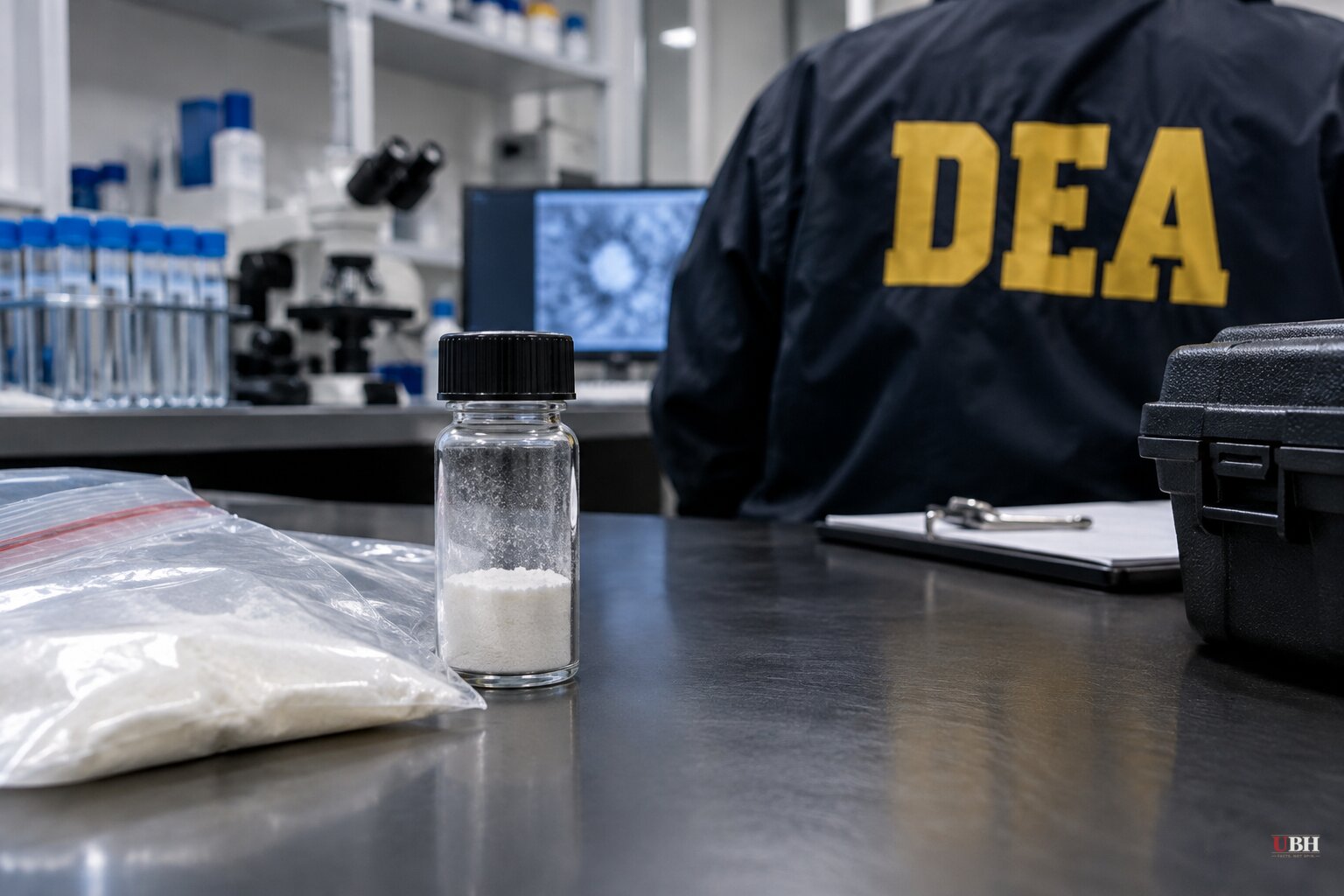
Since a three-month narcotics investigation ended in raids in Baton Rouge on Nov. 12, federal and local officials have been describing a new phase in the opioid fight. The drug at the center of it is not fentanyl.
On Nov. 12, the East Baton Rouge Parish Sheriff's Office (EBRSO) executed three search warrants tied to 34-year-old Torrey Lewis Jr. At 4830 Cottage Hill Drive, agents found a clandestine laboratory with $250,000 in professional-grade equipment.
What agents found in Baton Rouge
The lab had a 100-liter reactor system, specialized temperature-control equipment and an industrial evaporator. It also held numerous chemicals used in making synthetic drugs.
The main reactor vessel contained 58 liters of liquid. Within a week, EBRSO said, testing confirmed it was etonitazene, an extremely potent synthetic opioid in a class known as nitazenes.
Investigators also seized about 22.5 grams of fentanyl, three grams of cocaine, two rifles and $8,531 in cash. They took additional manufacturing and distribution paraphernalia as well.
Lewis was booked into the EBR Parish Prison on drug, gun and money laundering charges. He has not been convicted, and no statement from him or a lawyer has been made public.
EBR Sheriff Sid J. Gautreaux III called it a first-of-its-kind discovery for the DEA in the United States. "This investigation was already significant because of the scale and sophistication of the laboratory our agents uncovered," he said in a statement. He added that confirmation of nitazene manufacturing makes "the magnitude of what our investigators accomplished" even more extraordinary.
Louisiana's role in the nitazene supply
Deputies say nitazenes have existed for decades. Traffickers, they say, are increasingly pushing them into the illicit drug supply in Louisiana and across the country.
The Louisiana State Police Crime Laboratory reports a recent uptick in nitazene-positive seizures. According to the sheriff's office, more than 80% of all etonitazene exhibits seized by DEA nationwide this year have originated in Louisiana.
That is a striking concentration. It does not by itself show how much of the state's supply came from this one lab, and officials have not said whether the Cottage Hill Drive operation had begun distributing the 58 liters of liquid.
The DEA's national warning
The raid lands as DEA Administrator Terry Cole is making a broader warning. In a clip promoting a 60 Minutes investigation airing Sunday, Nov. 22, Cole said new synthetic opioids are more deadly than anything DEA agents have ever seen.
"The cartels will exploit every avenue and every source possible to bring new poison to the United States," Cole said. "Listen, it's all about profit for them."
The 60 Minutes promotion states that opioids are on pace to kill more than 35,000 people this year. It also says they are the leading cause of death among Americans ages 18 to 45. Those figures come from the broadcast's own promotion, and the full segment has not yet aired.
Neither the DEA nor the sheriff's office has tied the Baton Rouge lab to the cartels Cole describes. The Louisiana case, as described by officials, centers on a single local suspect and a domestic lab. That is a different supply model from the cartel-run imports the DEA has long emphasized.
Why a domestic lab matters
Border and port enforcement is built around stopping drugs from crossing into the country. A lab that makes a potent opioid inside a U.S. city shifts the problem to precursor chemicals and equipment, which can be bought and moved domestically.
The sheriff's office has not said where the chemicals or the $250,000 in equipment came from. It also has not said whether other labs are suspected. Those are the questions that determine whether Baton Rouge was an outlier or an early find.
The case against Lewis now moves through the Louisiana courts on the drug, firearm and money laundering counts. The 60 Minutes report on Sunday is expected to lay out Cole's case that the cartels are the main source of the deadlier pills. Whether officials can connect the Cottage Hill Drive lab to any larger network remains unanswered.
Sources used for this briefing
4 links from 4 independent newsrooms (syndicated copies of the same report count once)
These are the sources it draws on, linked so you can verify.


