
Unbiased headlines. Facts, not spin.
Unbiased Headlines is an independently owned news organization. We bring you the facts, not opinions, written fresh from 110+ named sources. Sources linked so you can verify it yourself.
 health
Major Story (8/10)
Event date: November 15, 2026 ·
Congo Ebola Outbreak Passes 11,700 Cases and 5,700 Deaths as MSF Calls Response Out of Control
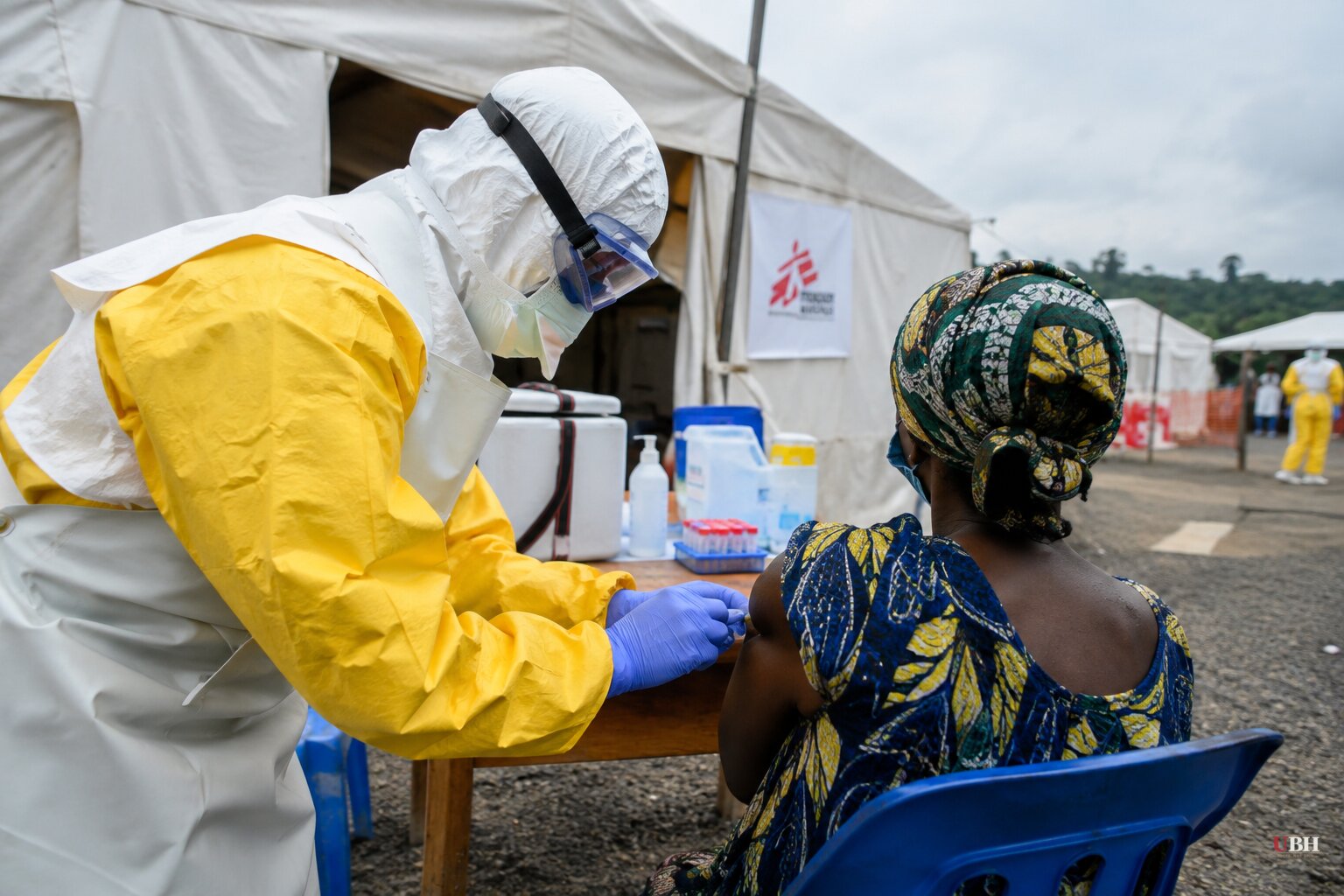
Since the World Health Organization declared the emergency in mid-May, Congo's Ebola outbreak has grown to more than 11,700 confirmed cases and 5,700 deaths as of Nov. 19. It is the deadliest of Congo's 17 Ebola outbreaks and the second-deadliest on record worldwide.
The numbers are still climbing fast. Government data showed 10,351 cases and 5,026 deaths on Oct. 31. By Nov. 11, Congo's National Institute of Public Health counted 11,114 cases and 5,433 deaths, a case fatality rate of 48.9 percent.
A faster start than West Africa
The outbreak reached 10,000 cases in 163 days, 51 days sooner than the 2014-2016 West Africa epidemic. That epidemic infected at least 28,600 people and killed more than 11,000 across Guinea, Liberia and Sierra Leone. The Associated Press reports the current outbreak is on track to pass that death toll.
It has already surpassed Congo's 2018-2020 epidemic, which killed 2,299 people.
The virus is the Bundibugyo strain. It has no approved vaccine or treatment, and doctors treat symptoms. Trials of the Ervebo vaccine, which works against the more common Zaire strain, have begun in recent weeks.
Spread inside Congo and beyond
As of Oct. 31, the disease had reached 67 of Congo's 178 health zones across eight of 26 provinces. Ituri and North Kivu in the east are the epicenters, accounting for 9,782 confirmed cases and 4,792 deaths at that point.
Outside Congo, Uganda reported 20 cases and two deaths. Kenya reported nine cases and two deaths. Nigeria confirmed one imported case. France confirmed a case in a doctor returning from an aid mission in Congo. A British doctor who tested positive in Congo was flown to London in November and has since recovered.
Why it is not being contained
The Africa Centers for Disease Control and Prevention says about 80 percent of new cases are showing up outside the chain of monitored contacts. That means most new infections come from chains of transmission health authorities cannot see.
Dr. Patrick Otim of the WHO says one-third of recorded deaths happen outside treatment centers, before anyone tests for Ebola. "These are people we never had opportunity to try to save them," he said.
The U.S. Centers for Disease Control and Prevention estimates the outbreak began in mid- to late February, two to three months before detection. By the time it was announced, 43 deaths had already been recorded. Dr. Abdou Sebushishe of International Medical Corps says that gap left responders unable to reach many of the first case's contacts, who had since scattered.
Children are hit hard. UNICEF says children made up 35 percent of deaths through Nov. 4. Children under 5 accounted for 21 percent of all deaths, and nearly 72 percent of infected children in that age group died.
Insecurity is a major factor. WHO Director-General Tedros Adhanom Ghebreyesus said Nov. 11 that "insecurity is now one of the greatest obstacles to the response." A nurse was killed and another health worker severely injured on Oct. 24 while answering an Ebola alert in Bafwasende, Tshopo province. Health workers have also struck repeatedly over pay that is months overdue.
Money that is not reaching the front line
Doctors Without Borders (MSF) said Nov. 12 that the outbreak remains out of control six months in. "Despite the vast amounts of money provided for the response, many frontline responders are left trying to contain the outbreak with empty hands and empty pockets," said MSF International President Dr. Javid Abdelmoneim.
MSF listed untrained and unpaid response staff, ambulances without fuel, and clinics without supplies for suspected cases. It called the failure of epidemiological surveillance "one of our greatest concerns," with entire areas "poorly covered or even completely neglected." The group acknowledged progress in expanding isolation and treatment units. The Congolese government and the WHO did not respond to requests for comment on MSF's statement.
Last month, Africa CDC raised concerns about more than $700 million in Ebola aid that remains unaccounted for.
A competing explanation points to the 2025 aid cuts. Experts cited by TIME link the surveillance gap to humanitarian funding reductions that year, including the Trump administration's dismantling of USAID, which led the U.S. government response in West Africa in 2014. Katie Thomas-Canfield, the International Rescue Committee's Ebola response director in Bunia, calls the situation "a perfect storm" of converging factors, among them late detection, the strain involved and community mistrust of health providers.
The two accounts are not mutually exclusive. One says the money was cut. The other says money was spent and did not arrive.
AP reports that experts see little chance of bringing the outbreak under control within the next year. Whether the $700 million Africa CDC flagged can be traced to the clinics and workers MSF says are going without remains unanswered.
Sources used for this briefing
7 links from 6 independent newsrooms (syndicated copies of the same report count once)
These are the sources it draws on, linked so you can verify.


