
Unbiased headlines. Facts, not spin.
Unbiased Headlines is an independently owned news organization. We bring you the facts, not opinions, written fresh from 110+ named sources. Sources linked so you can verify it yourself.
 health
Major Story (8/10)
Event date: October 18, 2026 ·
PAHO to Announce U.S. Lost Measles Elimination Status Today; State Data Counts 167 Pregnant Cases to CDC's 112
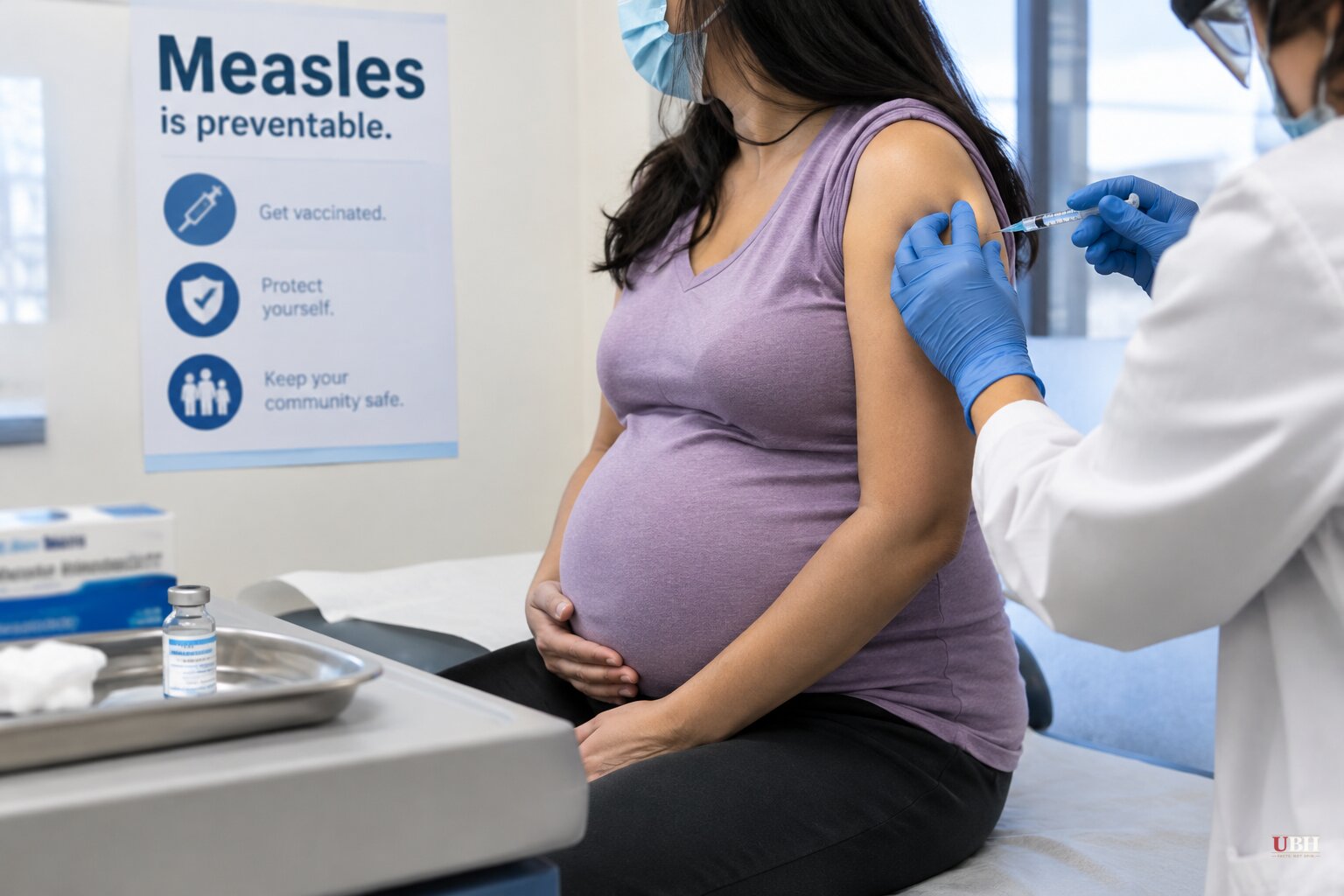
A CDC-authored study published Monday put 112 measles cases in pregnant women and 13 congenital infections on the record. The story has now moved to the formal end of a 26-year run. PAHO is scheduled to announce today, Nov. 17, that the U.S. has lost the measles elimination status it held since 2000.
Researchers with direct knowledge of the deliberations told KFF Health News that PAHO reached its conclusion this week: measles has re-established regular transmission in the country. A source close to the process told CNN on Friday that an independent commission reporting to the PAHO director found the U.S. no longer qualifies. The Wall Street Journal reported that first.
How the status was lost
The test is simple. The international committee considers an infection endemic if infections caused by the same strain are passed from person to person for at least a year within the same country. Scientists check this by comparing viral genomes.
Utah's public health laboratory posted a preprint in August showing one strain circulated in the state for more than a year. It accounted for more than 95% of cases there and caused more than 600 cases between June 2025 and June 2026. There have also been sustained outbreaks in South Carolina, Pennsylvania, Wisconsin and New York, as well as other states.
Angela Rasmussen, a virologist at the University of Saskatchewan and editor-in-chief of the journal Vaccine, said the decision was not a tough call and that the Utah data alone would have been enough. CNN reports it is not clear what data the committee relied on. KFF Health News reports PAHO based its assessment on two analyses, one by the CDC and another by an independent group of measles experts.
Two counts of infected mothers
The CDC-authored report in NEJM Evidence covers Jan. 1, 2025 through Sept. 28, 2026 and draws on 16 jurisdictions. It confirmed 112 cases in pregnant women. Of those, 110 (98%) had no MMR dose or an unknown vaccination status.
Twenty-six (23%) were hospitalized for causes not related to labor and childbirth, and 11 contracted pneumonia. Twenty-one pregnancy outcomes were reported within 14 days of the start of the mother's rash: 19 live births and two pregnancy losses, one miscarriage and one stillbirth. Of the 19 live births, eight babies were preterm and eight were admitted to a NICU.
CIDRAP, which publishes the Public Health Alerts series with NEJM Evidence, ran its own investigation of state health department data the same day. It found at least 167 infected pregnant women across 2025 and 2026, against the 112 in the CDC report. The 55-case gap shows how far the federal count sits below what state data show.
Among the 13 congenital cases, all of which tested positive for measles virus by PCR, six babies developed symptoms. One had symptoms compatible with meningoencephalitis, and a citation in the report indicates that infant might have been part of the large West Texas outbreak early last year.
The alert that wasn't sent
According to the Washington Post, HHS officials last month blocked CDC scientists from issuing a nationwide alert to doctors through the agency's Health Alert Network about the growing threat of measles in pregnancy. That is a single-outlet report.
Meanwhile, guidance on congenital measles from the American Academy of Pediatrics is already reaching doctors, and Pennsylvania's health department, home to the largest current outbreak in the nation, published an advisory last month for healthcare providers, schools, childcare centers and others in the state.
The scale, and who gets blamed
The CDC has confirmed 5,412 cases nationwide as of Nov. 12, the highest tally in decades. About 97% were in people who weren't vaccinated against measles. Washington Post columnist Leana Wen, writing in her newsletter, cites 43 outbreaks across 46 states and D.C., with the largest, in Pennsylvania, surpassing 1,360 cases.
Two-year totals vary by source. The CDC counts more than 7,500 cases over the past two years, according to AP. KFF Health News reports more than 8,000 people sickened and over 830 hospitalized. Johns Hopkins University researchers estimate the outbreaks have cost roughly $125 million in medical care, public health response and productivity losses. States have reported 13 measles-associated deaths, including a 7-month-old in New York and infants in Pennsylvania and Wisconsin in recent months.
HHS spokesperson Emily Hilliard attributed the resurgence to vaccination gaps that opened years before this administration. Childhood vaccination rates have steadily declined since the COVID pandemic started.
Many scientists also blame the Trump administration for spreading vaccine misinformation and stifling a swift, strong response to outbreaks. KFF Health News reports the administration cut millions of dollars from children's immunization programs run by state health departments and terminated funds for research on vaccine hesitancy. CNN notes that some members of the Trump administration, including President Donald Trump, have cast doubt on the safety and effectiveness of the vaccines that prevent measles. White House spokesperson Allison Schuster said the President and the Secretary have repeatedly encouraged measles vaccination, coordinated with states, and facilitated the deployment of vaccine doses across the country.
Michael Osterholm of the University of Minnesota's Center for Infectious Disease Research and Policy says the new risk comes from a generation gap. Many women of childbearing age were not vaccinated over the past 25 years, he said, and never met the virus because it had been beaten back. "Now, this group is highly susceptible to measles," Osterholm said.
Two questions follow today's announcement. One is whether HHS will let the CDC send a Health Alert Network notice on measles in pregnancy. The other is whether the CDC's count of infected mothers moves toward the 167 that state data already shows.
Sources used for this briefing
7 links from 7 independent newsrooms (syndicated copies of the same report count once)
These are the sources it draws on, linked so you can verify.


