
Unbiased headlines. Facts, not spin.
Unbiased Headlines is an independently owned news organization. We bring you the facts, not opinions, written fresh from 110+ named sources. Sources linked so you can verify it yourself.
 health
Major Story (7/10)
UN Report Says Evidence Linking Hormone-Disrupting Chemicals to Disease 'Continues to Grow'
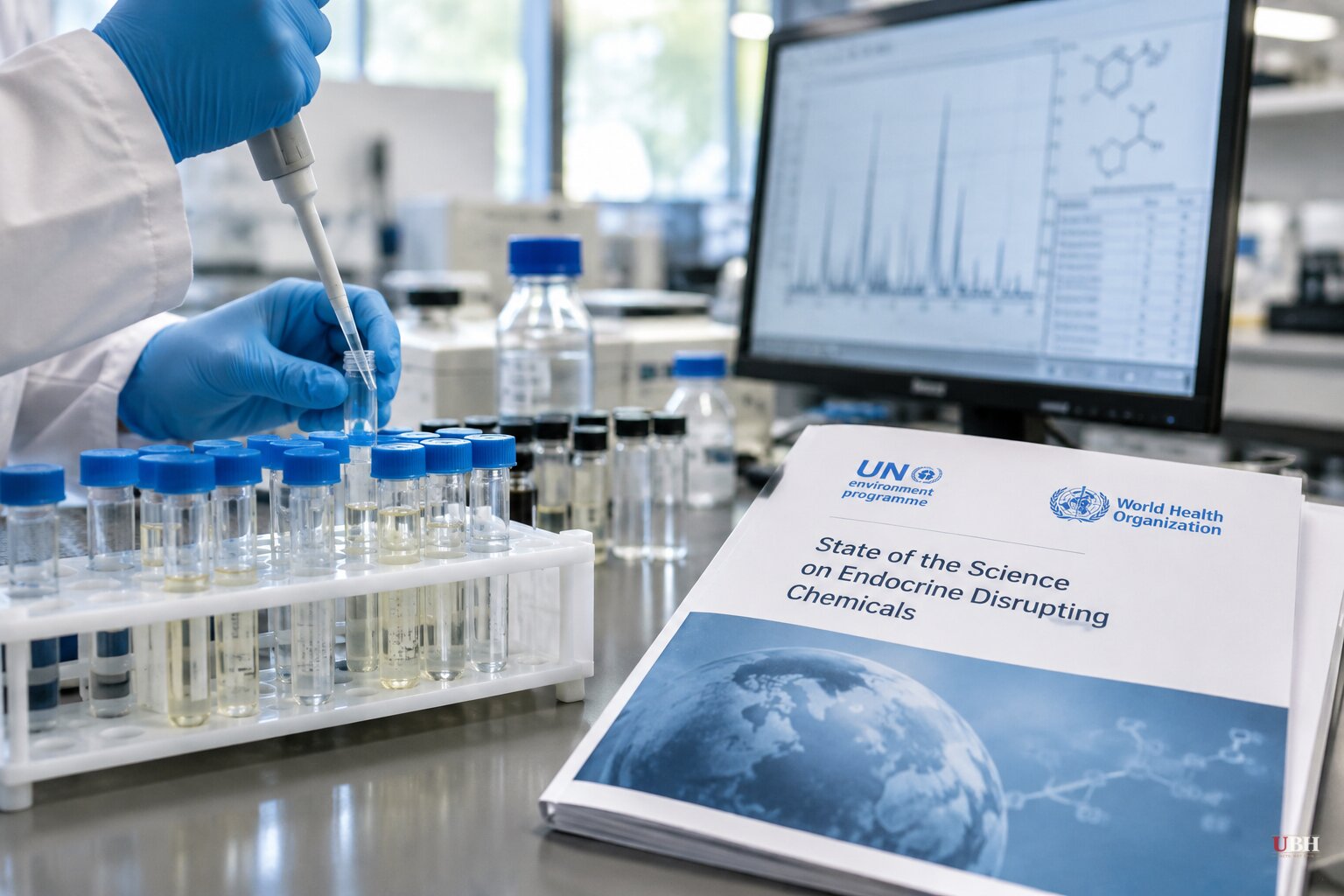
The United Nations says the science on hormone-disrupting chemicals is stronger than it was a decade ago, and the rules governing them haven't kept up.
The UN Environment Program (UNEP) and the World Health Organization released a "state of the science" report today, Nov. 17, on endocrine-disrupting chemicals, or EDCs. The report estimates that health costs tied to exposure exceed $1.1 trillion a year worldwide. That figure is the report's own estimate.
Where the chemicals show up
EDCs are found in plastics, personal care products, pharmaceuticals, toys, household goods, electronics and pesticides. People take them in by swallowing, skin contact and inhalation. Medical devices used during procedures are another route. Children can also be exposed by mouthing toys that contain them.
The chemicals have been detected in breast milk and umbilical cord blood. The report says exposure before birth and in early life can affect neurodevelopment, cognition and behavior.
It also links EDCs to cancer, cardiovascular disease, obesity, type 2 diabetes and metabolic liver disease. Reproductive organs, fertility and thyroid function are also affected, according to the report.
What changed since 2012
UN assessments of EDCs came out in 2002 and 2012. This one covers what scientists have learned since.
Laura Vandenberg, one of the lead authors, contributed to the 2012 report as well. She said that when it was published, there was a lot of evidence of harm, but it did not necessarily point in the same direction at the same kinds of health effects.
The new report says the evidence linking exposure to disease "is strong and continues to grow."
Jacqueline Alvarez, chief of the UNEP Chemicals and Health Branch, said the field has advanced in the breadth of health effects documented, in the sophistication of exposure science, and in testing and assessment methods. She also cited a growing understanding of the socioeconomic costs of regulatory inaction.
"What makes EDCs particularly concerning is that they can disrupt hormones that regulate many essential functions in both humans and wildlife, from development and reproduction to metabolism and behaviour," said Sheila Aggarwal-Khan, director of UNEP's Industry and Economy Division. "These effects can be long-lasting, and in some cases, irreversible."
The policy ask
The two UN bodies say policies and regulations aimed at the products and sectors responsible for widespread exposure remain "fragmented and insufficient." They call for urgent, coordinated international action.
In the foreword they wrote: "Solutions do exist. Some safer alternatives are available. The task for policymakers is to ensure that these solutions and alternatives are deployed."
The report is advice to governments. It carries no enforcement power, and no country is bound by it. Any change would have to come through national and regional lawmaking, such as the patchwork of EU chemicals and sector-specific legislation the report calls inadequate.
A related U.S. study shows the limits of what is known
A separate study by National Institutes of Health researchers, published in the Journal of Clinical Oncology, looked at two PFAS "forever chemicals," PFOA and PFOS. It used blood samples collected before diagnosis from 1,609 women who later developed breast cancer, compared with 2,269 women who did not.
Women in the highest PFOA group had a 67% higher rate of estrogen receptor-negative breast cancer. In the highest PFOS group the rate was 93% higher. These are relative differences between groups, not an individual woman's chance of developing the disease.
The researchers found no clear association between either chemical and breast cancer overall. Study leader Alexandra White said the work mostly covered older PFAS that have largely been phased out. The replacements tend to be shorter-chain compounds that may be less persistent in the body and environment, but "we know little about how they may influence health outcomes," she said.
That leaves an open question for regulators. Safer alternatives exist, according to the UN bodies, but the health record on some of the chemicals now replacing the old ones is thin. No government has announced a response to the UN report.
Sources used for this briefing
8 links from 8 independent newsrooms (syndicated copies of the same report count once)
These are the sources it draws on, linked so you can verify.


