
Unbiased headlines. Facts, not spin.
Unbiased Headlines is an independently owned news organization. We bring you the facts, not opinions, written fresh from 110+ named sources. Sources linked so you can verify it yourself.
 health
Notable (5/10)
UN Fund Announces $52 Million for Children in Three Crises as Sudan's Aid Shrinks
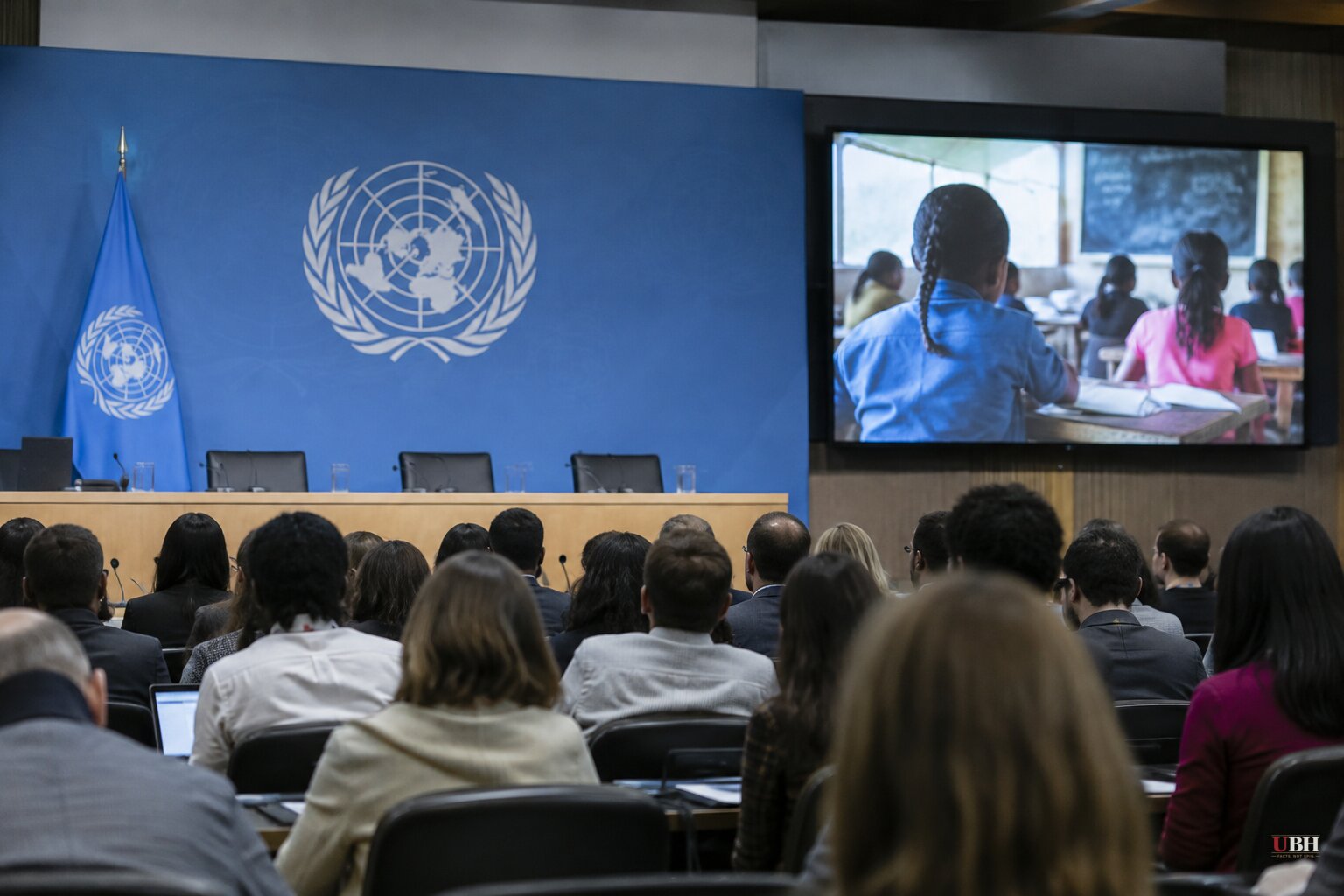
Education Cannot Wait (ECW), the UN's global fund for education in emergencies, announced $52 million on Friday, Nov. 20, to keep more than 300,000 children learning in Lebanon, Myanmar and South Sudan. The announcement came on World Children's Day.
The money lands against a backdrop of war, hunger and shrinking aid.
Where the $52 million goes
ECW director Maysa Jalbout told reporters in Geneva that 258 million children worldwide have their education disrupted by crises.
The split by country:
- Lebanon: $13 million for about 59,000 children. More than 1.1 million people, including over 390,000 children, have been displaced since the conflict escalated in March 2026. The programme is led by Ana Aqra Association and the International Rescue Committee.
- Myanmar: $16 million for roughly 150,000 children and adolescents. Half of them are out of school today, and more than a third have been forced from their homes.
- South Sudan: $23 million for more than 100,000 children. Around 2.8 million children there are out of school. Save the Children International and the national group UNKEA lead the programme.
ECW says local organisations will manage or receive 74% of the funding in Lebanon and Myanmar and 59% in South Sudan. About one in ten children reached has a disability, and at least half are girls.
More than $5 million is set aside as "crisis modifiers" that can be released without a new proposal when agreed early-warning indicators are triggered. "For too long, the world has funded education after each new shock," Jalbout said.
ECW is not fully funded. Jalbout said donors helped the fund reach 90% of its $600 million target at a recent Geneva conference. Another $58 million is still needed for children in other crisis-affected countries.
Sudan: schools gone, and disabled children hit hardest
Sudan's war between the army and the Rapid Support Forces began in April 2023. It is not covered by the new ECW money, but it shows the problem the fund is trying to address.
According to UNICEF, at least 8 million school-age children in Sudan lack access to formal education. As of August, about 30% of the country's schools were not operational. Around 1% were being used as shelters for displaced people.
Children with disabilities are hit hardest. Before the war, Sudan had more than 230 schools for disabled children, according to UNICEF. Many have closed. The exact number is unknown because no current data exists. The Sudanese government did not respond to Al Jazeera's request for comment.
In Khartoum, four-year-old Muzan Abdelrahman has a hearing impairment, and the specialised centres she relies on have closed. Her mother, Abeer Osman, told Al Jazeera she cannot provide the rehabilitation sessions at home. "What frightens me most is that these important years will pass without her getting the opportunity to learn how to communicate and express herself," Osman said.
Fourteen-year-old Mohammed Ahmed has a physical disability. Inaccessible entrances and staircases leave him dependent on others to move around his school. "I want a school where I can access classrooms and facilities independently and with dignity," he told Al Jazeera.
Hunger and a shrinking food pipeline
The World Food Programme says more than 19.5 million people in Sudan face acute hunger, and more than 4 million women and children are acutely malnourished.
WFP fed 4 million people in August. Since then it has been forced to cut nearly a million people from its food and nutrition support because of a lack of funds, the agency said.
Executive Director Luke J. Lindberg visited Goz El Salam displacement camp in Kosti earlier this month, where more than 28,000 displaced people shelter. "The World Food Programme can't outfeed the conflict," he said. "It's time for world leaders to step up and do their part and end this war."
One resident, 37-year-old Samia, is the main breadwinner for her five children and works in the local market. When work is bad, she told Lindberg, breakfast is kisra, a fermented flatbread, and lunch is maybe lentils.
Gaza: a third of recorded violations
Save the Children's annual global report found that one in four children, about 589 million, lived in conflict zones in 2025. That is the highest number documented since the end of the Cold War in 1990. Most are in the Middle East and Africa.
The group said almost one third of the tens of thousands of attacks and violations against children recorded worldwide last year took place in the Palestinian territories. It counted nearly 12,500 cases there, mostly attacks on hospitals and schools and deprivation of aid.
At least 20,000 children have been killed in Gaza, according to local health authorities. Save the Children's regional director, Ahmad Alhendawi, said conditions have shown little improvement this year. "What happened and what continues to happen in Gaza are violations at a scale that we haven't seen," he told The Associated Press.
Israel continues strikes in Gaza despite the October 2025 ceasefire with Hamas. Israel says the strikes, including one on a hospital in Khan Younis last week, target militants and respond to Hamas violations of the ceasefire. Hamas's role in the war's origin is not in dispute: Israel launched the campaign after the Oct. 7, 2023, attacks.
Save the Children also said the number of children in conflict zones is expected to rise this year because of the war in Iran and the wider Middle East and renewed fighting in Lebanon and Yemen in 2026.
What comes next
The ECW programmes are among the first under its new Crisis-Oriented Resilience and Emergency approach, which pairs emergency response with longer-term support in a single grant. Whether pre-positioned money speeds up classroom recovery will only show when an early-warning trigger is tested in one of the three countries.
Funding is the most immediate problem. ECW is $58 million short of its $600 million goal, and WFP has already cut nearly a million people in Sudan from its rolls.
Sources used for this briefing
7 links from 6 independent newsrooms (syndicated copies of the same report count once)
These are the sources it draws on, linked so you can verify.


