
Unbiased headlines. Facts, not spin.
Unbiased Headlines is an independently owned news organization. We bring you the facts, not opinions, written fresh from 110+ named sources. Sources linked so you can verify it yourself.
 health
Major Story (8/10)
U.S. Loses Measles Elimination Status as 5,412 Cases Mark Worst Year Since 1991
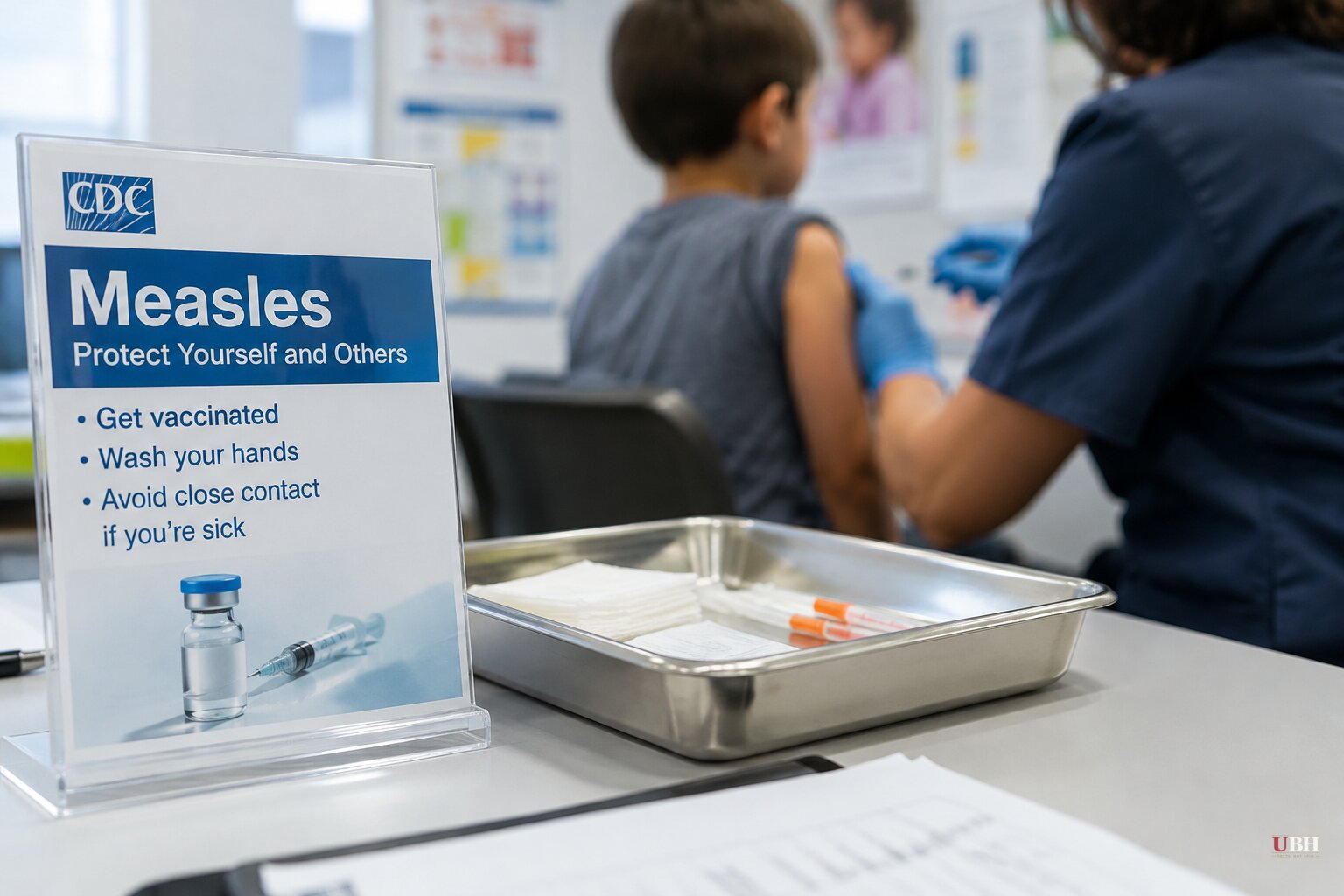
Four days after PAHO's verification commission concluded its Nov. 10-13 review in Washington, the Pan American Health Organization announced on Tuesday, Nov. 17, that the United States has lost the measles elimination status it held since 2000, as outbreaks continue to spread. Mexico and Bolivia lost theirs in the same decision.
PAHO Director Dr. Jarbas Barbosa accepted the commission's recommendation. Under PAHO's criteria, endemic transmission counts as re-established when the same genotype and lineage of the virus circulates uninterrupted for 12 months or more.
The numbers
The CDC reports 5,412 confirmed U.S. measles cases in 2026 through Nov. 12. That compares with 2,289 in all of 2025. It is the highest annual total since 1991.
The country has logged 43 outbreaks this year, including in Pennsylvania and Wisconsin, and the vast majority of cases are tied to outbreaks. Nearly all cases involved people who were unvaccinated or whose vaccination status was unknown.
The death toll depends on the time frame. The Guardian counts eight deaths in 2026. AFP puts the total at at least 12 since the resurgence began in 2025, starting with a Texas Mennonite community outbreak.
Across the Americas, PAHO says 58,213 confirmed cases had been reported as of Nov. 13. Guatemala accounts for more than 34,000 of them, according to PAHO. Daniel Salas, PAHO's immunizations chief, said Guatemala could be put on notice of impending status loss as soon as next month.
The Americas as a whole lost regional elimination status in November 2025 after sustained transmission in Canada. The region had only regained it in 2024. Barbosa said Canada has gone two consecutive months without new cases, but that the streak must hold a full year before its status can be restored.
What Washington says
Health Secretary Robert F. Kennedy Jr. posted on X that the U.S. "will stop measles outbreaks, protect American families, and work to regain U.S. measles elimination status." He said he continues to recommend MMR vaccination as "the most effective way to prevent measles." He also said HHS would for the first time give health care providers guidance to diagnose and treat measles and its complications.
CDC Director Dr. Erica Schwartz played down the designation itself. "The measles elimination designation is not what protects Americans. Vaccination does," she said. The agency has put $100 million into state and local health departments to reach communities where transmission is occurring, she said.
Barbosa, for his part, praised what he called "significant efforts undertaken by the United States," including surveillance, case detection, targeted vaccination and coordination across the health system. He also said the situation demands "urgent action."
The blame fight
Democrats and medical groups put responsibility on the administration. House Minority Leader Hakeem Jeffries called the loss "shameful" and said it was "a direct result" of Kennedy's policies, citing "the vaccine denial, the failure to rely on science." The American Medical Association called it a "deeply troubling and entirely preventable setback." American Academy of Pediatrics President Andrew Racine said the return of endemic measles is "a preventable failure to protect children."
Some of the criticism points to specific statements. Trump has called for the MMR shot to be split into three separate vaccines, saying "together, there could be a possibility they're quite lethal." Kennedy has stressed that the vaccine can cause side effects, that protection wanes over time and that some communities have declined it.
Public health groups also point to vaccination declines that began with the Covid-19 pandemic. The American Academy of Family Physicians said the loss "does not mean the MMR vaccine has stopped working." It said the point is that "we must restore confidence in the safety and efficacy of life-saving public health tools."
The administration has not accepted that it bears responsibility for the loss. Its statements frame the designation as secondary to vaccination and outbreak control.
What changes now
PAHO says measles is once again endemic in the U.S. Isolated cases and short outbreaks do not cost a country its status, but a year-plus chain of transmission does.
Measles can cause pneumonia, brain inflammation, permanent neurological damage and death. Infants too young to be vaccinated and people with weakened immune systems are the most exposed. The CDC does not generally recommend the shot for children under 1 or for pregnant women. Infants 6 months and older in outbreak areas can receive it.
CNN reports that doctors are urging unvaccinated people to get the shot now. Boosters are not typically recommended, but some people may benefit from another dose given how many outbreaks are active.
Countries that lose the status must submit a corrective action plan to PAHO. Barbosa said the U.S. is expected to file its plan in the coming weeks. No timeline for regaining the status has been announced.
Sources used for this briefing
6 links from 6 independent newsrooms (syndicated copies of the same report count once)
These are the sources it draws on, linked so you can verify.


