
Unbiased headlines. Facts, not spin.
Unbiased Headlines is an independently owned news organization. We bring you the facts, not opinions, written fresh from 110+ named sources. Sources linked so you can verify it yourself.
 health
Notable (6/10)
NYU Study: Medicare Negotiation Linked to $57 Drop in Heart-Drug Costs Without Generics, $7 With Them
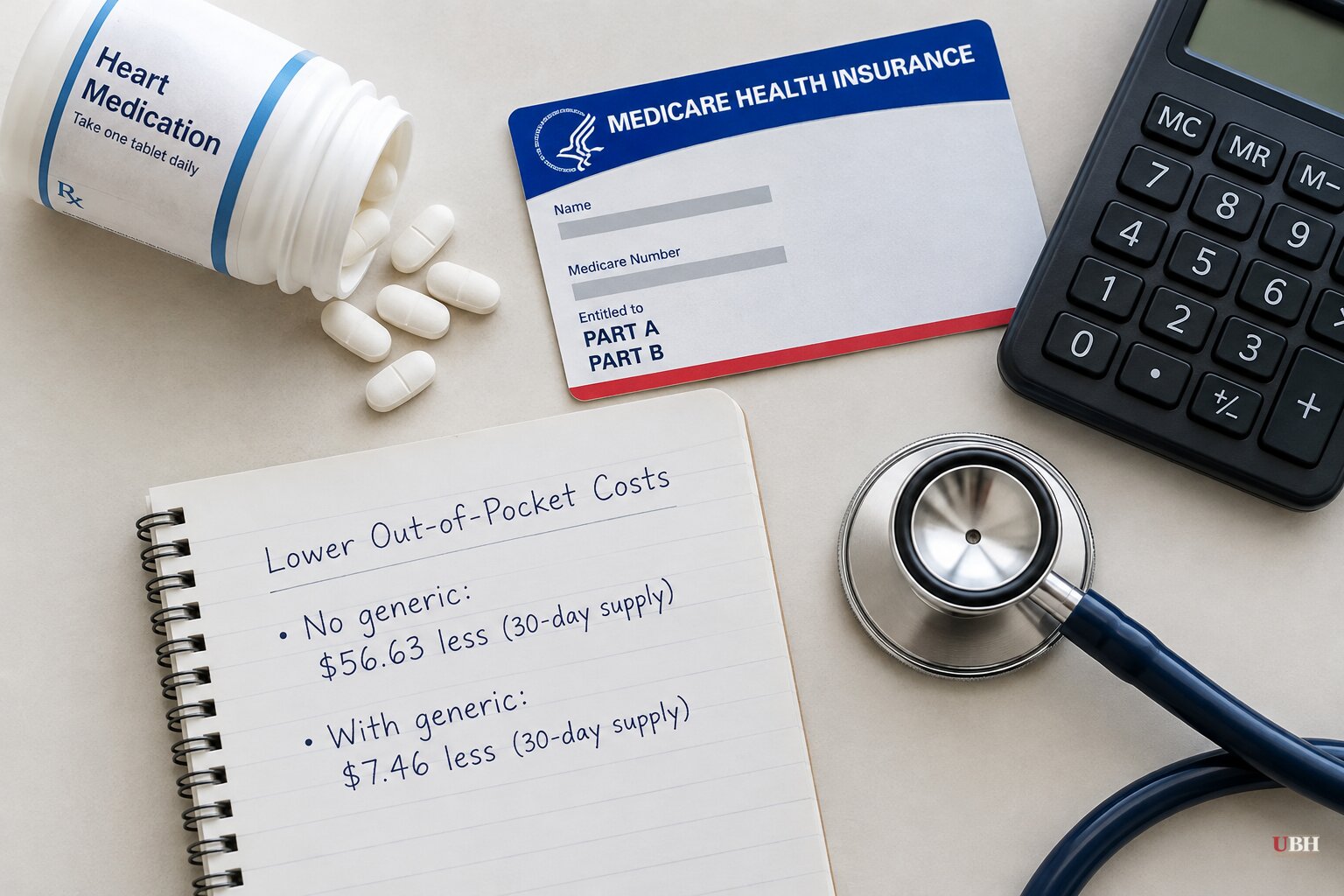
Medicare's first negotiated drug prices cut patient costs far less when a generic was already on the market. That is the central finding of an NYU Grossman School of Medicine study published Nov. 19, 2026, in JAMA Network Open.
For heart drugs with no generic, negotiation was associated with a $56.63 drop in 30-day out-of-pocket costs. For drugs where a generic had already arrived, the drop was $7.46.
The 95% confidence interval for the no-generic estimate is $55.48 to $57.78. For the generic estimate, it is $6.05 to $8.78. The savings with a generic work out to about 13% of the savings without one.
How the study worked
The authors analyzed 6,215 Part D plans: 5,738 Medicare Advantage plans and 477 stand-alone drug plans. They used a difference-in-differences design, comparing changes in cost for negotiated drugs against changes for comparison drugs.
Negotiated prices for the first ten drugs took effect Jan. 1, 2026. The drugs covered by the study's cardiovascular focus include apixaban (Eliquis), rivaroxaban (Xarelto), empagliflozin (Jardiance), dapagliflozin and sacubitril-valsartan (Entresto).
The paper notes that generic versions of dapagliflozin, sacubitril-valsartan and ticagrelor reached plan formularies in the same years negotiation began.
The Entresto timeline
Generic Entresto came first. An AB-rated generic from Novadoz (MSN) launched July 22, 2025, followed on July 24, 2025, by Torrent. That was months before the negotiated price took effect.
The Centers for Medicare & Medicaid Services set the negotiated Entresto price at $295 for a 30-day supply. The other negotiated prices were $231 for Eliquis, $197 for Xarelto and $197 for Jardiance.
Against Entresto's 2023 list price of $628, $295 is a 53% discount. A Leerink analysis dated Aug. 5, 2025, put Cost Plus Drugs' price for 30-day generic sacubitril-valsartan at $62.50, about 90% below that list price.
So a government-set price of $295 sits next to a market price of $62.50 for the same active drug combination. The study does not say negotiation failed. It shows how much room competition had already taken up.
Why a lower Medicare price doesn't always reach the patient
A negotiated price lowers what Medicare pays. What a patient pays depends on plan design.
DLA Piper's analysis found that about 90% of stand-alone Part D formularies charge coinsurance, a percentage of the drug's price, rather than a flat copay for non-specialty selected drugs. Coinsurance falls when the price falls. Flat copays do not.
Patients on flat copays, and those receiving the Low-Income Subsidy, see little or no change from the negotiated price. Part D also caps out-of-pocket spending at $2,100 in 2026. A patient who hits that cap gains nothing from a lower price.
The NYU authors describe the pattern as "a potential missed opportunity for drug selection and timeliness." They point to the program's timing rules: a drug becomes eligible for selection at least seven years after approval, and negotiation can take more than two years.
That structure helps explain the result. By the time a drug is eligible and a price is set, generic competition may already be at work.
What patients face now
Medicare Open Enrollment ends Dec. 7. Anyone choosing a Part D plan for Eliquis, Xarelto, Jardiance, dapagliflozin or Entresto faces a plan-specific answer on cost.
The study's numbers are averages across thousands of plans. Whether a given patient saves $57, $7 or nothing depends on three things: whether a generic exists, whether the plan uses coinsurance or a flat copay, and whether the patient has already reached the $2,100 cap or qualifies for the Low-Income Subsidy.
It remains unclear how the next rounds of negotiated drugs will fare under the same eligibility timeline. The authors' findings suggest that drugs with generics already available will show smaller patient savings than drugs without them.
Sources used for this briefing
1 link from 1 independent newsroom (syndicated copies of the same report count once)
These are the sources it draws on, linked so you can verify.


