
Unbiased headlines. Facts, not spin.
Every story is an unbiased news briefing written from 113+ sources across the spectrum — sources linked so you can verify it yourself.
 health
Major Story (8/10)
Event date: September 27, 2026
health
Major Story (8/10)
Event date: September 27, 2026
WHO Halts Diesel Funding for Gaza Hospitals, Health Ministry Says 70% of Generators Are Down
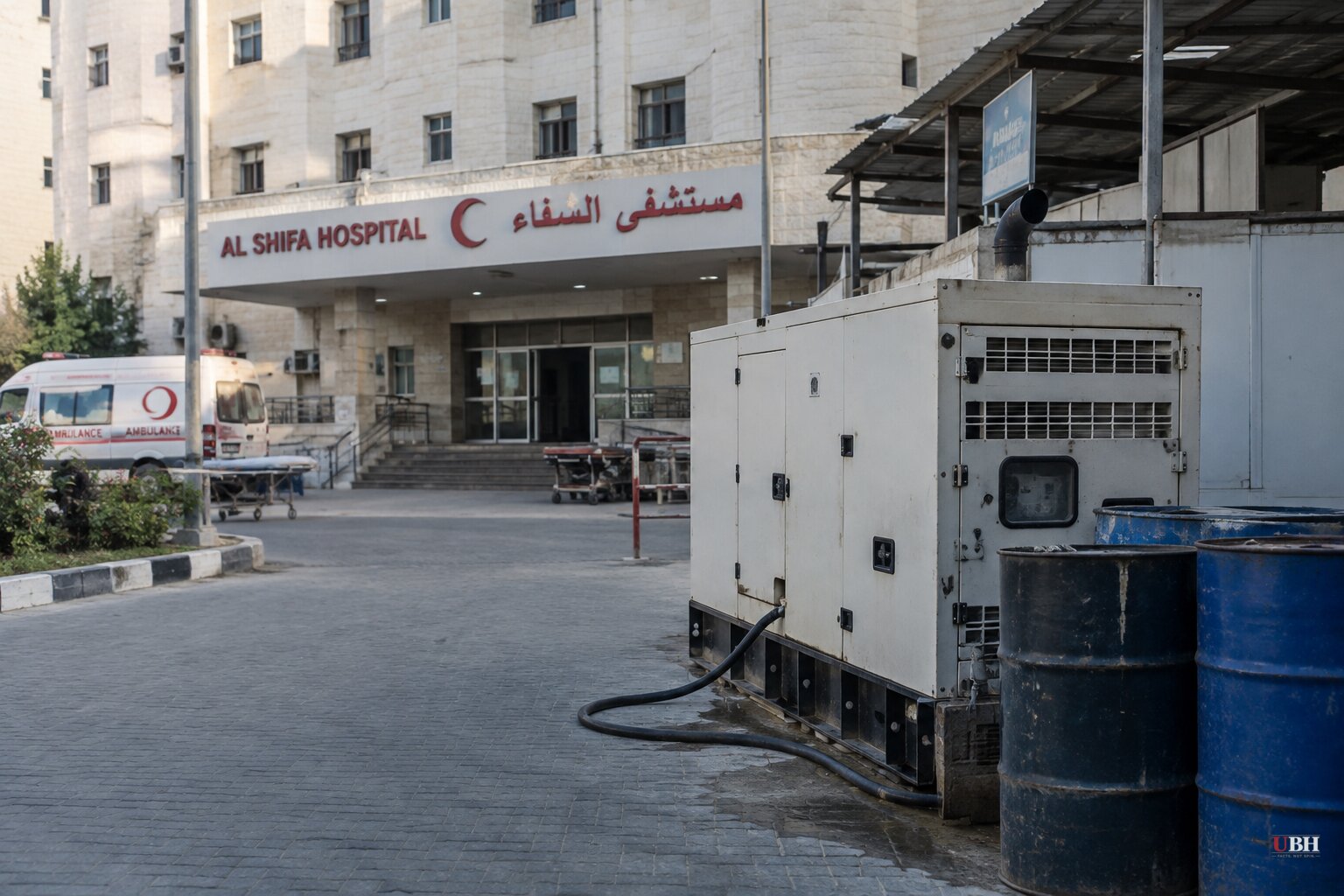
Since the World Health Organization notified more than 20 hospitals and health centers in Gaza on September 19 that it would stop funding their diesel and engine oil, events have accelerated. The Kuwait Specialized Hospital in Khan Yunis closed every department except its emergency ward that same week. Gaza's Health Ministry now says only 19 of the territory's 38 hospitals are functioning at all, and most of those are barely holding on.
Dr. Mohammed Zaqout, director general of hospitals at Gaza's Health Ministry, told The National that about 70 percent of hospital generators are no longer operational. He said Gaza's operating hospitals need 94,000 liters of diesel a month just to maintain a minimum level of service, and that they have not received the full amount in any single month since the war began nearly three years ago. Engine oil is worse: hospitals need roughly 2,500 liters a month to keep generators running around the clock, but Zaqout said recent months have brought only a few hundred liters.
"Electrical generators are the lifeline of hospitals," Mohammed Abu Salmiya, director of Al Shifa Medical Complex in Gaza City, told The National. "Every department depends on them, and any interruption poses a serious threat to patients' lives." Intensive care units, operating theaters, blood banks and laboratory equipment all run off the same failing generators.
Why the Fuel Isn't Getting In
The WHO's funding cutoff cites Israeli restrictions, according to The National. Some of the generators and spare parts hospitals need are classified by Israel as "dual-use" items, meaning they have both civilian and military applications, and require special approval before entry. Israel's stated rationale for restricting these shipments is preventing equipment from being diverted to militant use. None of the reports reviewed include a direct statement from the Israeli government responding to the current hospital shutdowns, so that security rationale is inferred from the dual-use classification itself rather than a fresh on-record Israeli comment.
Gaza's Health Ministry and local authorities argue Israel is failing to meet obligations under the ceasefire agreement that took effect in October 2025, which was supposed to guarantee entry of agreed quantities of fuel and supplies for essential sectors. The Network of Non-Governmental Organizations in the Gaza Strip has gone further, claiming Israel has blocked entry of more than 6,860 fuel trucks since the ceasefire began and that humanitarian aid volume dropped by roughly 80 percent since the start of the U.S. military action against Iran earlier this year. Those figures come from the NGO network's own statement and have not been independently verified in these reports. They should be read as the network's allegation, not a confirmed count.
The Diagnostic Bottleneck
The fuel crisis compounds a separate collapse already underway in Gaza's laboratories. At Al-Aqsa Martyrs Hospital in Deir el-Balah, lab department director Bassem Hassan told Al Jazeera that blood gas testing, critical for cardiac and ICU patients, has been suspended entirely. Blood-collection tubes are running short. Automated clinical chemistry analyzers, which labs rely on for more than 60 percent of their tests, have stopped operating. Sterilization equipment and blood-storage refrigerators are failing too.
Gaza's Ministry of Health says more than three-quarters of medical imaging equipment in the enclave is out of service, laboratory testing material shortages have hit 87 percent, and there's a 74 percent deficit in consumables needed for diagnostic testing. Hassan said his team now prioritizes tests by severity, putting kidney, cancer, heart and ICU patients first, which means other patients wait longer for results that determine their treatment.
Al Jazeera's own reporting characterizes the underlying conflict as a "genocidal war and siege," a framing that is the outlet's editorial language rather than a neutral description drawn from the sourced facts in this story. The measurable, sourced facts are narrower: hospital counts, generator failure rates, fuel-delivery shortfalls, and diagnostic equipment shortages, all attributed to named Gaza Health Ministry officials and hospital directors.
What's Unresolved
No source in this reporting states whether the WHO's diesel funding will resume, or on what terms. Nearly 175,000 people have been injured in Gaza since the war began, according to The National, a caseload that is colliding directly with a health system running on generators that were never built to operate this way for this long. Whether Israel eases the dual-use approval process for spare parts and whether the ceasefire's fuel provisions get enforced going forward remain open questions with no timeline attached in any of the current reporting.
Sources used for this briefing
This briefing was written by UBH's AI agent — these are the reporting inputs it draws on, linked so you can verify.


