
Unbiased headlines. Facts, not spin.
Unbiased Headlines is an independently owned news organization. We bring you the facts, not opinions, written fresh from 110+ named sources. Sources linked so you can verify it yourself.
 energy
Major Story (8/10)
Event date: November 13, 2026 ·
U.S. LNG Feedgas Hits Record Highs as IEA Warns Hormuz Gas Shortage Could Last Into 2027
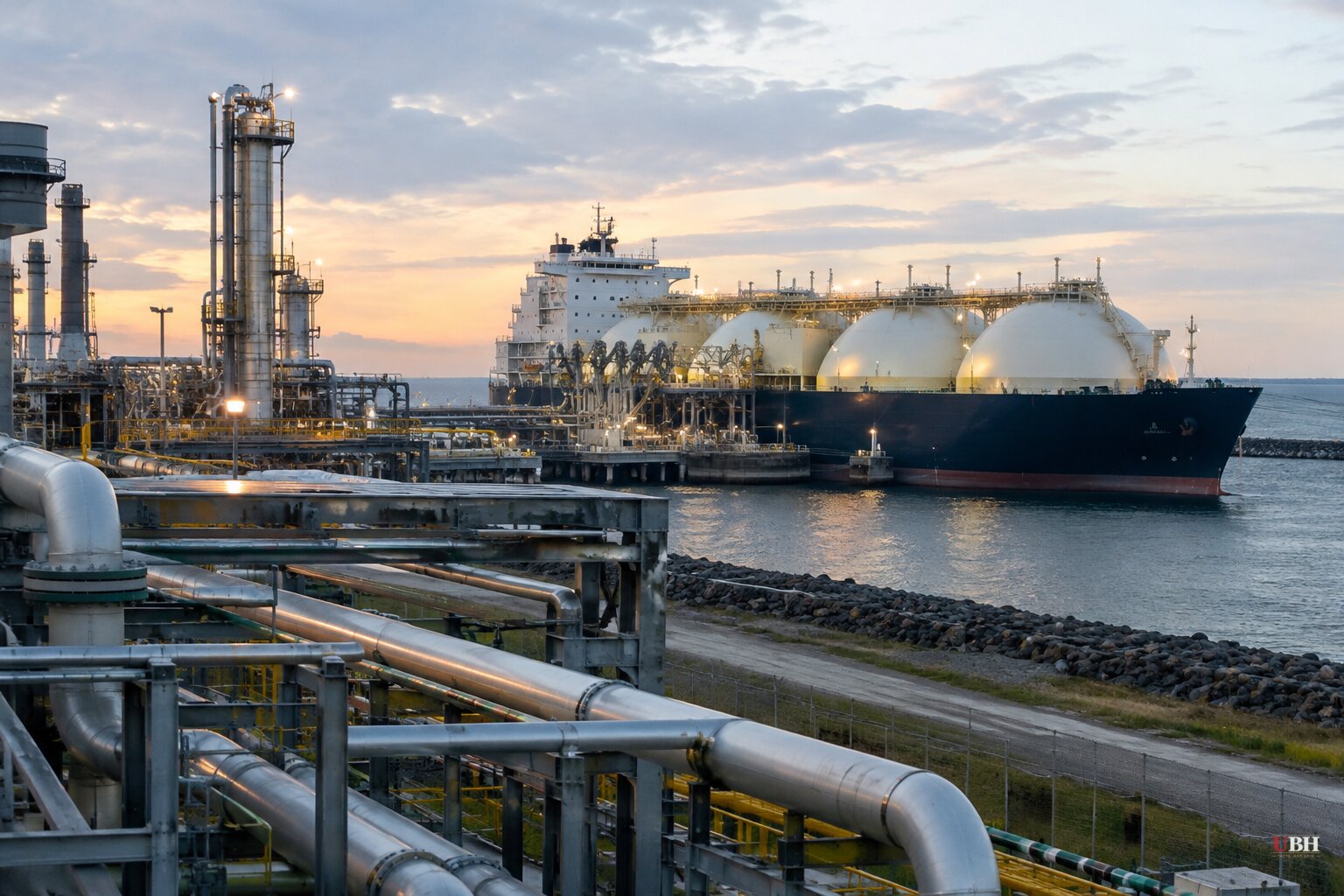
Since the Iran war began in February, attacks on shipping around the Strait of Hormuz have cut Persian Gulf LNG flows. American export plants are running flat out to fill part of the gap.
BloombergNEF estimates pipeline deliveries to U.S. LNG plants hit about 21.8 billion cubic feet per day on a Saturday this month. That is a record and more than 12% above a year earlier. Golden Pass set an all-time high for that plant, and Sabine Pass reached its highest level since April.
An earlier mark came on November 7, when feedgas deliveries reached 20.3 Bcf per day and stayed above 20 Bcf/d for three straight days, according to the American Gas Association. The AGA also says U.S. LNG exports are up more than 18% year over year through October.
The IEA's numbers
The IEA's Global Gas Security Review 2026 puts the hole in the market in concrete terms. LNG shipments from Qatar and the UAE fell by more than 60 billion cubic metres between March and October.
LNG output outside the Gulf rose 14% year over year in that window, adding more than 40 billion cubic metres. That covered roughly two-thirds of the lost Gulf volumes.
The remaining third is a real shortfall. Global LNG production fell 6%, about 20 billion cubic metres, over the same eight months. The agency expects global LNG supply to drop 3% in 2026, potentially the steepest annual contraction on record. That forecast assumes Hormuz disruptions last until at least December.
Shipbroker data point the same way. Banchero Costa counts 344.3 million tonnes of seaborne LNG exported from January through October, down about 2.5% from last year. U.S. cargoes made up just over 30% of that total, or 106.2 million tonnes.
Where American gas is going
The Department of Energy's latest monthly report covers August. U.S. LNG exports that month totaled 514.6 Bcf, or 61.2% of all U.S. natural gas exports, shipped to 33 countries.
Europe took 269.3 Bcf, or 52.3% of the total. Egypt was the largest single destination for the third month running, at 55.9 Bcf.
The five leading destinations accounted for 44.8% of U.S. LNG exports. Total U.S. gas exports were 841.2 Bcf against 239.9 Bcf of imports, leaving 601.3 Bcf of net exports.
Europe's winter exposure
The pressure is showing up in prices. ING's head of commodities, Warren Patterson, wrote in an October 29 note that Europe's TTF benchmark settled 4.85% higher and climbed above €100 per megawatt-hour for the first time since 2022. He saw "little sign of imminent relief in Persian Gulf LNG flows."
Patterson added that the outlook "appears more dire amid the risk of renewed U.S. strikes on Iran following the U.S. midterm elections." That is his assessment. No source in the reporting confirms strikes are planned.
QatarEnergy has extended force majeure on LNG deliveries to most customers through the end of December 2026. The IEA says Europe's depleted inventories mean it may need much higher injections in summer 2027, which would put it in direct competition with Asian buyers.
BigGo's summary of the BloombergNEF data says Asian spot gas prices are roughly triple pre-war levels. European futures are up nearly threefold on a cumulative basis.
What it means at home
American consumers are not seeing the global spike. The December Henry Hub contract settled at $3.22 per MMBtu on November 11, up nearly 13% since November 2. It reached a seven-week high on forecasts of cold weather in central and eastern states through about November 20.
The EIA's November Short-Term Energy Outlook, released November 10, cut its winter average Henry Hub forecast by 16% to $2.87 per MMBtu. It also lowered its 2027 average to $2.88. The agency cited a warm start to November, higher storage and production growth projected to outpace demand and exports.
That gap is the trade-off in an export boom. U.S. production is large enough to feed record export volumes while keeping domestic prices moderate. The EIA's outlook rests on that continuing, and it assumes the weather stays mild.
The industry expects U.S. LNG output could double by the end of the decade. Even so, disruption in the Gulf has pushed back the IEA's forecast of when the market flips to oversupply by at least two years.
The next test is the end of December, when QatarEnergy's force majeure is due to expire. Whether it is extended again will show whether the IEA's assumption of Hormuz disruption through December holds.
Sources used for this briefing
7 links from 7 independent newsrooms (syndicated copies of the same report count once)
These are the sources it draws on, linked so you can verify.


