
Unbiased headlines. Facts, not spin.
Unbiased Headlines is an independently owned news organization. We bring you the facts, not opinions, written fresh from 110+ named sources. Sources linked so you can verify it yourself.
 energy
Major Story (7/10)
Event date: November 2, 2026 ·
U.S. Strategic Petroleum Reserve falls to lowest level since 1982 as Iran war drawdown continues
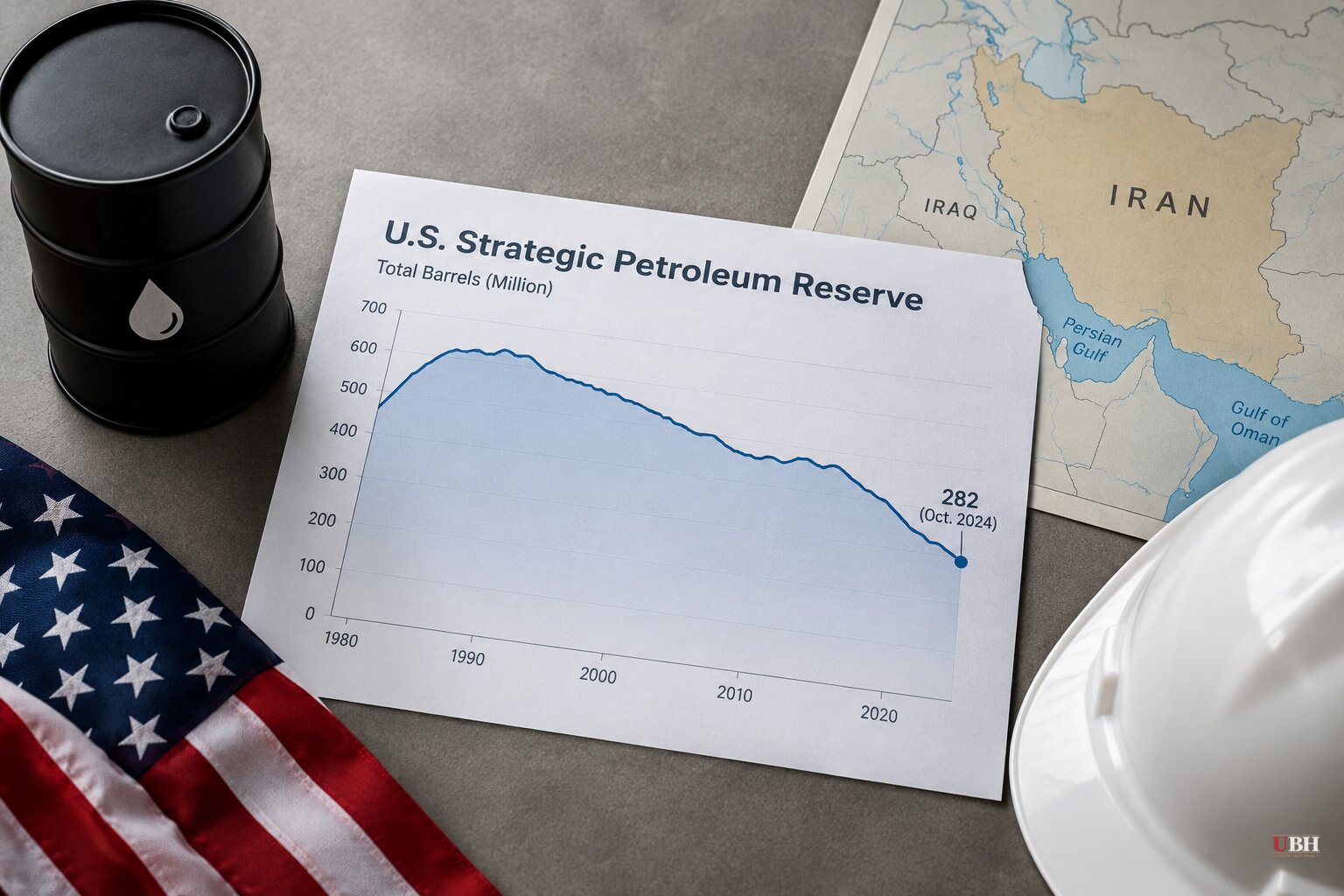
The U.S. emergency oil stockpile is at a 44-year low, and the government has already lined up its final batch of barrels for release.
Energy Department data put Strategic Petroleum Reserve crude stocks at 282.6 million barrels in the week reported Oct. 26, the lowest since October 1982. A later weekly reading, reported Nov. 2, showed 282.2 million barrels. The last time the reserve was lower was the week ending Oct. 15, 1982, at 280.802 million barrels.
How fast it drained
The reserve held 415.442 million barrels in the week ending March 6. By the week ending Oct. 16 it was at 282.683 million. That is a drop of about 133 million barrels, or roughly 32%, in about seven months.
The cause is a committed release of 172 million barrels. That is the U.S. share of a global agreement to control fuel prices after the U.S. and Israel started the war on Iran on Feb. 28.
The government said in late October that oil companies had agreed to borrow about 40 million barrels from the reserve. That is the last batch of the U.S. share of the deal.
The department also approved an emergency exchange of up to 400,000 barrels to cover a disruption at a Phillips 66 facility in Lake Charles, Louisiana.
The reserve had been growing before the war. It stood at 394.566 million barrels in January 2025 and rose until the release began.
Prices today
Brent crude traded at $96.68 a barrel as of 7:30 a.m. Eastern today, Nov. 16, according to Fortune's morning price check. That is 42 cents below yesterday morning and about $32.60 above a year ago.
It is well off late October levels. On Oct. 26, Brent settled at $115.81 and WTI at $101.76.
At the pump, AAA data show regular gasoline averaged $4.2858 a gallon on Oct. 26. That was up about 40% from $3.0532 a year earlier. It was down from $4.4874 a month earlier and below the all-time record of $5.0165 set June 14, 2022.
Diesel is the harder hit. It has averaged $4.343 during Trump's current term, against $4.078 under Biden, and set a record of $6.5276 on Sept. 22.
Regular gasoline has averaged $3.472 a gallon this term, against $3.471 under Biden. That is a gap of one-tenth of a cent.
The political cost
The Center for Research on Energy and Clean Air, a Finland-based nonprofit that advocates moving countries off fossil fuels, estimates U.S. consumers have paid an extra $471 each for fuel since the war began. It puts the worldwide figure at about $60 per person. Americans account for $160 billion of the $468 billion in extra spending across the 169 countries it studied. Those are the group's estimates, not government figures.
Voters are registering it. Trump's approval stood at 31% in a Reuters/Ipsos poll published Oct. 19. Year-ahead inflation expectations in that poll rose to 4.7%, from 3.4% in February.
The White House says the pain is temporary and tied to the war. Spokeswoman Taylor Rogers said: "Once this conflict comes to an end, gas prices will drop drastically."
The administration's case has some numbers behind it. Regular gasoline is below its 2022 peak and has come down from its late-September level. The reserve release was a coordinated international move, not a unilateral drain.
Trump's own words at an Oct. 24 rally in Perry, Georgia, cut the other way. He said the U.S. profits from the war even as drivers struggle at the pump: "I don't give a damn, I'm gonna say it: We're making a frickin' fortune." The White House has not reconciled that line with its message that prices are a wartime burden.
What the low level means
The reserve exists to cover supply shocks, so its size is a measure of how much buffer Washington has left. Its stated purpose is energy security in a disaster, whether sanctions, storm damage or war. It is a stopgap for consumers and critical services, not a long-term price fix.
The war is a supply shock of exactly that kind, and the buffer is now at a level not seen since the Reagan administration. Oil is also still about 50% above its year-ago price.
The refill is still unresolved. The 40 million barrels lent to oil companies are the last scheduled tranche of the 172 million barrel commitment. Rebuilding the stockpile would mean buying back crude, and the White House has tied lower fuel prices to the end of the war. No end date for the conflict has been offered.
Sources used for this briefing
4 links from 4 independent newsrooms (syndicated copies of the same report count once)
These are the sources it draws on, linked so you can verify.


