
Unbiased headlines. Facts, not spin.
Unbiased Headlines is an independently owned news organization. We bring you the facts, not opinions, written fresh from 110+ named sources. Sources linked so you can verify it yourself.
 energy
Major Story (7/10)
WTI settles at $85.39 and Brent at $92.44 as Hormuz shipments recover and IEA flips to a Q4 surplus
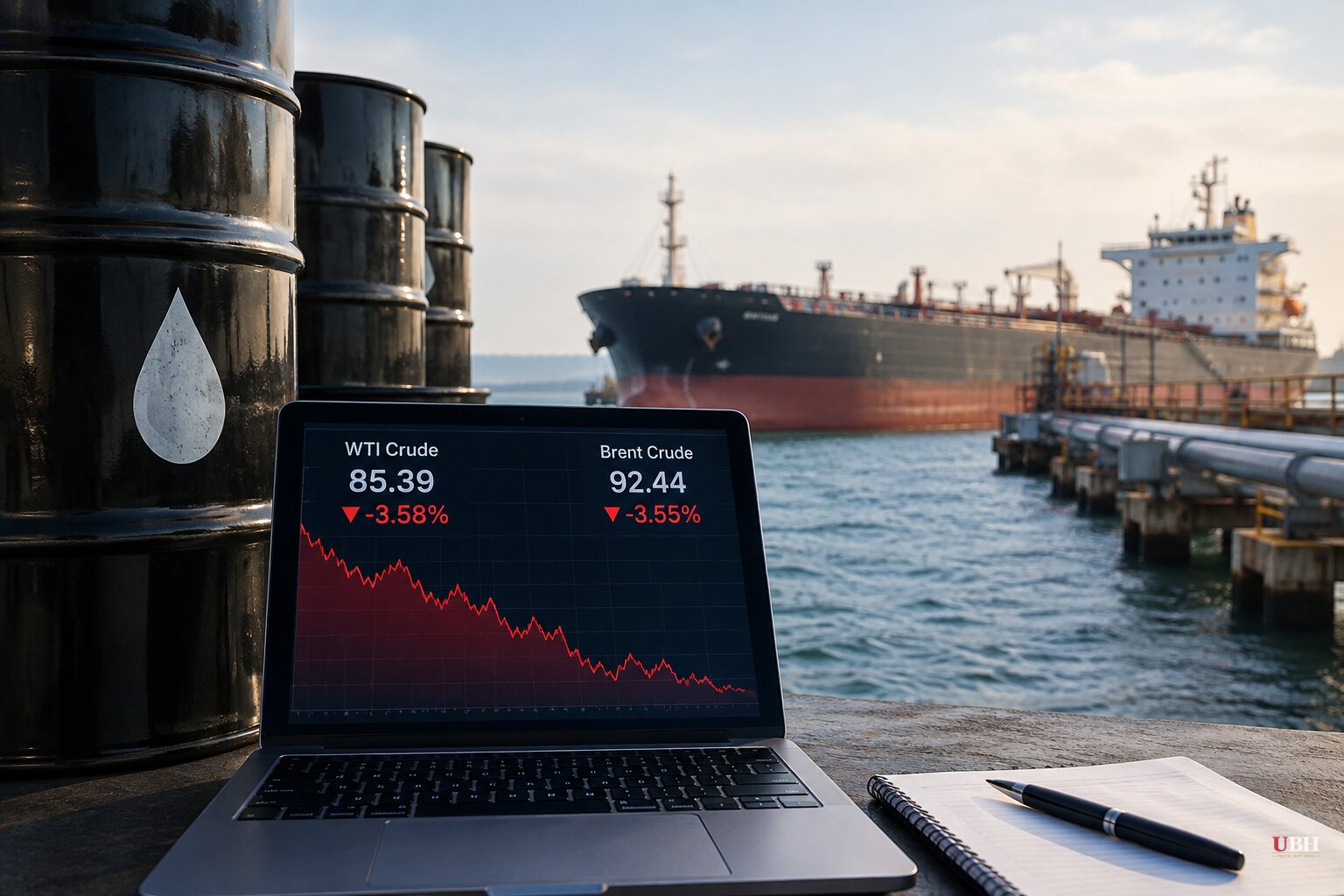
U.S. crude settled lower Monday, Nov. 16, as oil moving out of the Middle East picked up and the International Energy Agency (IEA) swung from forecasting a shortage to forecasting a glut.
West Texas Intermediate futures settled down 3.58% at $85.39 a barrel. Brent fell 3.55% to $92.44.
The moves came with shipments through the Strait of Hormuz recovering and tensions between Iran and the United States still unresolved.
The IEA reverses course
The IEA said Friday, Nov. 13, that it now expects global supply to exceed demand in the fourth quarter of 2026 by 1.7 million barrels a day. That reverses its earlier forecast for a deficit.
The agency said Middle East exports are coming back faster than global demand, even as attacks on shipping continue.
Russia is adding barrels too. The IEA put Russian crude output at 8.73 million barrels a day in October, up 210,000 barrels a day from the prior month.
Goldman Sachs said in a Sunday note that it expects Brent to average $88 a barrel in 2027 and fall to $78 by December 2027 as the market slides back into surplus. The bank expects Middle East supply to climb above its 2025 average as producers use ship-to-ship transfers and add pipeline capacity.
Where prices were two weeks ago
The drop looks bigger against early November. On Nov. 2, WTI was down 7.24% at $96.58 at 12:28 p.m. ET, with Brent near $104.93, after reports of renewed peace talks with Iran. That is a midday print, not a settlement, so the comparison is rough. Even so, WTI is about $11 lower.
Crude was still up about 70% for the year at that point.
Secretary of State Marco Rubio told reporters at the time that President Donald Trump would rather settle things with Tehran peacefully. "What the president expresses to you is incredible confidence that if we needed to do something militarily, we would have the ability to do it, and we really have everything we need to be successful," Rubio said. "But we would prefer to do it peacefully."
Iranian Foreign Minister Abbas Araghchi said, according to the state-run Islamic Republic News Agency, that a deal was possible if the United States "demonstrates goodwill."
Trump told Right Side Broadcasting Network on Nov. 1 that the eight-month-old war would end soon. "Either they'll make a deal, or we'll just end it," he said.
The risk side has not gone away
Not everyone treats the supply picture as settled. ING's commodity strategists wrote in a Nov. 1 note that the oil market was "increasingly bracing for the potential for more hostilities between the US and Iran." Their question was whether investors would keep pricing in that risk or start dialing it back.
The disagreement inside the alliance matters too. Israeli outlet Ynet reported a heated phone call in which Prime Minister Benjamin Netanyahu pressed Trump to resume strikes on Iran while Trump favored letting talks continue. Netanyahu's office denied the call was confrontational. A senior Israeli official confirmed the call happened but said it was "very much not a difficult conversation."
The White House told Fox News Digital that "the greatest naval blockade in history, Operation Economic Outcast, and the new Operation Iron Gate will continue with full effect." It added that Trump "holds all the cards."
The Financial Times has separately reported that Netanyahu has been calling Trump daily to push for a resumption of the war.
Pump prices lag crude
Retail prices were still elevated when last measured. AAA put the national average for gasoline just under $4.17 a gallon on Nov. 2, down more than 20 cents from a month earlier. Diesel averaged about $6.29, down about 8 cents.
Diesel has another pressure point beyond the Gulf. Russia and Ukraine have escalated attacks, including strikes on Russian refining infrastructure, and the Epoch Times reported that global diesel and gasoil supplies are tightening. A crude surplus does not automatically fix a distillate squeeze.
What to watch
The surplus forecasts from the IEA and Goldman depend on Gulf exports continuing to recover while shipping attacks go on. Iran and the U.S. have not announced a deal, and Araghchi's goodwill condition remains the stated Iranian position. If Hormuz flows hold and talks continue, the forecasts point to lower crude into 2027. If strikes resume, the IEA's surplus estimate would be tested first.
Sources used for this briefing
7 links from 7 independent newsrooms (syndicated copies of the same report count once)
These are the sources it draws on, linked so you can verify.


