
Unbiased headlines. Facts, not spin.
Unbiased Headlines is an independently owned news organization. We bring you the facts, not opinions, written fresh from 110+ named sources. Sources linked so you can verify it yourself.
 energy
Major Story (7/10)
Event date: November 14, 2026 ·
Venezuela Oil Sales Hit $12.26 Billion, 99% Returned, as Rystad Warns a Democratic Congress Could Delay Long-Term Output
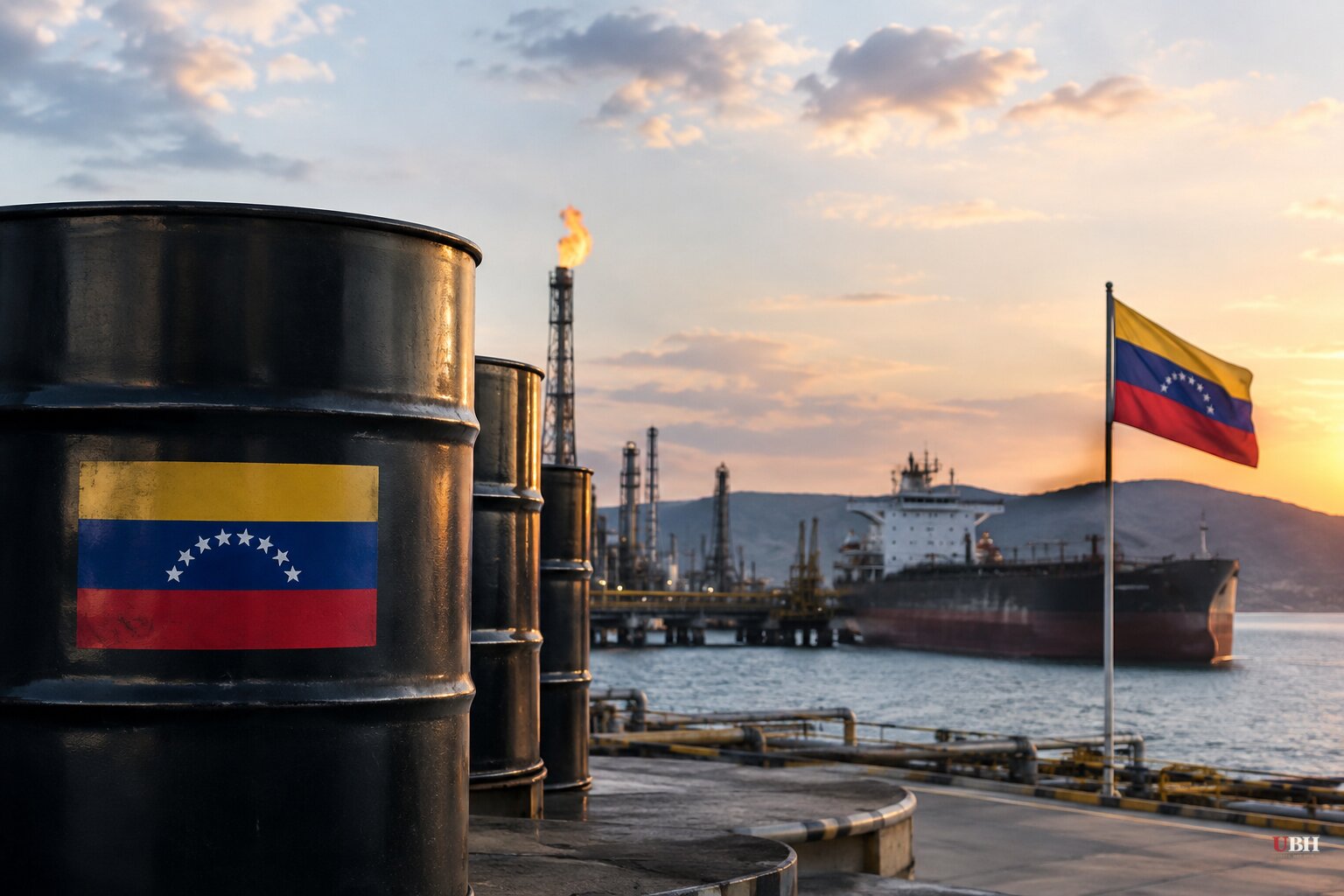
Since U.S. forces captured Nicolás Maduro in January and took effective control of Venezuela's oil sales, the money and the barrels have both started moving. Now the numbers are in, and so is a forecast of how Washington's next political phase could affect them.
Where the oil money went
A report released Thursday by the State Department, prepared by the accounting firm KPMG, puts proceeds from Venezuelan crude, plus minor amounts of gold, minerals and fertilizer, at $12.26 billion. Almost 99% has been returned to Venezuela under the energy deal with the country's interim authorities.
As of Sept. 30, the end of the 2026 budget year, $168.6 million remained in an escrow account managed by the U.S. Treasury.
The mechanics are simple. Crude is sold on the open market and the proceeds go into the U.S.-managed account. Venezuelan officials then request approval to release funds for infrastructure and humanitarian needs.
Most of the money went to individuals and businesses in Venezuela through foreign exchange transactions with commercial banks. About $133 million paid directly for services or supplies for the Venezuelan government.
Approved transactions include $5 million for the Miami law firm Greenberg Traurig, nearly $24 million for dialysis and coal-mining equipment, and $8.7 million to settle Venezuela's vaccine-procurement debts with the Pan-American Health Organization.
The report redacts the names of the 20 companies that bought oil and gold in the first nine months of 2026. Each went through U.S. vetting for sanctions and money-laundering compliance, according to the report. That is a break from past practice, when Venezuela's government faced little scrutiny over its oil funds.
Who those 20 buyers are has not been disclosed.
What the midterms change
Democrats won both chambers of Congress in the 2026 midterms, which limits President Trump's domestic agenda from January 2027. Foreign policy mostly stays with the president.
Rystad Energy analysts Radhika Bansal, Jorge León and Kartik Selvaraju say the near-term recovery is unlikely to be derailed. It is driven by well reactivations, workovers and infill drilling, which need fewer new approvals. Rystad projects output rising from roughly 1.2 million barrels per day in October 2026 to around 1.5 million by 2028.
Rystad also notes that sanctions implementation and licensing by Treasury's Office of Foreign Assets Control remain largely under executive control, which limits what a Democratic Congress can change directly.
The longer horizon is less certain. Rystad's upside scenario has Venezuela approaching 3 million bpd by 2040, assuming stronger prices and continued policy support. After the election, the firm added a sensitivity: heavier congressional scrutiny could delay selected greenfield projects by one to three years, pushing about 0.5 million bpd of potential 2040 production further out.
Scrutiny of one operator
Rystad points to North American Blue Energy Partners (NABEP) as an example. Its three production participation contracts have lifted combined output from roughly 90,000 bpd at the end of 2024 to nearly 200,000 bpd, led by the Petrozamora field.
According to Rystad, Democratic lawmakers are already asking questions about how NABEP was selected and about the legal basis for its agreements. The analysts say such challenges could complicate Venezuela's ability to attract the investment needed for longer-term growth. The sources do not detail the lawmakers' specific allegations, and no finding of wrongdoing has been reported.
Majors weigh in, but the street feels little
ExxonMobil has taken a step toward returning almost 20 years after Venezuela nationalized its projects. In January, days after Maduro's capture, its chief executive called the country "uninvestable." NPR's Manuel Rueda reports from Caracas that Exxon is, for now, only researching drilling possibilities.
Chevron, which never left, recently announced a $7 billion investment over five years and said it will double its Venezuelan output.
Rueda points to two drivers. Venezuela's interim government overhauled its petroleum law this year so that private companies based in the country can operate fields themselves and take disputes to international arbitration. And Luisa Palacios, a former oil executive now at Columbia University's Center on Global Energy Policy, says Venezuela looks attractive as "a diversification play" given "very high oil prices and high uncertainty about future sources of supply" tied to the Middle East.
On the ground, little has changed. Rueda says many places still face daily power cuts. Wassim Richani, who owns a furniture store in Valencia where power goes out for up to six hours a day, told him: "Right now we don't see these deals affecting in the economic. I think in the near future, yeah, they will."
The strategic objection
Not everyone sees the rebuild as a clear win. Venezuelan analyst Martín Rodríguez Rodríguez, in his new book Petróleo y revolución, argues that Hugo Chávez's oil diplomacy was a coherent grand strategy that largely achieved its aims against the U.S., even as it wrecked the Venezuelan economy.
A review of the book in Caracas Chronicles draws the implication: if Washington succeeds in restoring the industry under interim leader Delcy Rodríguez, it could rebuild the instrument Chávez used against it. The review says Rodríguez's cooperation under military pressure and economic necessity may not survive once those constraints ease. It does not claim she is preparing to revive Chávez's foreign policy.
What comes next
The next test is January 2027, when the Democratic Congress is seated. Rystad's 1.5 million bpd forecast for 2028 depends on brownfield work that needs no congressional sign-off. The roughly 0.5 million bpd of delayed greenfield output depends on whether lawmakers' questions about operators like NABEP turn into formal challenges.
Sources used for this briefing
7 links from 6 independent newsrooms (syndicated copies of the same report count once)
These are the sources it draws on, linked so you can verify.


