
Unbiased headlines. Facts, not spin.
Unbiased Headlines is an independently owned news organization. We bring you the facts, not opinions, written fresh from 110+ named sources. Sources linked so you can verify it yourself.
 energy
Major Story (8/10)
Event date: November 12, 2026 ·
Ukraine Says It Has Hit All Five of Russia's Largest Refineries Since Oct. 30 as Fuel Rationing Spreads to Three Regions
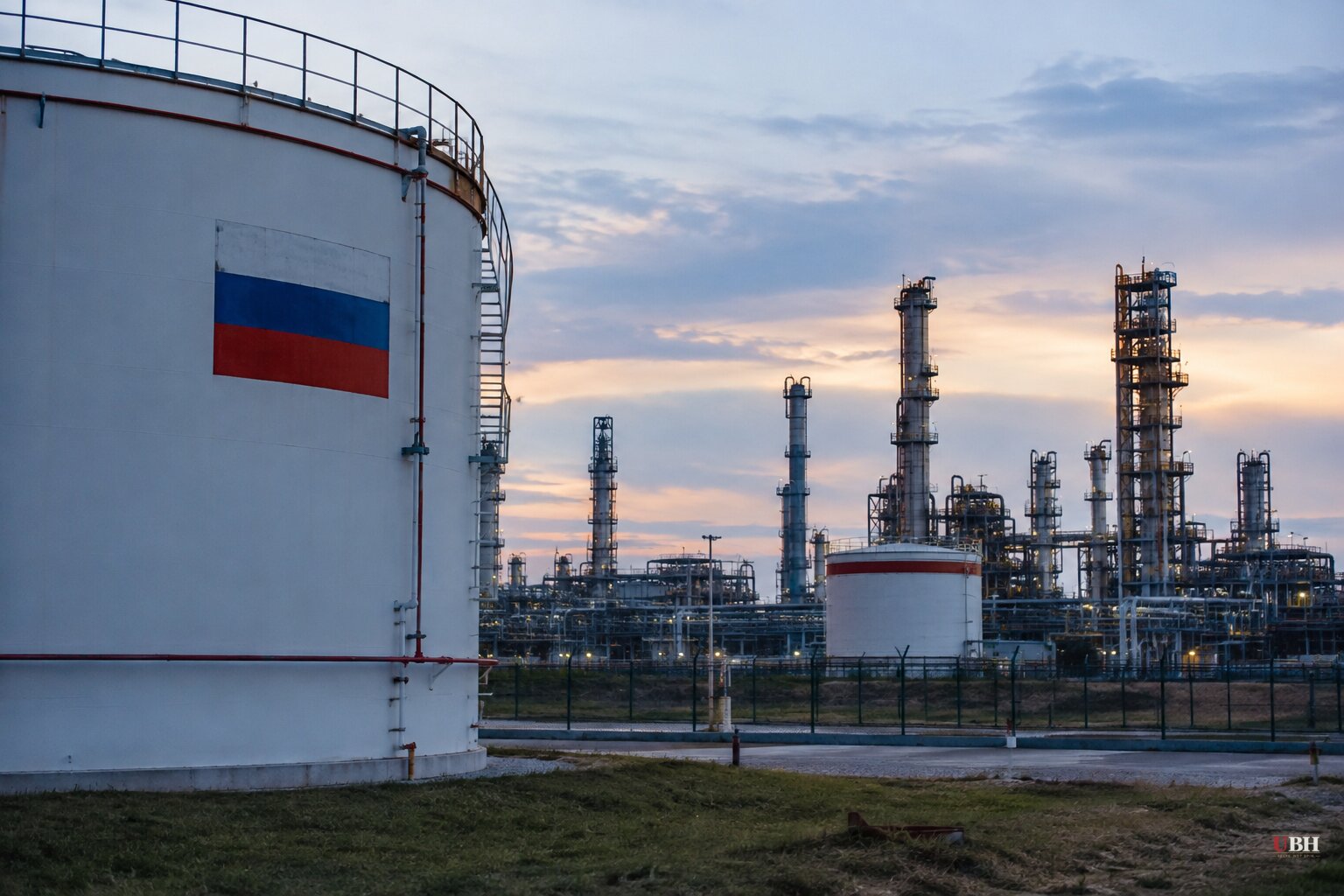
Since Ukraine resumed its refinery campaign on Oct. 30, Kyiv's General Staff says it has hit all five of Russia's largest oil-processing plants, and the effects are showing up at Russian gas pumps and in the casualty lists.
The strikes
The General Staff said Thursday that Ukrainian forces targeted at least nine refineries between Oct. 30 and Nov. 11. The five it called the most powerful in Russia are Omsk, Kirishi, Ryazan, Nizhny Novgorod and Yaroslavl. It also listed Novokuibyshevsk, Ufa, Saratov and Afipsky.
The latest hit was Omsk, in Siberia, about 2,500 kilometers (1,550 miles) from the Ukrainian border. Ukraine's Special Operations Forces said they struck it Nov. 11 for the third time, after earlier attacks in July and October. Omsk processes more than 21 million metric tons of crude a year. The Special Operations Forces say it is also Russia's only producer of catalysts used in secondary oil processing, which other refineries depend on.
On the night of Nov. 9, Ukraine hit the Kirishi refinery in the Leningrad region, which the General Staff says handles about 20 million tons a year, more than 6% of Russian capacity. Leningrad Governor Alexander Drozdenko confirmed the attack. The General Staff said it damaged a crude distillation unit and two cooling installations. On Nov. 7, Ukraine hit Saratov, a 7-million-ton plant. The Ukrainian military says that strike forced the refinery to suspend operations.
Ukrainian arms maker Fire Point puts the combined capacity of the targeted plants at more than 120 million tons a year, about 36% of Russia's total. That is a company figure, not an independent one. In July, the General Staff claimed it had knocked 43% of Russian refining capacity offline.
Volgograd deaths
The campaign continued overnight into today, Nov. 13. Volgograd Governor Andrei Bocharov said four workers were killed and two injured when Ukrainian drones hit the city's southern industrial zone. He first reported only debris-sparked fires with no casualties, then revised that later in the morning.
The exiled outlet Astra identified the site as Lukoil's Volgograd refinery, the largest in southern Russia, with capacity of about 14.8 million tons. It was previously hit on Oct. 2. Bocharov blamed "the criminal Kyiv regime" for the deaths.
Russia's Defense Ministry said it intercepted 1,198 Ukrainian drones overnight over Russian regions and annexed Crimea. Ukrainian authorities said Russian attacks the same night set a hospital ablaze and killed at least three people.
Rationing
Russian officials are openly limiting fuel sales. Kommersant reported Nov. 9 that Rosneft capped purchases at its stations in Krasnoyarsk at 50 liters of standard gasoline, 30 liters of premium and 100 liters of diesel, and banned canister sales. The regional trade ministry said other major chains had not imposed limits.
Karelia head Artur Parfenchikov announced caps of 30 liters of gasoline and 50 liters of diesel at Rosneft highway stations on Nov. 8. He said the aim is "to prevent panic buying" and ensure even distribution. Drozdenko set the same limits in Leningrad region on Nov. 9.
Russia's average gasoline price stood at 98 rubles per liter as of Nov. 2, up about 16% since January. Local media in Volgograd reported drivers lining up at stations today after prices rose 50 kopeks per liter overnight.
The rationing follows a lull in late October. Kyiv Post, citing context from the Ukrainian side, ties that pause to U.S. pressure on Kyiv. Zelensky said in a Nov. 6 post that the strikes continue "in response to Russian strikes on Ukrainian energy facilities." He said they would create "motivation for real negotiations." Russian drones also hit the Nizhyn Fat and Oil Plant in Chernihiv region on Nov. 10, and Ukraine says Russian missiles and Shahed drones keep hitting its power plants, heating systems and water supply.
Talks widen to European security
The strikes come as U.S.-led diplomacy shifts shape. Envoys Steve Witkoff and Jared Kushner spent hours with Vladimir Putin in Moscow on Thursday, then flew to Dublin to meet Zelensky. Earlier this week, U.S., Russian and Ukrainian delegations were due to meet in Abu Dhabi. Kushner said the aim was to "identify areas of common ground" and "build momentum toward the next phase of negotiations."
Russian Foreign Minister Sergey Lavrov said Washington had put "collective security" at the top of the agenda, covering more than Russia and Ukraine. The Washington Post reports that U.S. and Russian negotiators have now added the post-Cold War European security arrangements to the discussion. That is a change Moscow has long sought. It has alarmed European leaders and raised questions about NATO's future role.
Moscow has insisted Europe will not sit in the three-way talks. Europe's governments are therefore being asked to accept the outcome of a settlement that touches their own security architecture, negotiated without them.
No date has been announced for another round. It is unclear whether Ukraine's strikes on Russian fuel supply and the widening agenda in the talks will move Putin, or only harden positions on both sides.
Sources used for this briefing
6 links from 6 independent newsrooms (syndicated copies of the same report count once)
These are the sources it draws on, linked so you can verify.


