
Unbiased headlines. Facts, not spin.
Unbiased Headlines is an independently owned news organization. We bring you the facts, not opinions, written fresh from 110+ named sources. Sources linked so you can verify it yourself.
 energy
Major Story (7/10)
Event date: November 6, 2026 ·
Chicago Fed's Goolsbee Warns Oil, Tariff and Demand Shocks May Not Fade as October Prices Rise 0.4%
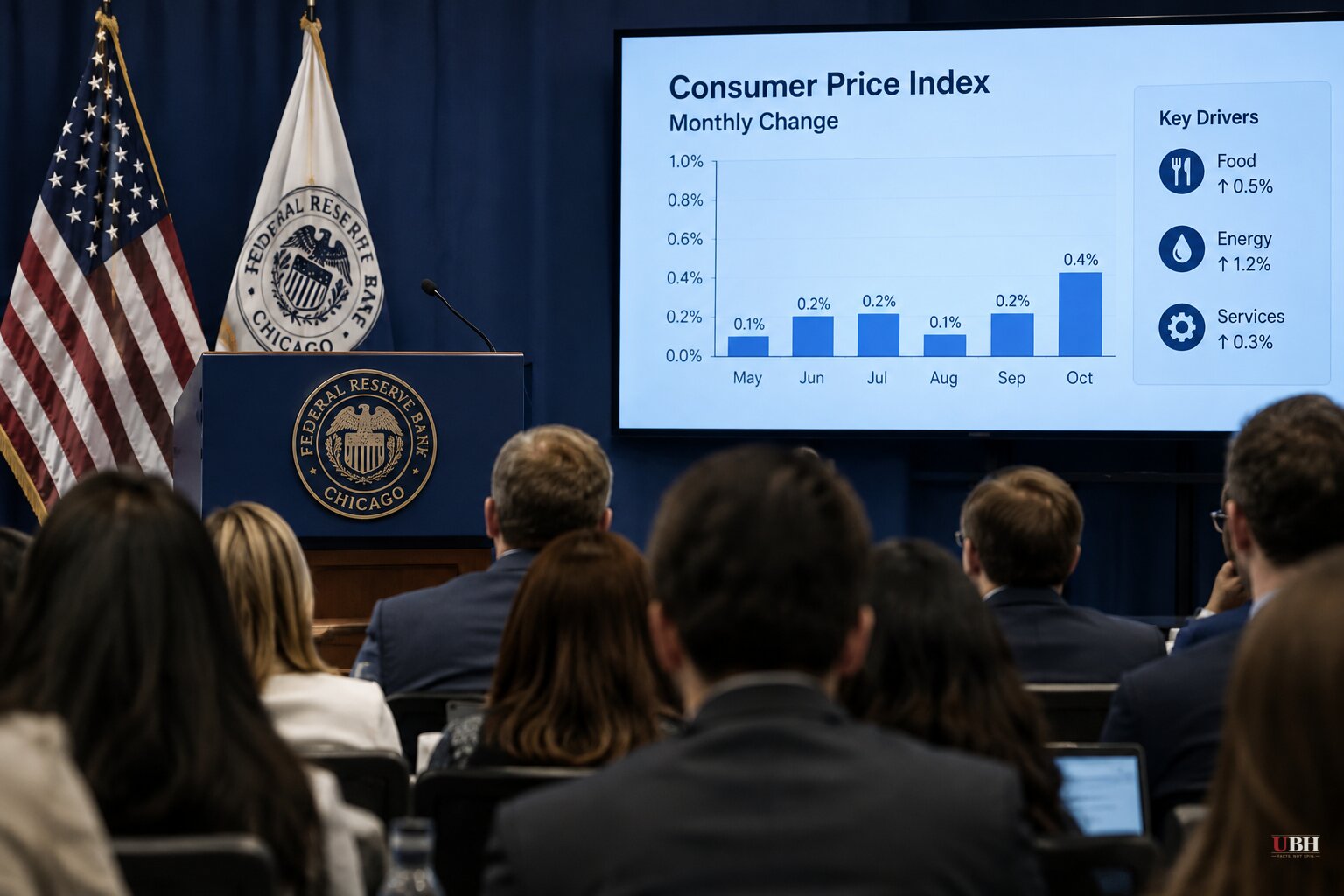
Another month, another ugly inflation print. The October Consumer Price Index showed prices rising 0.4% over the prior month, driven in large part by food and energy costs as the war in Iran continues.
Forecasts cited in recent analysis put year-end inflation near 4% compared with 2025. That is an estimate, not a reported figure. It is also well above where any administration wants to be heading into a political season.
Wages are not keeping up
Jobs numbers have been relatively strong. Wages have not followed.
Business Insider, responding to the October CPI report, wrote that Americans struggling with high costs "likely won't feel any relief at the pump in the near future — especially as more potential military action looms" in Iran. Its summary of the squeeze: "For everyday Americans, all of these international strains amount to what is, essentially, a pay cut."
Goolsbee: the shocks were supposed to go away
Austan Goolsbee of the Federal Reserve Bank of Chicago told PBS News that inflation is proving more persistent than expected. Energy effects from the Iran war are to be expected, he indicated. Tariff-driven price increases, he said, should have faded by now. They have not.
"Now, what we have been dealing with is a series of shocks, some from oil prices, some from tariffs, now some from the demand side, and a lot of those things were supposed to go away," Goolsbee said.
He did not write off the possibility of relief. "They might still go away and prove transitory," he said. But he warned that the word should raise alarms, because the last time officials used it, "we found out that, when you have major disruptions to the supply chain, those oftentimes end up being far more persistent than the theory says they're supposed to be."
That is a Fed official saying, on the record, that the tariff effect has outlasted the timeline. Tariffs are a policy choice made in Washington, not a force of nature, and the cost shows up at the register.
The demand side: AI and data centers
Goolsbee also pointed to demand-side pressure. One piece of it is surging electricity demand from the artificial intelligence buildout, which has pushed energy prices higher in regions where data centers are expanding fast.
The effect reaches beyond power bills. The buildout is also pushing up costs for construction, computers, electrical equipment and computer chips, according to the OilPrice.com analysis of the CPI report.
The political fallout
Democrats won big in last week's midterm elections. The result has been widely read as a rebuke of President Trump, the Iran war and the administration's economic record. That reading is an interpretation of the vote, not something the ballots themselves state.
The OilPrice.com analysis argues the price pressure goes beyond one administration's reach. By that argument, the oil-market disruption, the data-center power crunch and the supply-chain strain are not products of a single political regime. Goolsbee's own list of causes points the same way: oil, tariffs and demand each contribute, and only some are within the White House's control.
That does not let the administration off the hook for the pieces it does control. A war with no end date and a tariff regime that is still showing up in prices are both decisions made by this White House.
Voters have said what they think about the cost of living. The next move belongs to Washington, and whether the oil, tariff and AI-driven shocks fade or persist is the question Goolsbee raised. He did not say which way it will go. He said the word "transitory" should make people uneasy.
Sources used for this briefing
3 links from 1 independent newsroom (syndicated copies of the same report count once)
These are the sources it draws on, linked so you can verify.


