
Unbiased headlines. Facts, not spin.
Unbiased Headlines is an independently owned news organization. We bring you the facts, not opinions, written fresh from 110+ named sources. Sources linked so you can verify it yourself.
 energy
Major Story (8/10)
Trump Says 'We Don't Need a Deal With Iran' and Tells Vance to Focus on Crime in Democratic States
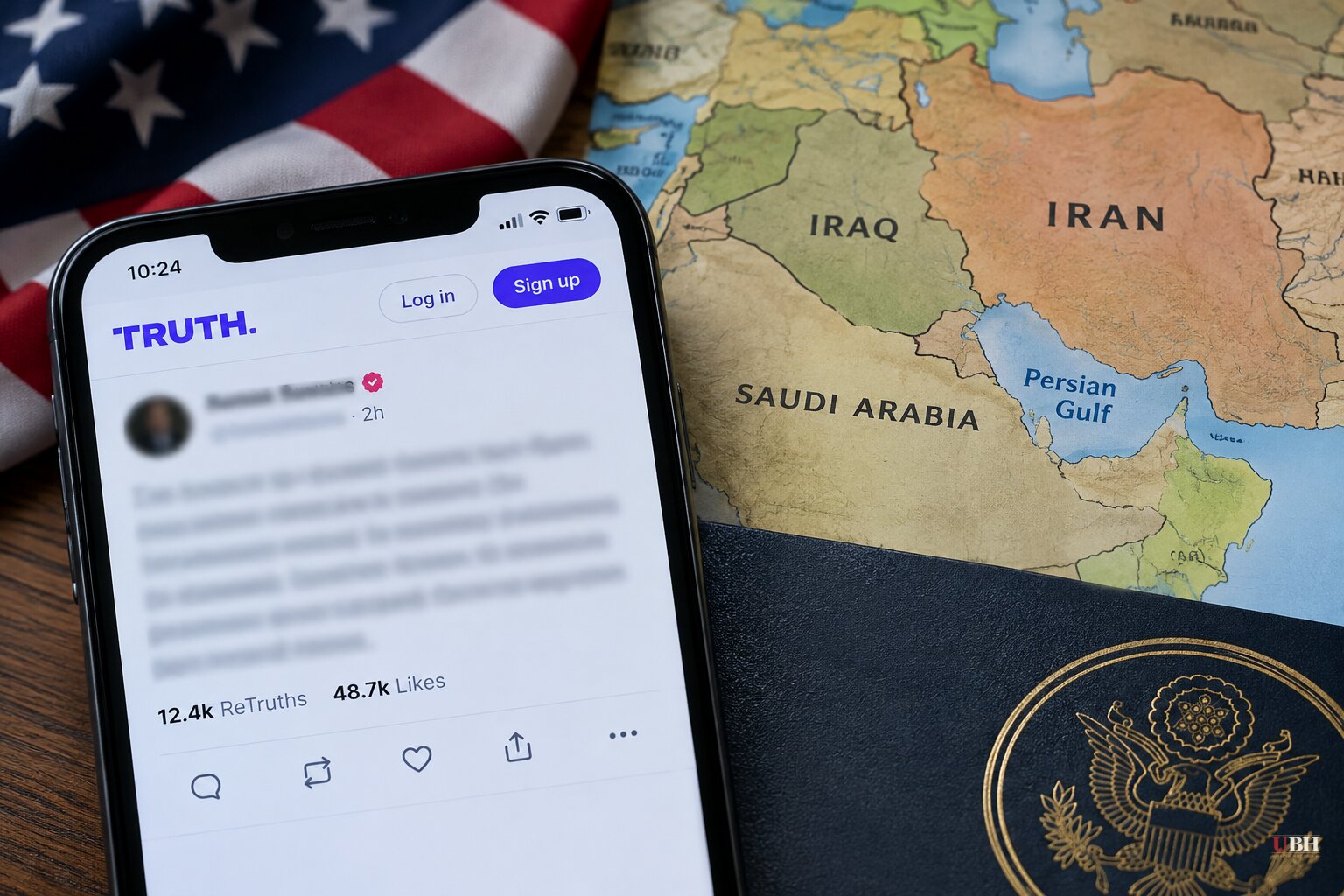
Since U.S. and Israeli strikes on Iran began on Feb. 28, the war has dragged into its ninth month, with a June memorandum of understanding failing to produce a settlement. On Thursday, Nov. 12, President Donald Trump said he is done chasing one.
"We don't need a deal with Iran. Those days have long since passed," Trump wrote on Truth Social. "We've got their money, Hundreds of Billions of Dollars, and we've got their Strait!"
In the same post, Trump said he asked Vance to give "his complete and total attention" to what he called "Massive Corruption and Crime" in Democratic-run cities and states. He named Minnesota, California and Illinois, wrote that "Billions of Dollars is being stolen each and every month," and said the federal budget "could be quickly BALANCED" if that were fixed. The post offered no evidence for the figure and did not explain how the money was taken.
What the post does to Vance's role
Vance led the U.S. delegation at the Islamabad talks in April and has been the administration's main face in Iran diplomacy. On Wednesday, the Wall Street Journal reported he was weighing face-to-face talks with a top Iranian security official.
The White House has not said whether the new assignment removes Vance from the Iran file.
The timing is awkward. Republicans took heavy losses in the midterms just over a week ago, and Vance and other Republicans have blamed the Iran war for them, according to CNBC's reporting. Corruption was also a top issue that broke for Democrats, and Trump's post turns that argument back on Democratic-run states.
Talks, or no talks
The president's statement cuts against CNN's reporting that U.S.-Iran contacts had accelerated in recent days, with both sides quietly negotiating a sensitive agreement meant to avert a return to all-out war and open the door to broader talks.
It also cuts against Trump's own words earlier this month. On Nov. 2 he wrote that "Iran wants a settlement, as soon as possible. It could happen!" and said further strikes after the midterms were not in the cards. A day later he confirmed a U.S. strike on a newly built Iranian anti-aircraft facility on Qeshm Island, calling it "a minor attack" that "wasn't war."
Trump's side of the argument is leverage. A U.S. official told the Epoch Times earlier this month that the United States is "in a very strong position with control of the Strait of Hormuz and the Iranian economy collapsing," and that Trump "holds all the cards." Secretary of State Marco Rubio said Tuesday there is "no need for major combat operations" because economic pressure is working.
The Strait claim is contested. The U.S. says it is enforcing a naval blockade of Iran's Persian Gulf and Gulf of Oman ports, while Iran says it controls Hormuz and keeps claiming attacks on shipping. Iranian Foreign Ministry spokesman Esmail Baghaei said earlier this month Iran will not reopen the Strait unless Washington lifts the blockade.
The money claim is also disputed. Iranian state media put the frozen assets Tehran wants released at $12 billion, including $6 billion held in Qatar. U.S. officials said earlier that no frozen Iranian funds had been released. Trump did not say where his "hundreds of billions" figure comes from.
Tehran's position
Iran's Supreme National Security Council secretary, Mohsen Rezaei, said this week that Iran will not send "a single atom" of its enriched stockpile abroad. He also warned that if the U.S. hits Pickaxe Mountain, Iran will target all U.S. bases, including those in Europe, and said a new round of war would last no more than four to five days.
Foreign Minister Abbas Araghchi has said the conflict will not be resolved by military means or tighter sanctions. Iran has said its offer to reopen the Strait within two days of an agreement stays on the table if the U.S. meets its demands: lifting oil sanctions, ending the blockade and releasing frozen assets. Iran has not yet responded to Trump's post.
Oil reaction
Crude had been sliding before the post on signs Gulf exports were holding up. Saudi Arabia told OPEC its October output rose 26%, and Iraq said its output hit a wartime peak, according to Bloomberg.
After Trump posted, futures reversed. As of 8:28 a.m. ET, January Brent was up 1.1% at $93.78 a barrel, briefly topping $94, and West Texas Intermediate was up 1.3% at about $87.62. Those are futures prices ahead of the 9:30 a.m. ET stock open. CNBC reported stock futures declined after the post.
Brent was above $106 on Nov. 3 after the Qeshm strike reports and fell below $100 on Monday after Trump said more strikes were unlikely. Thursday's move was small by comparison.
Qatar's mediation is still running, and the Saudi-Houthi fighting in Yemen continues to threaten Gulf oil infrastructure. It remains unclear whether the quiet channel CNN described survives a president publicly declaring it unnecessary, and who on the U.S. side now carries it.
Sources used for this briefing
8 links from 8 independent newsrooms (syndicated copies of the same report count once)
These are the sources it draws on, linked so you can verify.


