
Unbiased headlines. Facts, not spin.
Unbiased Headlines is an independently owned news organization. We bring you the facts, not opinions, written fresh from 110+ named sources. Sources linked so you can verify it yourself.
 energy
Major Story (7/10)
Event date: November 7, 2026 ·
Russian Diesel Exports Doubled to 271,000 Barrels a Day in October, Kpler Data Show. None Has Reached the U.S.
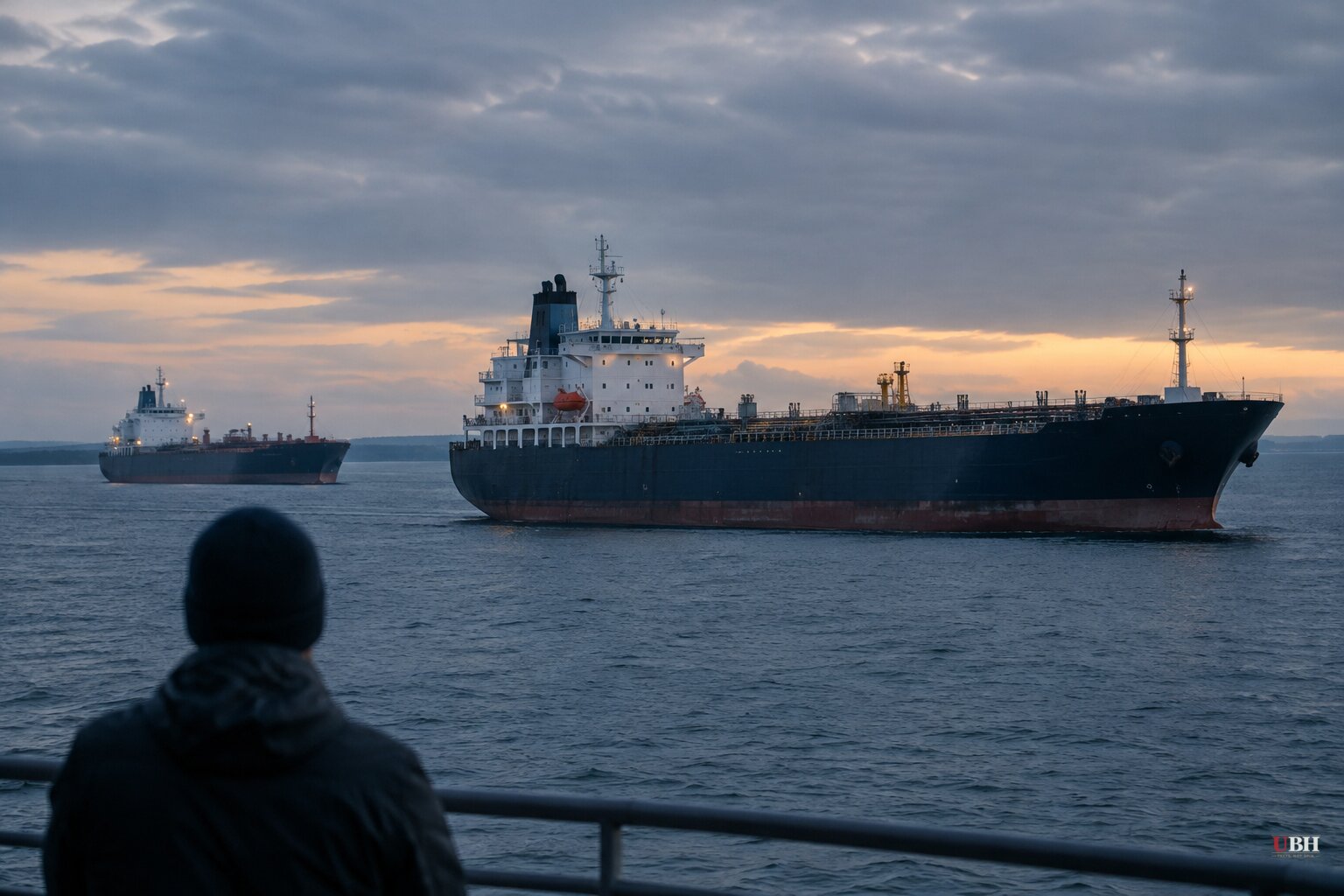
Since Trump announced a diesel deal with Vladimir Putin on Oct. 9, the clearest measurable result is on Russia's side of the ledger. Russia exported 271,000 barrels a day of diesel in October, up from 135,000 in September, according to Kpler data reported by the Financial Times.
The U.S. side of the ledger is empty. Russia has sent four tankers toward the American coast under the arrangement, and none has discharged a cargo.
Where the tankers went
The Malta-flagged Agioi Fanendes loaded about 40,000 tonnes of ultra-low sulfur diesel at Primorsk on Oct. 22 and was due in the U.S. on Nov. 7. It stopped in the North Atlantic short of the East Coast. "Since Nov. 9, the tanker has remained almost stationary, while its unchanged 11-meter draught suggests no cargo has been discharged," Kpler said. The firm added that the vessel has no confirmed destination.
Energy Secretary Chris Wright said Tuesday, Nov. 10, that the tanker would go to another port. "We just want that diesel going into the world markets," he said.
Two other tankers, the Russian-flagged Talisman and the Leruo, changed course last week. As of Nov. 5, Kpler and MarineTraffic data showed one heading toward Brazil and the other into the Mediterranean. A third vessel in the North Atlantic changed its listed destination from New York to "for orders."
The Financial Times also reported that a fourth ship, the sanctioned Seychelles-owned tanker Beast, loaded at Primorsk in late October and is signalling "Atlantic" as its destination.
What the deal actually promised
Trump announced the agreement after an Oct. 9 call with Putin. He said Russia would make more than 300,000 tonnes of diesel available immediately to U.S. and global markets, then 500,000 tonnes in November and 1 million tonnes "immediately thereafter." The Treasury Department's Office of Foreign Assets Control issued a temporary general license the same day. It allows Russian diesel to be sold, delivered, unloaded and imported until April 7.
"Lower prices for Americans, especially our Great Farmers, Ranchers, and Truckers, is my Greatest Priority," Trump wrote on Truth Social.
Russian Deputy Prime Minister Alexander Novak said Oct. 21 that more shipments would follow as U.S. and Russian companies work out contracts. He said Russia could restore diesel exports to 3 million to 3.5 million metric tons a month by year-end, with other countries also receiving fuel. "It will depend on the volumes we can supply beyond the needs of the United States," he said.
Diesel exports to Brazil, Turkey and other countries have also risen, the Financial Times reported.
Why U.S. buyers are staying away
The pattern suggests American companies do not want to touch the cargoes. Jeremy Paner, a former U.S. sanctions official and now a partner at Hughes Hubbard & Reed, laid out the calculation to Reuters. Any savings from cheaper Russian diesel could be erased by legal fees from future congressional probes, he said. "It's a relatively easy call for businesses to say, 'We don't want to touch it,'" Paner said.
No investigation of any buyer has been announced. The reluctance Paner describes is about anticipated exposure, not an existing case.
The price question
Diesel topped $6 a gallon nationally for the first time ever this fall, up from $3.76 before the Iran war, according to AAA data cited by CNN. Even in the best case, Russian barrels were never going to close that gap. Energy Information Administration figures show the Agioi Fanendes cargo equals roughly 10% of what the U.S. transportation sector alone burns in a day.
Critics of the policy focus on sanctions rather than pump prices. Ben Harris, a Treasury assistant secretary during the original 2022 sanctions push and now vice president at the Brookings Institution, told CNN that Trump "really sees no value in sanctioning Russia and he doesn't see sanctions as a way to end the (Ukraine) war." He called the moves "incredibly disheartening."
The administration frames it as a supply move. Wright's comment points to a goal of more diesel in global markets, not only in American ones.
Russia's supply is not guaranteed
Two factors cut against a sustained surge. Ukraine resumed strikes on Russian refineries on Oct. 30 after a two-week pause, and Moscow has extended a diesel export ban through the end of January. Both point to lower Russian shipments in the coming months.
The Centre for Research on Energy and Clean Air said Urals crude averaged $102 a barrel in October. That is far above the $44.10 price cap the EU set on Feb. 1. The Helsinki-based group argues the cap has not durably limited Russian earnings and recommends either tightening it or taxing the use of Western maritime services to carry Russian oil.
What comes next
The open questions are specific. Kpler has not identified where the Agioi Fanendes will unload. The Beast's final destination has not been confirmed. Trump's promised 500,000 tonnes for November has not been tied to any delivery contract with a U.S. buyer. The license expires April 7.
Sources used for this briefing
6 links from 6 independent newsrooms (syndicated copies of the same report count once)
These are the sources it draws on, linked so you can verify.


