
Unbiased headlines. Facts, not spin.
Unbiased Headlines is an independently owned news organization. We bring you the facts, not opinions, written fresh from 110+ named sources. Sources linked so you can verify it yourself.
 energy
Notable (6/10)
EU Paid an Estimated €8.7 Billion for Russian Yamal LNG in 10 Months, 21% More Than in All of 2025
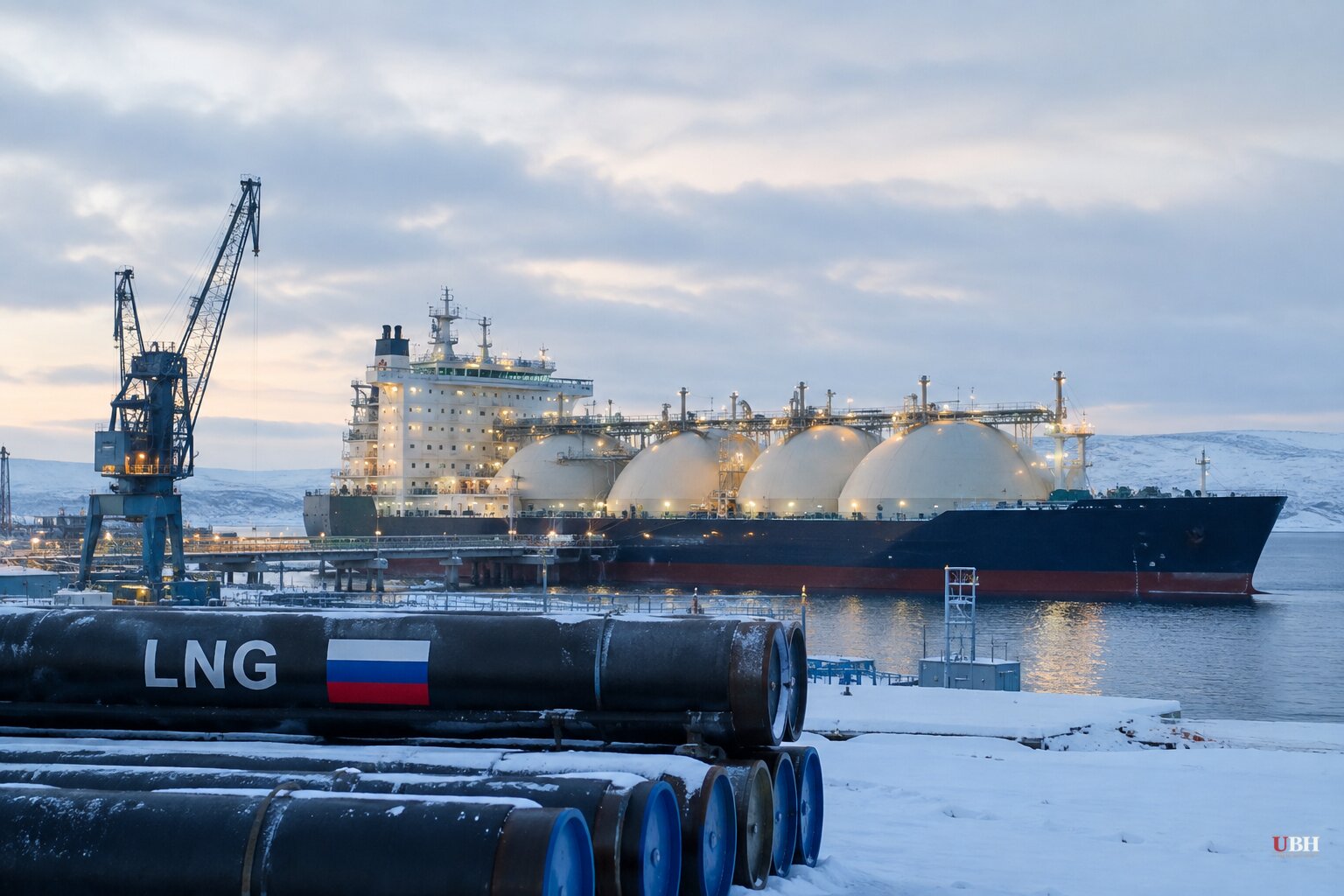
The European Union is on track to spend nearly €10 billion this year on liquefied natural gas from one of Vladimir Putin's flagship Arctic projects, weeks before its own ban on the trade takes full effect.
The environmental group Urgewald, analyzing shipping data from the energy intelligence firm Kpler, estimates EU buyers paid €8.7 billion for LNG from Russia's Yamal project in the first ten months of 2026. The estimated bill for all of 2025 was €7.2 billion, so this year's figure is already about 21% higher.
The group published the numbers on Thursday, Nov. 12, 50 days before the ban begins.
Volumes and prices
EU ports received 12.89 million tonnes of Yamal LNG between January and October, up 6.3% from the same period last year. That came in 177 cargoes, or roughly one every 1.7 days. The EU took 81% of the project's recorded deliveries worldwide.
Price is a big part of the jump. October volumes fell about 11% from September, to 705,591 tonnes across ten cargoes. Their estimated value still rose 2.6% to €839 million, because the monthly TTF benchmark climbed from €75.34 per megawatt-hour to €86.79. Urgewald says that is more than double the level before the U.S.-Israel war on Iran.
France took 70% of October's EU deliveries, with seven cargoes at Dunkerque and Montoir. Spain received two at Bilbao and the Netherlands one at Rotterdam.
Belgium's Zeebrugge terminal recorded no Yamal cargoes in August, September or October. It is still the largest single EU destination for the year, with 42 cargoes and about 3.1 million tonnes.
The Center for Research on Energy and Clean Air, a think tank, found that EU imports of Russian LNG rebounded 60% in September from a record low in August. The group says the EU still buys almost half of Russia's LNG exports.
What the figures do and do not show
These are estimates. Urgewald says they are built from shipment volumes and gas exchange prices. Actual prices under long-term contracts may differ, so the figures should not be read as net revenue to the Russian budget.
The trade is also running inside the EU's own timetable. Restrictions on Russian LNG under short-term contracts began April 25, 2026. The full ban, including eligible existing long-term contracts, starts January 1, 2027. Until then, deliveries under those contracts continue.
Urgewald sanctions campaigner Sebastian Rötters says the purchases "help fund Putin's war machine while Russian attacks devastate Ukraine's cities and energy infrastructure." He adds that "Europe's estimated bill for Yamal LNG is racing towards a staggering €10 billion this year."
Switching suppliers has its own limits, according to Alexander Kirk, another Urgewald sanctions campaigner. He points to existing commercial LNG ties with the United States, Norway and Algeria. "We can end Russian LNG imports on 1 January," Kirk said. "But switching suppliers still leaves European households exposed to gas price spikes and political pressure from abroad." He argues for insulation, heat pumps, wind and solar to cut demand.
Why the ice matters
Winter makes Yamal more dependent on European buyers. The project relies on specialized Arc7 ice-class tankers. Ports in Europe sit close enough that those ships can unload and return quickly.
By December, ice conditions block non-Arc7 vessels from reaching Yamal. Since 2018, only 11 Arc7 cargoes have traveled east along the Northern Sea Route between November and May. Redirecting gas to Asia means longer voyages and higher shipping costs.
"Losing access to Europe's market could deal a devastating blow to Putin's flagship Arctic gas industry," Rötters said. "Longer voyages, higher shipping costs and thinner profits would leave Russia paying the price."
He also called on governments to hold the line: "No retreat, no new exemptions and no lifelines for this trade."
What comes next
The test is January 1. If the ban holds without carve-outs, Yamal loses its nearest and largest customer in the middle of the Arctic winter. If exemptions appear, the €8.7 billion figure will look like a floor for 2026, not a ceiling. Urgewald's estimate for the full year will not be known until November and December cargoes are counted.
Sources used for this briefing
7 links from 6 independent newsrooms (syndicated copies of the same report count once)
These are the sources it draws on, linked so you can verify.


