
Unbiased headlines. Facts, not spin.
Unbiased Headlines is an independently owned news organization. We bring you the facts, not opinions, written fresh from 110+ named sources. Sources linked so you can verify it yourself.
 energy
Notable (5/10)
Environment Agency: Two Main 'Forever Chemicals' Down About 30% in English Rivers Since 2016
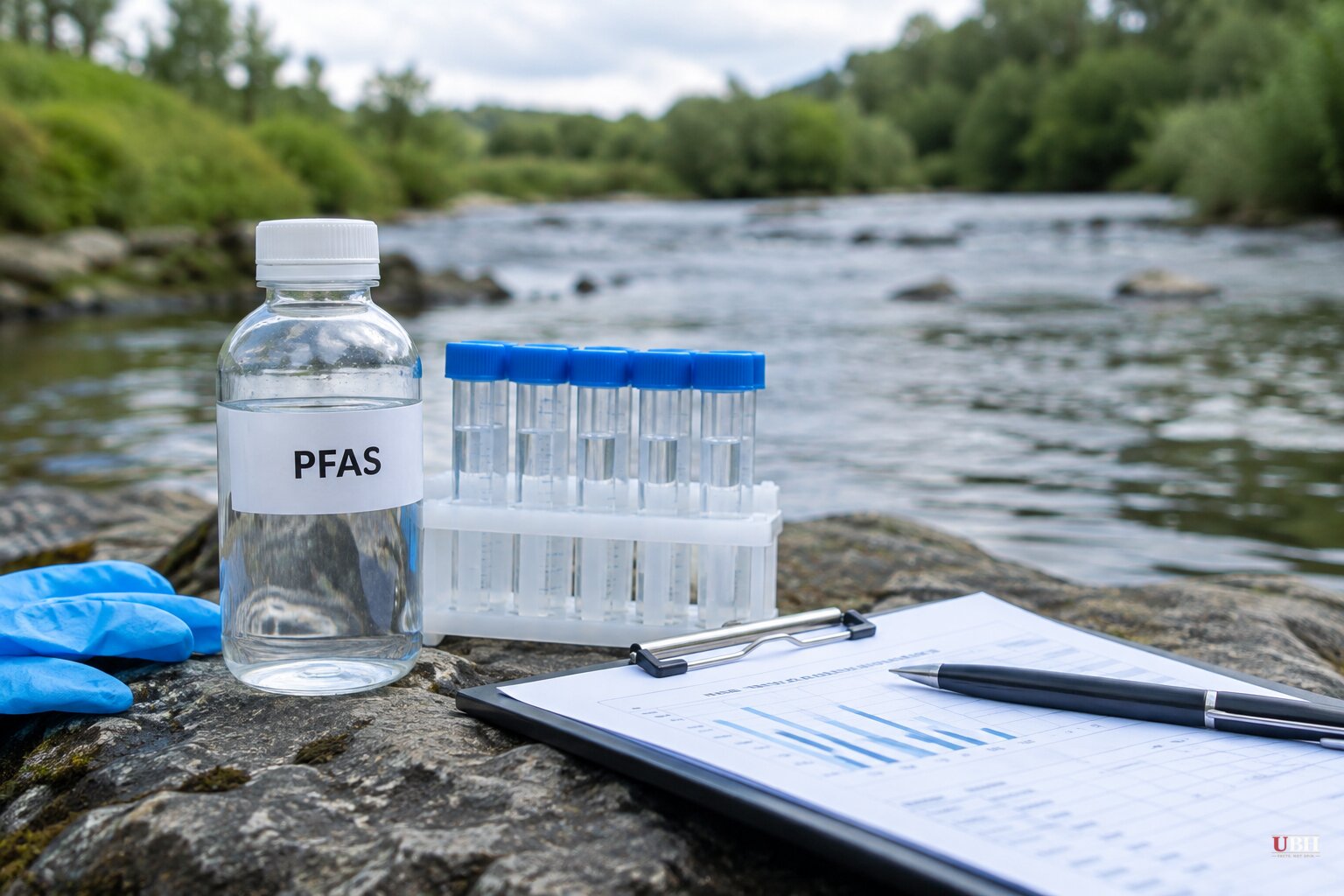
Targeted bans on two specific chemicals appear to have worked. The Environment Agency published a report today, Thursday, Nov. 12, showing that PFOS fell by about 30% and PFOA by 29% in English rivers between 2016 and 2025.
PFOS concentrations in freshwater fish dropped by approximately 49% over the period.
The report, titled PFAS sources, pathways and environmental data, updates the agency's 2021 assessment. It draws on a much larger body of monitoring data, covering rivers, lakes, estuaries, coastal waters and sources such as landfill leachate.
What the restrictions did
PFOS and PFOA are the oldest and best-studied of the PFAS family, the group of chemicals nicknamed "forever chemicals" because they break down extremely slowly. They were used in products such as non-stick frying pans and firefighting foam for their oil- and water-resistant properties.
Researchers began linking the two to tissue damage in animals and to serious health conditions, including testicular cancer, about two decades ago. The UK all but banned PFOS in 2010 and PFOA in 2020.
The Environment Agency says the declines show that "regulatory action to reduce emissions can lead to real environmental improvements for certain PFAS in some parts of the water environment."
Dr David Megson, reader in environmental forensics at Manchester Metropolitan University, said: "It's brilliant to see how far we have come in the last 10 years."
Lower concentrations, same chemicals
The good news comes with a large caveat from the agency itself. Because these chemicals take so long to break down, the overall amount in the environment is likely unchanged. Lower river concentrations reflect dilution and wash-out to sea, not destruction.
The agency also says PFAS contamination remains widespread, reflecting decades of historic use and continued releases from some sources.
Megson said the report is "an essential foundation to support investigations to make the polluters pay for any damage they have caused." No such investigations or enforcement actions were announced alongside the report.
The fight over regulating the whole class
About 15,000 other PFAS are thought to exist, though only around 200 are frequently used. The Environment Agency says "uncertainty remains regarding the toxicity of many PFAS." It says its findings reinforce the need to regulate all PFAS as a group rather than one by one.
The chemicals industry has long opposed that approach. Its position is that there is little or no evidence that the other PFAS are toxic, and that some have vital uses, including in life-saving medical equipment.
Both positions rest on the same gap: the toxicity of most of these chemicals has not been established. The agency reads that gap as a reason to regulate broadly. The industry reads it as a reason not to.
Monitoring and what comes next
The agency now regularly tests for 60 other PFAS to map contamination across the country. Dr Robert Bradburne, the agency's chief scientist, said understanding of PFAS has advanced significantly since 2021 and the agency can now monitor a much wider range of the chemicals with greater accuracy. "The reductions in some older PFAS are encouraging, but there is more to do," he said.
Earlier this month the government announced it would begin monitoring PFAS levels in people's bodies.
The report will support delivery of the UK's first PFAS Plan, which the government published earlier this year. Emma Hardy, the minister, said: "I welcome the findings of this report, and this government is determined to reduce exposure to these chemicals for the public and the environment."
The government is considering a restriction on forever chemicals in firefighting foams and is legislating to prohibit further persistent organic pollutants.
Disposal is a constraint. One of the few ways to permanently destroy PFAS is high-temperature incineration, and the country has just two suitable sites.
It is unclear whether ministers will extend the model that worked for PFOS and PFOA to the rest of the class. The foam restriction under consideration and the results of the new human monitoring programme are the next tests.
Sources used for this briefing
7 links from 5 independent newsrooms (syndicated copies of the same report count once)
These are the sources it draws on, linked so you can verify.


