
Unbiased headlines. Facts, not spin.
Unbiased Headlines is an independently owned news organization. We bring you the facts, not opinions, written fresh from 110+ named sources. Sources linked so you can verify it yourself.
 energy
Major Story (7/10)
Event date: November 5, 2026 ·
Gulf Crude Exports Recover to 80% to 85% of Pre-War Levels While Refined Products Lag at 35% to 40%
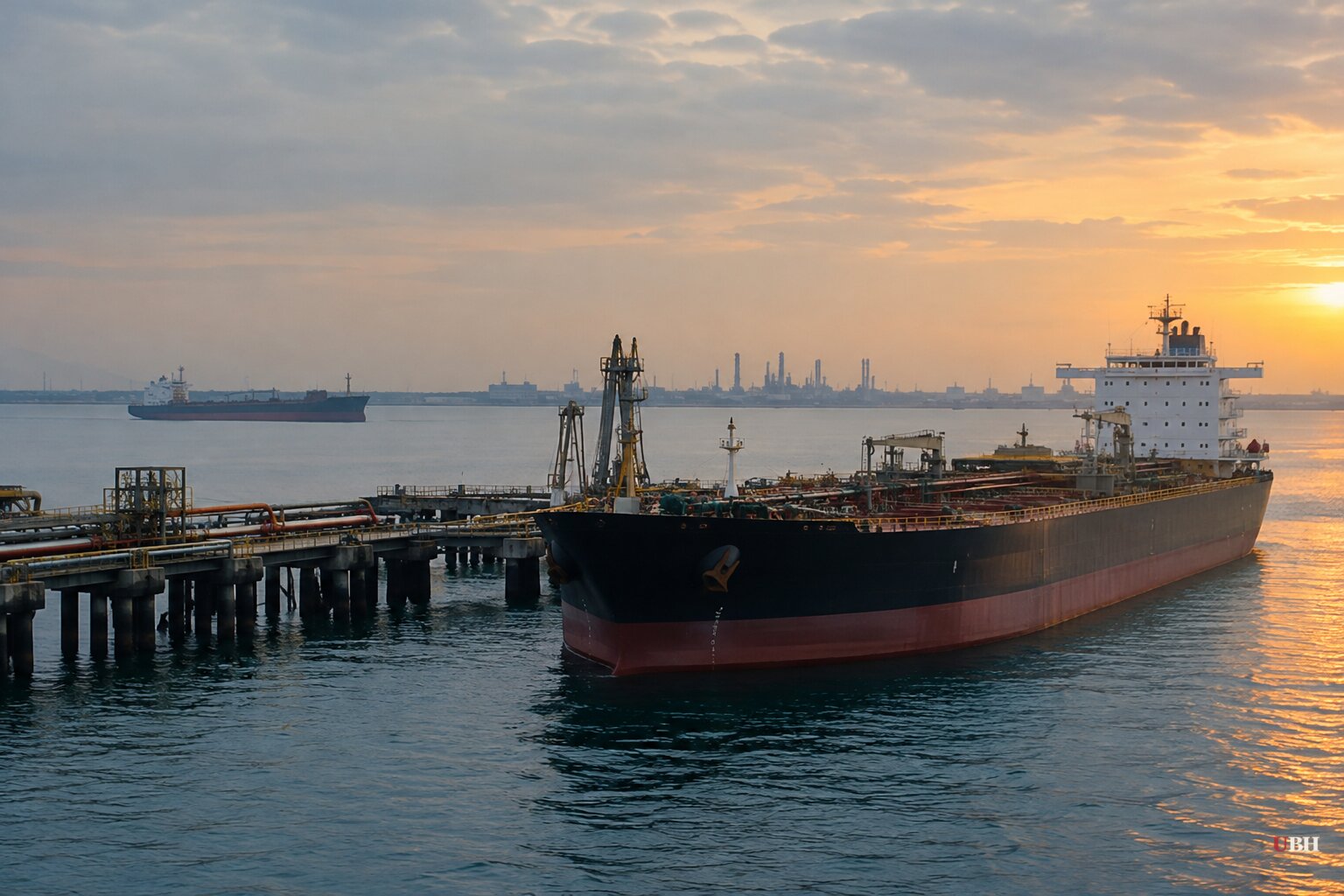
Since the U.S.-Iran war began on Feb. 28, the Strait of Hormuz has gone from near-closure to a partial reopening. The latest figures show the recovery is lopsided: crude is flowing, refined fuel is not.
Fereidun Fesharaki, chairman emeritus of the consultancy FGE NexantECA, said last week that Middle Eastern crude exports, pipeline shipments included, have recovered to 80% to 85% of pre-war levels. Refined-product shipments are stuck at about 35% to 40%.
Why refined products lag
Xavier Tang, senior market analyst at Vortexa, put the gap down to vulnerability. "Oil infrastructure such as refineries remains susceptible to drone strikes," he said, and that has led Gulf producers to put crude shipments first.
The recovery in crude is also uneven depending on who is counting. JPMorgan's Natasha Kaneva, head of global commodities research, said Middle East oil transits averaged 20.7 million barrels per day last week. That compares with 24.7 million before the war and a low of 9.8 million in March. The ratio works out to about 84%, in line with Fesharaki's range.
The tracker Kpler has a lower number. It put flows at an average of 70% of the pre-war level over the past week, and described them as volatile.
Vessel traffic through the strait rose in October to its highest monthly level since July, according to S&P Global. Crude tanker movements fell that month, and security incidents continued.
Qatar's LNG pickup
Qatar's liquefied natural gas loadings reached 13 to 15 shipments per 10-day period on a moving-average basis this month, up from about 11 in October. That is roughly half of pre-war levels, according to Bloomberg, Kpler and Copernicus data.
One Qatari LNG tanker was attacked last month. That did not reduce exports or Hormuz transits, though earlier attacks had slowed Qatari flows.
European gas prices trade around 82 euros per megawatt-hour. That is down from more than 100 euros before last week's diplomatic signals took a war-risk premium out of energy markets. European storage is still well below seasonal norms, and withdrawals have been underway for several weeks, so the window to rebuild inventories has closed.
Qatar is also hedging for a long period of Hormuz uncertainty. It has agreed to buy up to 7 million tons of U.S. LNG a year from Cheniere and Woodside, with deliveries starting in 2030 and 2031. The war knocked out roughly 17% of Qatar's export capacity, an estimated $20 billion a year in lost revenue.
Prices and the politics
Brent futures settled at $94.62 a barrel on Nov. 4, down 8.7% in a day, after Democrats flipped both the House and Senate in the Nov. 3 midterms. That is still well above the roughly $72 close on Feb. 27, the day before the war started.
Vice President JD Vance blamed the war for Republican losses. President Donald Trump told reporters Vance's assessment was largely true because the war had driven up gasoline prices. House Minority Leader Hakeem Jeffries wrote colleagues on Nov. 4 that House Democrats must act within their first 100 days in the majority to stop the war.
CNN's analysis argues the politics are only part of the price drop. It says oil sat above $100 every day in October, peaking at $114 on the last trading day of the month, then fell $25 over the following week. CNN also points to a supply picture that has turned: oil majors raised output outside the Middle East, and crude flows from outside the region are up 1.5 million barrels per day from a year earlier.
Others urge caution. Giovanni Staunovo, commodity analyst at UBS, said the modest rebound on Nov. 5 reflected an unresolved Middle East situation. June Goh, senior oil analyst at Sparta Commodities, said more volatility is likely because the path to a diplomatic end to the war is uncertain and strategic reserves have been drawn very thin.
ING's Warren Patterson and Ewa Manthey wrote on Nov. 5 that the new Congress does not take office until January, leaving room for escalation. Absent escalation, they said, the market is likely to keep giving back its risk premium, and the selloff looked overdone.
What drivers see
The AAA national average for regular gasoline was $4.10 on Nov. 5, against almost $3.08 a year earlier. GasBuddy's Patrick De Haan said it could fall to $3.65 in the coming weeks, with diesel dropping to $5.50 from a $6.29 average for the week ended Nov. 2.
Diesel is the product where the refined-export gap matters most. OilPrice.com's analysis says Ukraine's strikes on Russian refineries, together with the depleted stockpiles, point to tight markets well into next year, especially for diesel. With Gulf refined shipments at a little over a third of normal, a faster-than-expected diesel price relief depends on refineries the Gulf producers themselves consider exposed to drones.
Sources used for this briefing
4 links from 3 independent newsrooms (syndicated copies of the same report count once)
These are the sources it draws on, linked so you can verify.


