
Unbiased headlines. Facts, not spin.
Unbiased Headlines is an independently owned news organization. We bring you the facts, not opinions, written fresh from 110+ named sources. Sources linked so you can verify it yourself.
 energy
Major Story (8/10)
Iran's Ghalibaf Says Hormuz Will 'Never Return' to Pre-War Status, Awaits US Reply to Seven Conditions
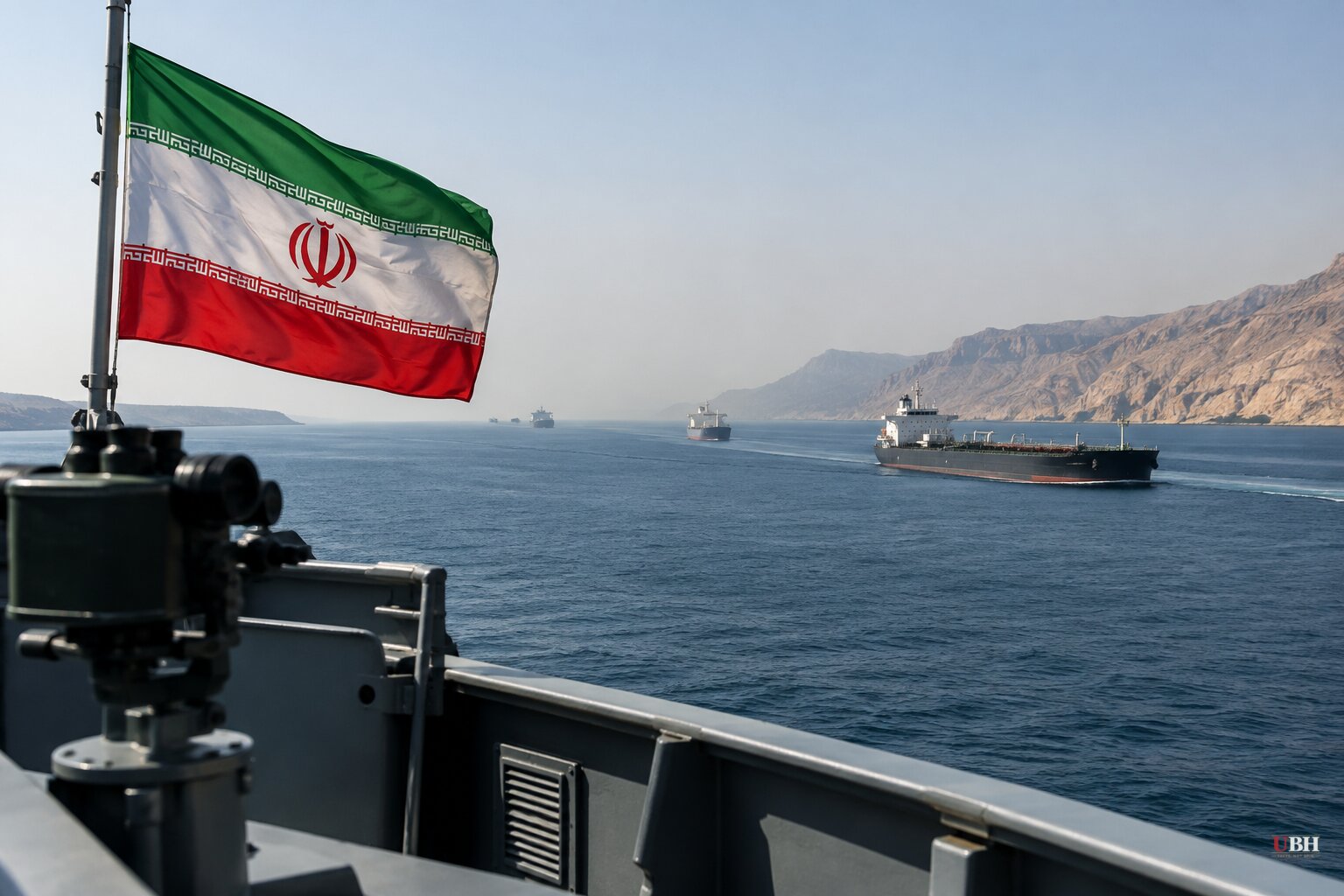
Eight months into the war, and five months after the Islamabad memorandum of understanding was signed in June, Iran's chief negotiator has put a new marker down on the Strait of Hormuz. Mohammad Bagher Ghalibaf, speaker of Iran's parliament, said in an interview published Wednesday, Nov. 11, that the waterway will "never return" to its status before the US-Israel war on Iran.
Ghalibaf's claim over the strait
Ghalibaf said Iran and Oman have reached an understanding to oversee the strait, as part of Tehran's seven-point proposal to end the war. He described a navigation corridor and a traffic separation scheme agreed with the Sultanate.
"There are no 'free waters' there, and the 1982 [UN Convention on the Law of the Sea] does not apply to the strait," he said. "The regulations within the Strait of Hormuz are governed by the laws of the two littoral states that border it."
That is a legal claim, not an established fact. It is Iran's position, and no other government quoted in the interview has accepted it.
Ghalibaf also said there is no passage through the strait until Washington gives what he called an official, specific response to Iran's conditions.
The seven conditions
Ghalibaf said Tehran sent the US a response through a Qatari mediator that laid out the seven conditions. He said Iran is waiting for an official reply. "The ball is now in the American court," he said.
The conditions he outlined:
- Lifting the US naval blockade and sanctions
- Release of Iranian frozen funds
- An end to fighting on all fronts
- An explicit announcement that the war is over
He said these items come from the Islamabad memorandum and must be carried out before Iran enters negotiations with the US. "If America limits itself to what has been agreed upon without making excessive demands... then, naturally, reaching an agreement is possible," he said. "What stands in the way of an agreement is our lack of trust in the United States."
Ghalibaf also said US officials asked Russian President Vladimir Putin, during a visit to Moscow, to mediate direct talks with Tehran. The US has not confirmed that in the material cited here.
Washington's different picture
Trump describes the strait in opposite terms. On Fox News' Sunday Morning Futures he said: "Remember, we now control the Hormuz Strait. They get nothing. We get everything." He also claimed more business is moving through the strait than before the war.
The Wall Street Journal has reported that overall Middle Eastern oil shipments have passed prewar levels, above 24 million barrels per day. Gulf producers increasingly used alternative export routes to get there, according to that report. So the aggregate figure does not by itself show how much traffic is moving through Hormuz.
Trump also said he faces a choice. "Do I make a deal with them or do I finish them off? That's the only question," he said. Separate reports from The Hill and The New York Times, citing unnamed sources, said US Central Command has prepared strike options, including on Iranian energy infrastructure. Trump has not authorized new strikes.
Secretary of State Marco Rubio has said major combat operations are not needed while the blockade holds.
Warnings from Tehran
Ghalibaf cautioned against renewed US attacks. He said Trump would face "another defeat" and political pressure from the new Congress that takes office in January. He added that if the US or Israel starts a war, Iran will confront both and respond to any attack.
He said Iran wants to leave the state of "no war and no peace," and that this can be pursued through permanent deterrence, including military capability, not only through talks. In a separate remark, he said Iran would help resolve the Yemen fighting between the Saudi-backed government and the Houthis if both Yemen's government and Saudi Arabia asked, but "no one should interfere."
Mehdi Mohammadi, an adviser to Iran's chief negotiator, separately told The Guardian that Tehran could be forced into pre-emptive strikes if the stalemate continues.
Incidents on the water
The diplomacy is running alongside incidents at sea. Iran's Revolutionary Guard said two oil tankers were struck overnight in the Strait of Hormuz. Social media accounts and a conflict tracker also describe a tanker attack in the Gulf that injured four people, and Iranian strikes on an Omani island the US reportedly uses to support ships transiting the strait. Those reports rest on posts and a news aggregator, and the details are not independently confirmed here.
If the Omani island strike is confirmed, it would sit awkwardly beside Ghalibaf's description of an understanding with Oman. Muscat has not been quoted in the material cited here.
US Central Command says American forces are running round-the-clock operations to keep the strait open to commercial shipping while enforcing the blockade on Iran.
What comes next
The open question is whether Washington sends the official reply Ghalibaf says Iran is waiting for, and in what form. Trump has framed his choice as a deal or a strike. Iran has said it will not enter negotiations until its conditions are carried out, and the US has said nothing publicly yet on accepting them.
Sources used for this briefing
7 links from 7 independent newsrooms (syndicated copies of the same report count once)
These are the sources it draws on, linked so you can verify.


