
Unbiased headlines. Facts, not spin.
Unbiased Headlines is an independently owned news organization. We bring you the facts, not opinions, written fresh from 110+ named sources. Sources linked so you can verify it yourself.
 energy
Major Story (7/10)
Howden Says US Data Center Power Demand Is Growing 10x Faster Than the Grid as Senate Permitting Bill Draws Opposition
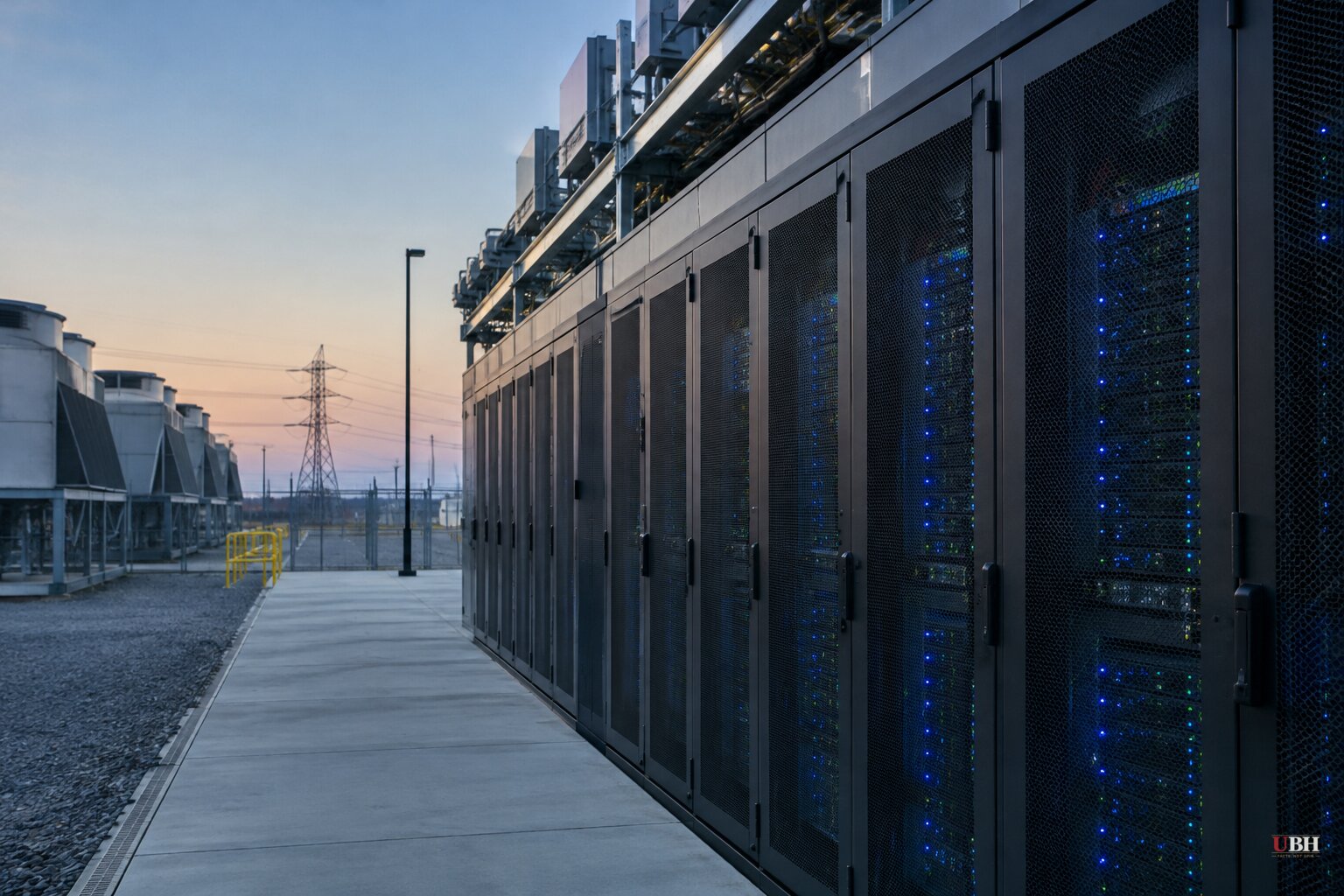
Since the Senate cleared a procedural step on Monday, Nov. 9 for the Bipartisan American Affordability and Jobs Act (BAAJA), the fight over how to power the AI buildout has moved from campaign ads to actual legislation and new hard numbers.
The numbers first. Howden, the global insurance broker, released research today, Nov. 11, estimating that US data center power demand has grown 19% a year since 2000. Grid capacity over the same period grew about 2% a year.
That gap has pushed data centers from 0.1% of total US grid capacity in 2000 to 5% in 2025, according to Howden's analysis of EIA data and 451 Research figures. Howden says power constraints are adding 24 to 72 months to build times on the most constrained projects.
Howden puts the cost of those delays at $800 million to $2.4 billion in lost revenue for the largest, most power-constrained builds. That estimate assumes annual revenue approaching $400 million at the top end of the facilities it tracks. It is an insurer's estimate, and Howden sells coverage into this sector.
The behind-the-meter workaround
Developers are not waiting. Howden says new hyperscale facilities are increasingly building their own generation behind the meter to skip the grid queue.
To hold a 5% share of grid capacity at current growth rates, the firm calculates data centers would need up to 58% of their power, about 110 gigawatts, from behind-the-meter sources by 2030. Howden itself calls that unlikely to be achievable and expects a mix of more grid share, slower growth at constrained sites and on-site generation.
Much of that on-site generation is gas. Global Energy Monitor data show US gas projects tied to data centers rose from roughly 4 gigawatts in early 2024 to 189 gigawatts in development by mid-2026. Some researchers contend the plants have worsened local pollution and health problems such as asthma.
On Bloomberg television today, University of Houston energy fellow Ed Hirs discussed how officials in Texas and elsewhere are responding to the demand for data center power.
Bloomberg Markets has also reported that the Federal Energy Regulatory Commission has told grid operators to streamline connections. The reported proposals include handling requests within 90 days and making data centers share the cost of grid upgrades.
What the Senate bill does
BAAJA is aimed at speeding energy infrastructure. According to TIME, it requires data centers to pay the full cost of the grid upgrades they trigger and includes transmission reforms. It also rolls back some environmental protections and could mean more gas-fired data centers on public lands.
President Trump urged the Senate on Truth Social on Sunday to pass it, writing that "China will take any Data Center that we don't want." Labor leaders back the bill for the jobs it promises. Many industry trade groups support it too, even though it would likely raise their building costs.
Opposition is organized. Hundreds of local and national groups, including the Sierra Club and the Natural Resources Defense Council, have signed letters urging Congress not to pass it as written.
"Everything about BAAJA goes against the spirit of voters this midterms, in which we saw voters turn out for candidates who directly oppose data centers," said Allie Rosenbluth, U.S. campaigns manager at Oil Change International. "This bill is a massive giveaway to the data center industry—and creates a backdoor for fossil fuels to enter the grid through data centers."
The sponsors want it passed before the current Congress ends in January. Engineering News-Record notes it may be one of the few bills lawmakers hope to finish before a Democratic-led Congress is sworn in Jan. 3.
State pressure is already building
The politics are shifting at the state level too. Texas Governor-elect Gina Hinajosa, a Democrat, has called for a data center moratorium and legislation requiring large-load users to pay for power and infrastructure. She also warned developers not to "trample on the rights of property owners to build ... transmission lines in record time because high-load users demand it."
In Iowa, Senator-elect Josh Turek, a Democrat, opposes restarting the Duane Arnold nuclear plant because most of its power is slated for Google. Governor-elect Rob Sand, also a Democrat, supports it if data centers pay "their full freight."
Georgia's Public Service Commission flips to a Democratic majority in January. Peter Hubbard won a full term Tuesday, Nov. 3, and Sheila Edwards won an open seat. Both will join Alicia Johnson, who won in July 2025, giving Democrats three of the five seats.
The commission voted unanimously in 2025 to approve Georgia Power's 10-gigawatt expansion. Reports estimated 80% to 85% of it would serve data centers.
Brionté McCorkle of Georgia Conservation Voters, whose affiliated PAC spent $4.3 million on Democratic commission candidates across two cycles, said residents' main worry is power bills. "The Public Service Commission is one of the only lines of defense that people have to be protected from data center costs showing up on their power bills," she said.
The cost concern has bipartisan roots. Sen. Jon Husted, R-Ohio, introduced the Ratepayer Protection Act, which passed the House with large bipartisan support but fell short in the Senate. Democrats there argued it did not go far enough because it leaves the decision on cost standards to the states.
The Senate has to finish BAAJA in the weeks before Jan. 3 for it to pass this Congress. Whether the cost-sharing provisions satisfy opponents who want a harder line on gas-fired data centers is the open question.
Sources used for this briefing
8 links from 8 independent newsrooms (syndicated copies of the same report count once)
These are the sources it draws on, linked so you can verify.


