
Unbiased headlines. Facts, not spin.
Unbiased Headlines is an independently owned news organization. We bring you the facts, not opinions, written fresh from 110+ named sources. Sources linked so you can verify it yourself.
 energy
Notable (6/10)
Guterres Tells COP31 Leaders the Climate Crisis Is 'Outrunning Us,' Proposes 'Climate Justice Compact' and Windfall Taxes on Oil Majors
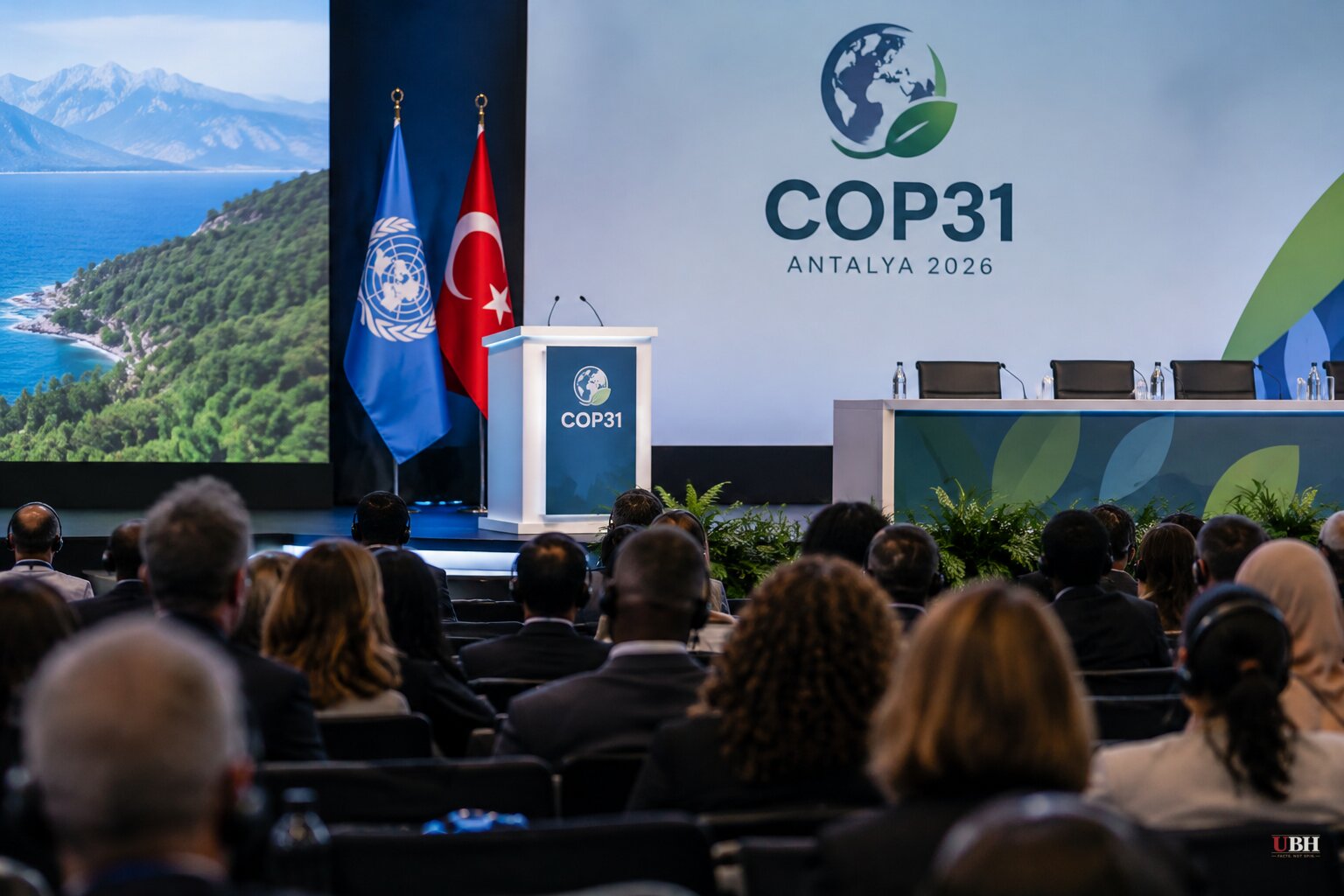
COP31's high-level segment began today, Wednesday, Nov. 11, on the third day of the summit in Antalya, with Secretary-General António Guterres telling dozens of leaders that "the brutal truth is that the climate crisis is outrunning us."
He put numbers behind it. Emissions in 2025 hit all-time highs, he said, and the last four years were the hottest ever recorded.
"Fossil fuels must go the way of the dinosaurs, but that won't happen on its own," Guterres said. "The dinosaurs did not have a lobby, but fossil fuels do."
A new proposal and a tax call
Guterres used the speech to propose a "Climate Justice Compact," aimed at expanding climate finance, protecting vulnerable countries and strengthening international cooperation. He said it should rest on "shared responsibility, shared security and shared benefits."
He also urged governments to tax the windfall profits of major oil companies. "Fossil fuel interests keep making a killing, while killing our planet," he said, and accused them of seeking to "distort the science." Those are his accusations. No fossil fuel company or industry group is quoted responding.
Guterres tied the argument to the economy as well as the climate. He said dependence on fossil fuels is damaging economies, which reads as a nod to the price spike since the U.S.-Israeli war on Iran disrupted crude shipments from the Middle East.
His term ends this year, so this is his last COP as Secretary-General.
Wars and tariffs crowd out climate
Brazilian President Luiz Inácio Lula da Silva, whose country hosted COP30, said the momentum from that conference faded at the start of this year. Climate change, he said, has disappeared from the speeches and documents of world leaders.
"We started talking more about weapons and tariffs than the survival of future generations," Lula said.
Turkish President Recep Tayyip Erdoğan, the host, echoed him. "Wars, crises, migration, famine and poverty increase the need for international solidarity each day," he said.
The Iran war has pushed global warming down the priority list for some governments as they scramble for reliable fuel supplies. Climate campaigners argue the same war makes the strongest case for switching to clean energy faster.
Iranian President Masoud Pezeshkian is attending. Before leaving for Turkey he told Iranian state television that "at this conference, we will speak about the actions of the United States and Israel in destroying the environment."
Who showed up
The attendance list is thin where it counts. Erdoğan, Lula, Qatar's Emir Sheikh Tamim bin Hamad Al Thani, Pezeshkian and Pakistani Prime Minister Shehbaz Sharif are there. European Commission President Ursula von der Leyen is participating, and Chinese Vice President Han Zheng and Marshall Islands President Hilda Heine are among those scheduled to speak.
French President Emmanuel Macron, German Chancellor Friedrich Merz, Italian Prime Minister Giorgia Meloni, Canadian Prime Minister Mark Carney and Japanese Prime Minister Sanae Takaichi are skipping the summit. British Prime Minister Andy Burnham is the only G7 leader scheduled to attend. He is due to speak Thursday.
The United States, the largest historical emitter of greenhouse gases, has skipped the talks for a second year in a row.
The actual negotiation
Negotiators from nearly 200 countries are working on a Turkish proposal to raise electricity's share of global energy consumption to 35% by 2035. The initiative is voluntary. It covers transport, buildings and industry.
The EU has said the electrification must be "clean." That could set up a debate over what role oil, gas and coal play in the Turkish text. The proposal also has to revive stalled efforts to move away from fossil fuels, which is the part Guterres is pressing hardest.
Former French Prime Minister Laurent Fabius, who presided over the 2015 Paris conference and leads an advisory council of former COP presidents, said the leaders' speeches should give the talks political impetus. He wants leaders to explain how they will deliver on their commitments. "The key word in Antalya is implementation," Fabius said.
The backdrop
A UN report last month found the world on course to break through the 1.5°C warming limit countries agreed to pursue under the Paris Agreement. The year has also brought severe heat waves across Western Europe and a glacier collapse in Nepal that triggered a catastrophic flash flood. Sources put the death toll at more than 1,400 to more than 1,500 people, with thousands still missing.
The conference runs through Nov. 20. Burnham's address Thursday is the next test of whether any G7 government is prepared to put specific commitments on the table, as negotiators work to settle the electrification target and the fossil fuel language around it.
Sources used for this briefing
7 links from 6 independent newsrooms (syndicated copies of the same report count once)
These are the sources it draws on, linked so you can verify.


