
Unbiased headlines. Facts, not spin.
Unbiased Headlines is an independently owned news organization. We bring you the facts, not opinions, written fresh from 110+ named sources. Sources linked so you can verify it yourself.
 energy
Major Story (7/10)
Event date: November 2, 2026 ·
California West Nile Toll Reaches 528 Serious Cases and 32 Deaths as Mosquito Officials Brace for an El Niño Year
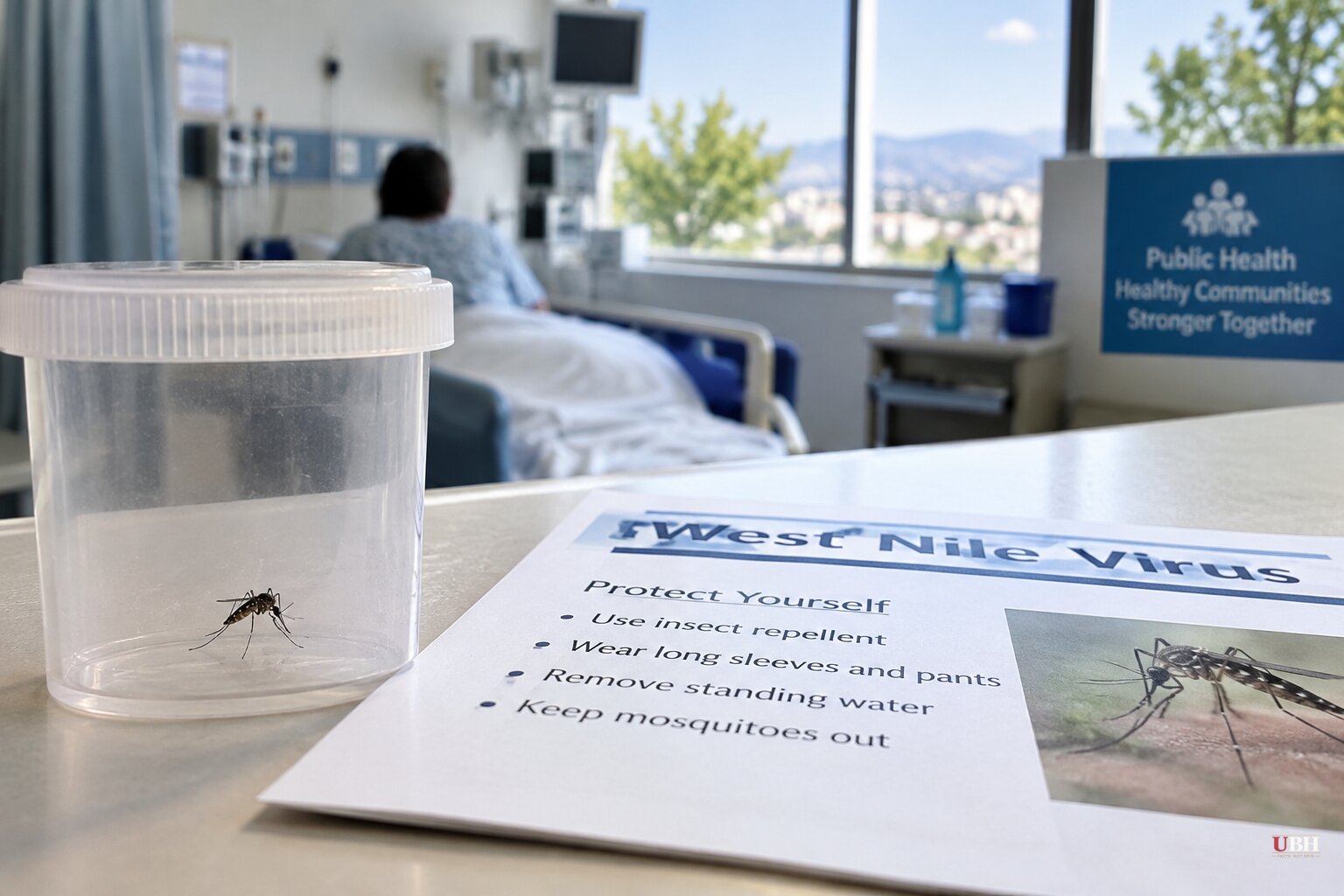
Since the record Southern California sea levels of late October, the El Niño story on the West Coast has been about water and wind. A less visible cost is now on the books: West Nile virus.
As of Nov. 6, the virus has seriously sickened 528 Californians and killed 32, according to the California Department of Public Health. That is the most West Nile activity in five years. Los Angeles County accounts for more than half of the reported human cases.
How a warm, wet year fed the outbreak
The virus replicates rapidly in the gut of Culex mosquitoes once temperatures rise above 70 degrees. This year's warm, wet summer and fall supplied those conditions.
In September, the outer bands of Hurricane Marie dropped about an inch and a half of rain across much of Los Angeles' westside. Downtown L.A. broke a rainfall record set in 1965. Temperatures then climbed to 104 degrees, with overnight lows that never fell below 77.
The rain also undid a routine defense. Susanne Kluh, general manager of the Greater Los Angeles County Vector Control District, said the storm flushed mosquito-killing treatments out of more than 3,000 miles of underground storm drains. The district treats those drains monthly.
"One of our biggest sources for Culex (mosquitoes) are our underground storm drains," Kluh said. "It's pretty much 72 degrees down there and humid all year round."
With the larvicide gone, populations surged. At one point this summer, more than 70% of mosquitoes the district trapped for sampling carried West Nile, Kluh said. That share has since fallen to about one-third.
The human toll
Most infected people never feel sick. About 1 in 5 develop fever, headache and body aches. Roughly 1 in 150 get seriously ill, when the virus reaches the brain and causes inflammation, neurological problems and sometimes death. There is no cure, only supportive care.
Cooler nights are now slowing both mosquito breeding and the growth of the virus, so Los Angeles residents may soon notice fewer mosquitoes.
What vector control officials fear for 2027
The worry is the next warm season. Paula Macedo, chair of the Mosquito and Vector Control Association of California, said: "We're all scared of next year. With the amount of activity that we already saw this year and having the forecast of being an El Niño year, we are all bracing ourselves."
The forecast is not in doubt. NOAA's Climate Prediction Center says El Niño is already in place and still strengthening. NOAA puts the odds above 83% that it stays strong to very strong into early 2027. NOAA's Ken Graham, director of the National Weather Service, has called it "a strong, if not historic El Niño going into this winter."
A UC Berkeley-led study of Los Angeles-area data from 2006 to 2016 found a narrow temperature tipping point for West Nile transmission near 70 degrees. The study's authors project rising risk along Southern California's coast as the climate warms.
The link between El Niño and mosquitoes is a forecast, not a finding. Forecasters stress that El Niño shifts odds without guaranteeing outcomes. NOAA itself says typical El Niño effects are more likely with an event this big, but not certain. The reporting on West Nile adds that next year's result depends on a tangle of birds, mosquitoes and weather that even experts struggle to predict. And scientists are still working out how climate change influences El Niño itself, according to Grist's reporting.
NPR's account of the forecasts adds that El Niño could also bring rain to drought-stricken areas.
The water side of the same winter
The coastal threat that opened this El Niño season has not gone away. NOAA oceanographer William Sweet's analysis showed average sea level in the week ending Oct. 30 ran 1.4 feet above expectations in San Diego, 1.3 feet in Los Angeles and 1.1 feet in San Francisco. In Huntington Beach alone, 114 homes and other structures were damaged by seawater.
Dillon Amaya, an assistant professor at North Carolina State University, said king tides will "provide a larger trigger for flooding" and that the ocean is expected to stay warmer than average through at least spring. Those tides are due around Thanksgiving, Christmas and Martin Luther King Jr. Day.
Fraser Shilling, director of the Road Ecology Center at UC Davis, has published a report naming places of concern, including San Luis Obispo, parts of the Bay Area, Stinson Beach and Humboldt Bay. It also flags lower-probability, high-impact spots such as Highway 37 near Novato Creek and airport runways built on fill near San Francisco Bay. San Rafael in Marin County is among the highest-risk areas, with homes and businesses built to the shore and below sea level.
"It costs millions or billions to fix these things before they break," Shilling said, "but it costs even more if you wait till after."
What comes next
The Greater Los Angeles County Vector Control District's monthly storm-drain treatments are the main control on Culex breeding in the county's drain network. The unresolved question for next year is whether a stormy El Niño winter will wash that larvicide out again before the warm season begins. Neither the district nor the state has said what, if anything, it plans to change.
Sources used for this briefing
7 links from 6 independent newsrooms (syndicated copies of the same report count once)
These are the sources it draws on, linked so you can verify.


