
Unbiased headlines. Facts, not spin.
Unbiased Headlines is an independently owned news organization. We bring you the facts, not opinions, written fresh from 110+ named sources. Sources linked so you can verify it yourself.
 energy
Notable (5/10)
Event date: November 9, 2026 ·
IRENA: 21,000 km of New Transmission Lines Built Last Year, but Grid Spending Must Double by 2035
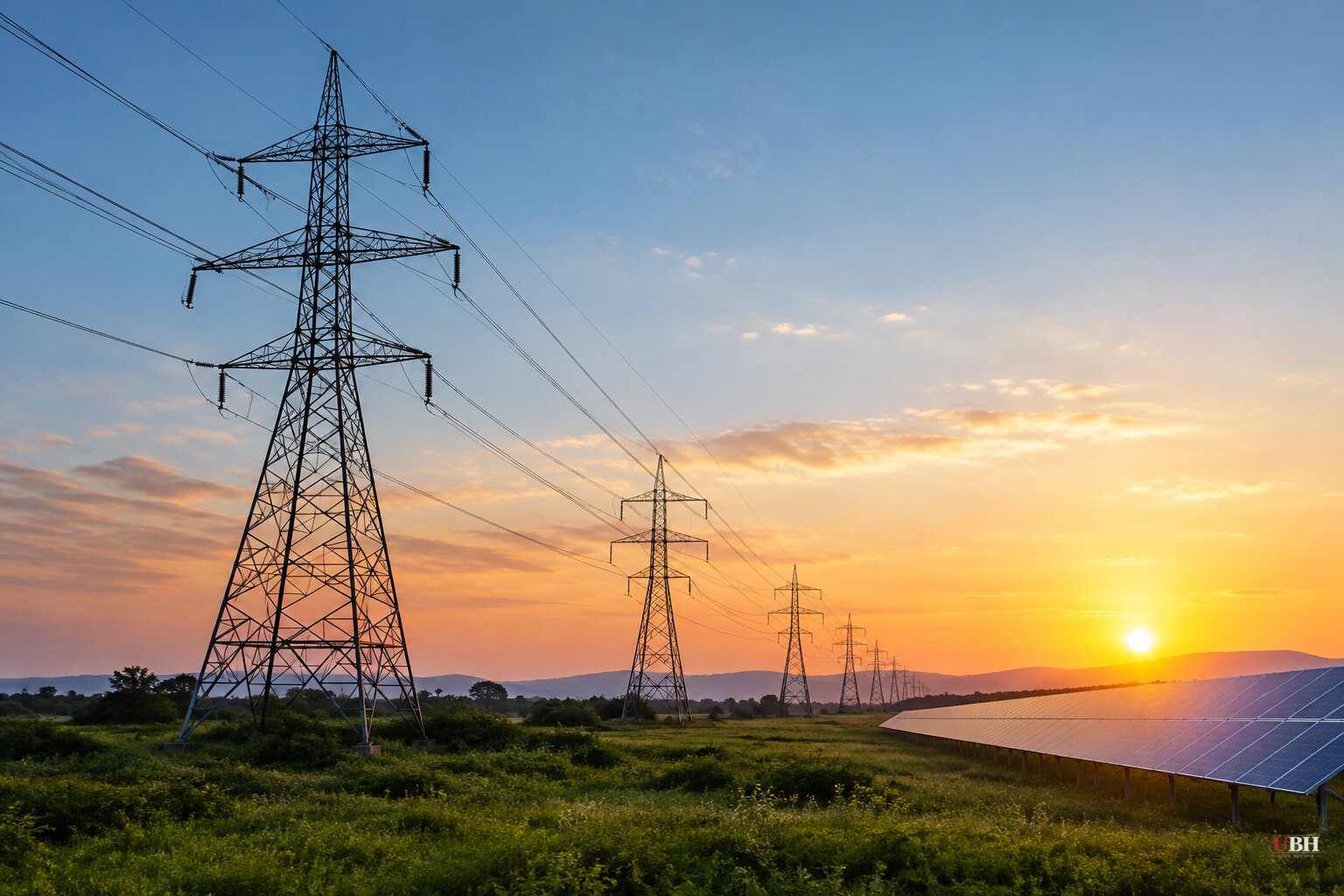
Utilities built more than 21,000 km of new transmission lines last year, a 50% jump from the year before, according to the International Renewable Energy Agency. The agency presented the figure this week at the COP31 climate summit in Antalya, Turkey, citing data from the Utilities for Net Zero Alliance.
It is a record. It is also, by IRENA's own account, nowhere near enough.
"Power grids will make or break not only the energy transition but also the world's ambition to raise global electrification to 35% by 2035, as championed by the Turkish COP31 Presidency," said IRENA Director-General Francesco La Camera. He said the agency's analysis shows global grid investment "must more than double, reaching a cumulative USD 10 trillion by 2035."
The money gap
The International Energy Agency has put numbers on the imbalance. Since 2015, annual global investment in electricity generation has climbed nearly 70% to about $1 trillion a year. Annual grid spending has grown at less than half that pace and sits near $400 billion.
The IEA calculates that grid investment must rise roughly 50%, to about $600 billion a year, to meet projected demand through 2030. IRENA's target is steeper and runs longer, through 2035.
The IEA also said in 2023 that utilities worldwide would need to add or replace some 50 million km of transmission lines by 2040 for Paris Agreement signatories to meet their commitments. The 21,000 km tally comes from the alliance's utility data, so it is not a like-for-like comparison. The gap in scale is still enormous.
Why wires matter
Wind and solar output varies with the weather, and the best sites are often far from the cities that use the power. When lines cannot carry the electricity, it gets wasted. The industry calls that curtailment, and it drives up the cost of renewable power.
Negotiators in Antalya are treating aging networks as a main barrier to the clean energy buildout. Turkey and Australia, the summit's co-hosts, are pressing for commitments on fossil fuel phase-out, renewable capacity and transmission.
The UN introduced a Global Grids Accelerator at its General Assembly in September, designed to fast-track funding for electrical infrastructure in Africa and Southeast Asia.
Who pays
The European Commission estimated last year that the EU alone needs between $2 trillion and $2.3 trillion in grid upgrades by 2050 to reach its climate goals. EU grid investment in 2024 was $90.5 billion. The Brussels think tank Bruegel says that would need to climb above $100 billion a year.
La Camera acknowledged that ambition alone will not get there. "We must move from targets to implementation, from individual projects to system-wide transformation, and from commitments to delivery at scale," he said.
That is a lot of money, and the question of who supplies it is still open. Neither IRENA nor the IEA has said in the figures above how the split between public and private capital should work.
Energy security changes the argument
Supply disruptions tied to the Iran war have pushed governments to treat power as a security issue. Wood Mackenzie's head of scenarios and technologies, Prakash Sharma, said the energy transition "has arrived at a genuine crossroads."
"The world is no longer moving in one direction," Sharma said. "Nations are making fundamentally different choices about how to power their economies." Wood Mackenzie's position is that countries that put energy security ahead of emissions plans could still end up with lower emissions through faster electrification that replaces imported hydrocarbons.
Singapore shows one of those different choices. Its Energy Market Authority has laid out a five-year plan to meet demand from data centers, chip fabs and electric transport. Peak demand reached 8.6 gigawatts, and planners expect 9.9 to 13 gigawatts by 2031.
The plan calls for five new natural gas-fired plants by 2031, adding about 26% to generation capacity. It also calls for a second import terminal at Jurong Port by 2030, lifting regasification capacity from 10 million to 15 million metric tons a year. Grid spending of up to $5.3 billion between 2025 and 2029 is 11 times what was spent in the prior five years. Singapore is also weighing a second high-voltage link with Peninsular Malaysia that could lift cross-border capacity to 2 gigawatts by 2030.
The country's officials have voiced concern about "resource nationalism," where governments hoard supply in a crisis. Gas and interconnectors are their answer.
China's share of the buildout
China is the largest single player. The Global Energy Transition Report 2026, released November 7 by the China Enterprise Reform and Development Society, projects Chinese energy investment of $940 billion this year. That is about 27.6% of the roughly $3.4 trillion in projected global energy investment, a 5% increase from 2025. The IEA separately forecasts $3.4 trillion in world energy spending, with about $2.2 trillion going to clean energy and grids and $1.2 trillion to fossil fuels. The $940 billion covers all energy, not just renewables.
Chinese state media, citing official figures, put China's installed renewable capacity at 2,337 gigawatts at the end of 2025, or 60.1% of its total generating capacity. Those figures also credit China with 63.6% of new renewable capacity added worldwide.
The energy think tank Ember reported that China's solar exports hit a record 68 gigawatts in March 2026, a 50% jump over the previous record set in August 2025. Ember said 50 countries set all-time highs for solar imports from China that month, led by emerging markets in Asia and Africa.
For countries buying that equipment, the dependence runs through Beijing, a point that matters to any government weighing energy security against a cheap supply of Chinese panels, batteries and grid hardware.
What comes next
The COP31 talks in Antalya continue, with grid financing for developing markets a central ask. The test is whether pledges convert into money. The IEA's numbers show spending of about $400 billion a year against a stated need of about $600 billion by 2030, and IRENA wants far more by 2035.
Sources used for this briefing
7 links from 5 independent newsrooms (syndicated copies of the same report count once)
These are the sources it draws on, linked so you can verify.


