
Unbiased headlines. Facts, not spin.
Unbiased Headlines is an independently owned news organization. We bring you the facts, not opinions, written fresh from 110+ named sources. Sources linked so you can verify it yourself.
 energy
Major Story (7/10)
Science Study: Sea Ice, Snow Cover and Permafrost Have Moved Outside Their Holocene 'Safe Operating Space'
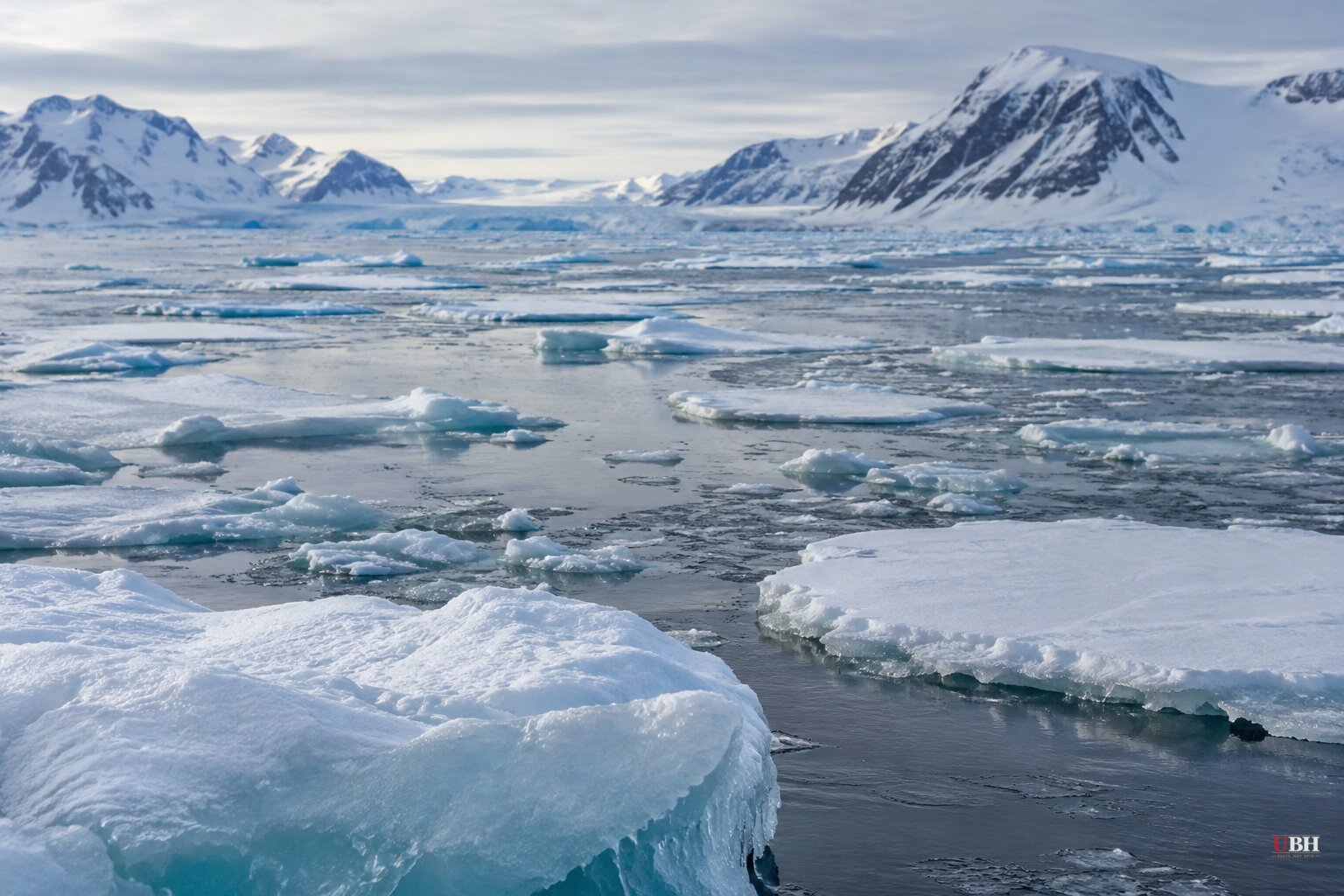
A new study in the journal Science says large parts of the world's frozen systems have moved outside the stable range they occupied for about 12,000 years.
More than 30 researchers, led by the Stockholm Resilience Centre, published the paper on Thursday, Nov. 12. They call the range the "safe operating space" of the cryosphere, the planet's ice, snow and frozen ground.
What the researchers measured
The team tracked four control variables: land ice volume, sea ice extent, snow cover extent and permafrost temperature. They compared current conditions against the Holocene, the stretch of unusually steady climate in which human civilization developed.
The paper's verdict on the results is blunt: an "accelerating and partly irreversible loss of cryospheric integrity."
Arctic sea ice, Antarctic sea ice, global snow cover and permafrost have all fallen outside the safe threshold, according to the study. Land ice has not crossed it yet but sits at the boundary. The authors say warming already locked into the climate system makes it likely to cross within the coming centuries.
The researchers attribute the shift to the burning of fossil fuels.
The stakes the authors point to
The West Antarctic Ice Sheet holds enough ice to raise sea levels by about 11 feet (3 meters). Evidence is growing, the authors say, that it is nearing a point of irreversible decline.
Permafrost holds trillions of tons of carbon. If it degrades, the study warns, carbon dioxide and methane could escape and push warming higher. Melting Greenland ice could also slow or collapse the ocean circulation that keeps Europe's climate temperate.
"The consequences of a changing cryosphere extend beyond regions where ice and snow are disappearing," said co-author Albert Norström of the Stockholm Resilience Centre.
The paper does not predict instant catastrophe. Leaving the safe space does not mean 11 feet of sea level rise next year or a sudden carbon release. It means the odds of crossing dangerous tipping points are rising.
Norström tied that risk to the Paris Agreement's 1.5°C goal. "As we scratch 1.5 [degrees Celsius] and go above it, we are just really gambling with potentially triggering some of these Earth system tipping points," he said.
Co-author Lan Wang-Erlandsson of Stockholm University put the policy conclusion plainly: "It's really time to take action and rapidly cut greenhouse gas emissions."
Engineering fixes on the table
The researchers also discuss geoengineering ideas. They include covering Alpine glaciers with protective sheets, pumping cold seawater to the surface to thicken ice, and building artificial barriers in front of ice sheets.
The authors stress that these methods are costly, have uncertain results, and do not touch the underlying cause, which they say is greenhouse gas emissions. Anyone proposing public money for such projects will have to answer for the price tag and the track record. The study offers no cost figures.
A diplomatic backdrop
The paper arrives during COP31 in Turkey, scheduled for Nov. 9-20. UN Secretary-General António Guterres told The Associated Press ahead of the summit that "this is a moment of truth" and that "everybody must do more, everybody must do more now."
Guterres, whose second and last term expires at the end of the year, said scientists told him last year he could no longer claim the 1.5°C limit was still achievable. "That was an enormous shock for me," he said. The UN is now working to limit how far beyond 1.5°C the world goes.
The AP itself described Guterres's warnings over the past decade as often delivered in increasingly hyperbolic language. It cited his 2023 line that "the era of global boiling has arrived." The Science paper uses more measured wording on timing, saying outright that crossing its thresholds is not an overnight doomsday.
What the framework is and is not
A "safe operating space" is a boundary the authors defined by comparing today against 12,000 years of Holocene conditions. It is a research construct, not a regulatory limit, and the paper does not name a specific policy that would restore any of the variables it tracks.
What the study does establish, in its authors' account, is that Arctic sea ice, Antarctic sea ice, snow cover and permafrost are already outside the range they set. Land ice is the one holdout, and it sits on the brink.
COP31 delegates have until Nov. 20 to turn urgency into commitments. Guterres's term ends at the close of the year, and no one has said what, if anything, the paper will change in the negotiating text.
Sources used for this briefing
7 links from 6 independent newsrooms (syndicated copies of the same report count once)
These are the sources it draws on, linked so you can verify.


