
Unbiased headlines. Facts, not spin.
Unbiased Headlines is an independently owned news organization. We bring you the facts, not opinions, written fresh from 110+ named sources. Sources linked so you can verify it yourself.
 energy
Major Story (7/10)
Event date: November 11, 2026 ·
Venezuela Ends State Electricity Monopoly in Unanimous Vote, a Day After Exxon Signs Preliminary Oil Deal
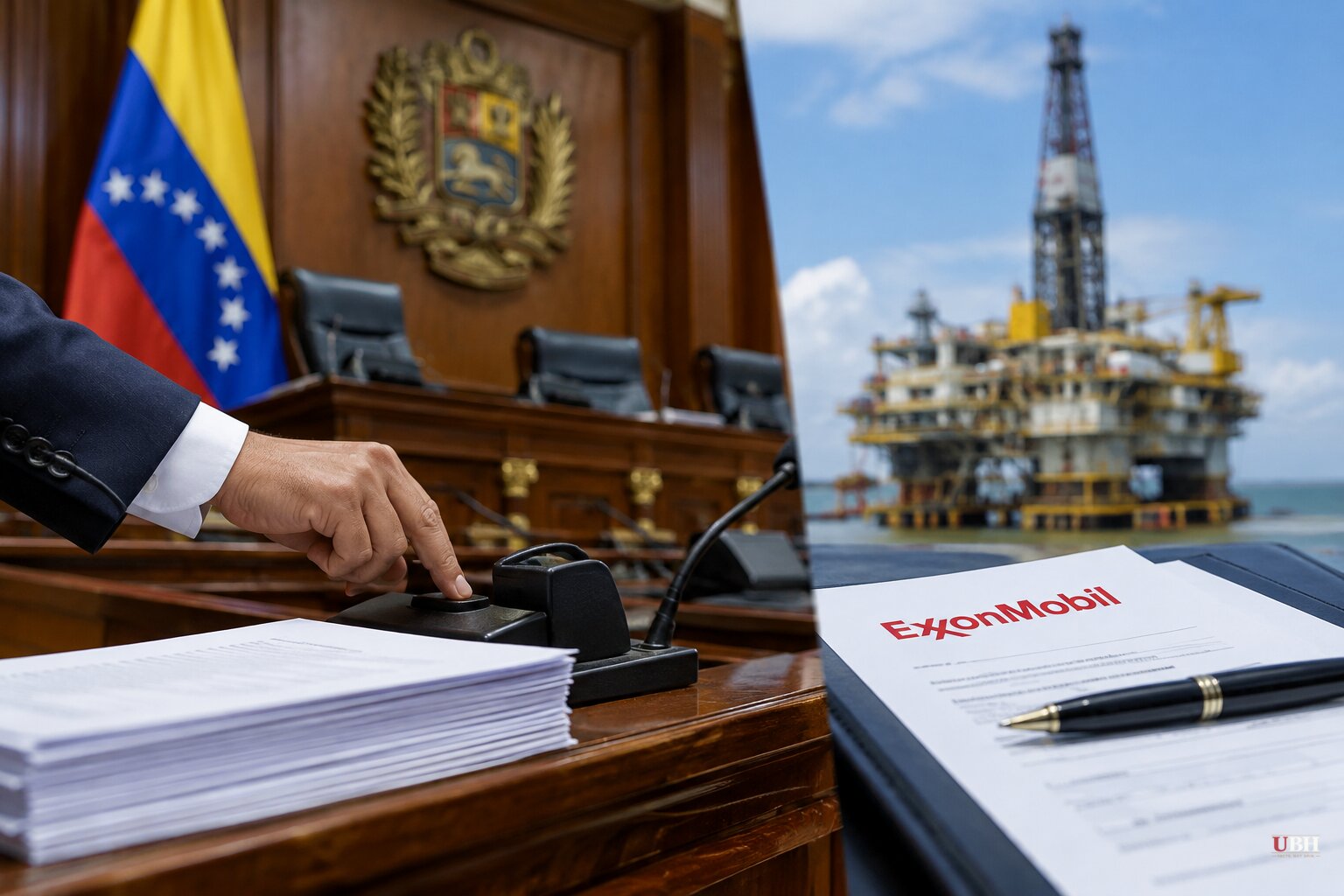
Venezuela's National Assembly voted unanimously on Tuesday, Nov. 10, to end the state monopoly over electricity that Hugo Chávez imposed in 2007. Private and mixed-ownership companies can now generate, transmit, distribute and sell power, provided they hold authorization.
The vote came a day after ExxonMobil signed a preliminary agreement with state oil company PDVSA. Both moves follow the same pattern since U.S. forces captured Nicolás Maduro in January: interim President Delcy Rodríguez has opened nationalized industries to foreign capital under pressure from Washington. Oil and mining were first. Electricity is next.
What the law does
The reform amends the Organic Law of the Electric System and Service. Private firms can build plants, build transmission lines and charge a fixed toll, or take distribution and commercial rights in defined areas.
They can also receive concessions over state assets for up to 25 years. Afterward the assets revert to the state utility, CORPOELEC, or another state entity. A new superintendency will set tariffs, investigate complaints and impose penalties.
The state keeps exclusive control of hydroelectric generation in the Caroní basin, plus transmission and distribution in areas deemed strategic. Oil and independent power firms need no state authorization to generate power for their own internal networks, unless they plug into the national grid.
National Assembly President Jorge Rodríguez, the interim president's brother, said private firms will mainly supply businesses, industries and shopping centers. He said CORPOELEC will keep subsidizing households, "above all for the most vulnerable." Tariffs will be computed in foreign currency and converted at the Central Bank's official rate. They have not been published.
The shortfall
Experts estimate the state generates about 12,000 megawatts. Demand reached 16,400 MW in September. Venezuelanalysis put the deficit at more than 4,000 MW.
The Venezuelan Observatory of Social Conflict logged 531 protests over electricity service in September. On Monday, demonstrators blocked the highway between Barcelona and Puerto La Cruz in Anzoátegui state. Delcy Rodríguez answered that "burning tires does not add a single megawatt to the electric grid."
Outages vary by region. Some reports put them at up to 12 hours a day. In Táchira state, rationing that once ran four hours has stretched to 18 and 20 consecutive hours, according to electricity consultant Efraín Rincón. The crisis, long concentrated in oil-producing Zulia, reached Caracas, Miranda and La Guaira this year.
"The power goes out on me every day," said Nuris Medina, a 66-year-old lawyer on the outskirts of Caracas. "It's a middle class area, imagine in the interior of the country."
Authorities have pledged to add 1,300 MW before year-end. They have negotiated with GE Vernova, Siemens and Argentina's Impsa to restart idle plants.
Privatization or "expansion"
Jorge Rodríguez insisted the law "no way promotes privatization" and called it "not privatization, but an expansion." Venezuelanalysis called it partial privatization. Opposition lawmaker Antonio Ecarri backed the vote, saying it was needed "in the face of collapse" of the grid and because of "the disastrous policy that resulted from the previous law."
OilPrice.com argued the reform mainly benefits oil producers and large businesses able to pay the new tariffs. In its account, households keep a subsidized rate on a state grid that still depends on the repair work. OilPrice.com reported that Caracas has not guaranteed payment to the suppliers that work requires.
Power expert Miguel Lara told Reuters earlier this year he did not know "which power supply will support the economic reactivation they are talking about."
The law's investor protections are the other open question. It sends unresolved disputes to Venezuelan courts or to "alternative dispute resolution mechanisms." Venezuelanalysis noted that U.S. licenses for Western companies dealing with Venezuela have required disputes to be settled in the U.S., UK, France or Singapore.
The national legislature that passed this was unanimous and led by the president's brother. Investors will have to decide how much a law is worth when the same family can change it.
Exxon's preliminary step
On Monday, Nov. 9, ExxonMobil and PDVSA signed a memorandum of understanding at a ceremony presided over by Delcy Rodríguez. The document is nonbinding and commits Exxon to no specific project. Exxon has not said which areas or projects it is assessing. Before it can explore or produce, it needs a final joint-venture or production-sharing contract.
Venezuela expropriated Exxon's assets nearly two decades ago. The company's own statement is cautious: the memorandum "is a meaningful first step, but any future investment would require stable policies, clear regulations, strong investment protections and competitive returns."
Hydrocarbons Minister Paula Henao pointed to Exxon's history in the Orinoco Belt and said the aim is to raise recovery from heavy and extra-heavy crude with Exxon's technology. Rodríguez said Venezuela now has "a solid legal security framework" for the company.
The memorandum came about two months after President Trump said Exxon was among companies planning to do business in Venezuela again.
Power and oil
The two stories are tied together. The White House announced on Aug. 31 that North American Blue Energy Partners, controlled by Venezuelan businessman Alejandro Betancourt, received 100-year concessions over 17 fields. They hold about 65 billion barrels, roughly a fifth of Venezuela's total.
The company says the Pentagon's Office of Strategic Capital holds a 35% stake in its parent. That means a U.S. government agency is an equity partner in a Venezuelan oil venture.
U.S. Energy Secretary Chris Wright, in Venezuela for the accord, said the oil sector depends on working power. "You need them both," he said. He voiced optimism that existing infrastructure can be revived under a five-year plan.
The final text of the electricity law is due in Venezuela's National Gazette in the coming days. That will show the investor guarantees, and the tariff schedule is still to come.
Until those are public, neither Exxon's memorandum nor the new generators have terms that can be tested.
Sources used for this briefing
7 links from 7 independent newsrooms (syndicated copies of the same report count once)
These are the sources it draws on, linked so you can verify.


