
Unbiased headlines. Facts, not spin.
Unbiased Headlines is an independently owned news organization. We bring you the facts, not opinions, written fresh from 110+ named sources. Sources linked so you can verify it yourself.
 energy
Major Story (7/10)
Event date: November 12, 2026 ·
Asian Refiners Return to Gulf Crude as Saudi Arabia Cuts Prices and US Cargoes to Asia Slow
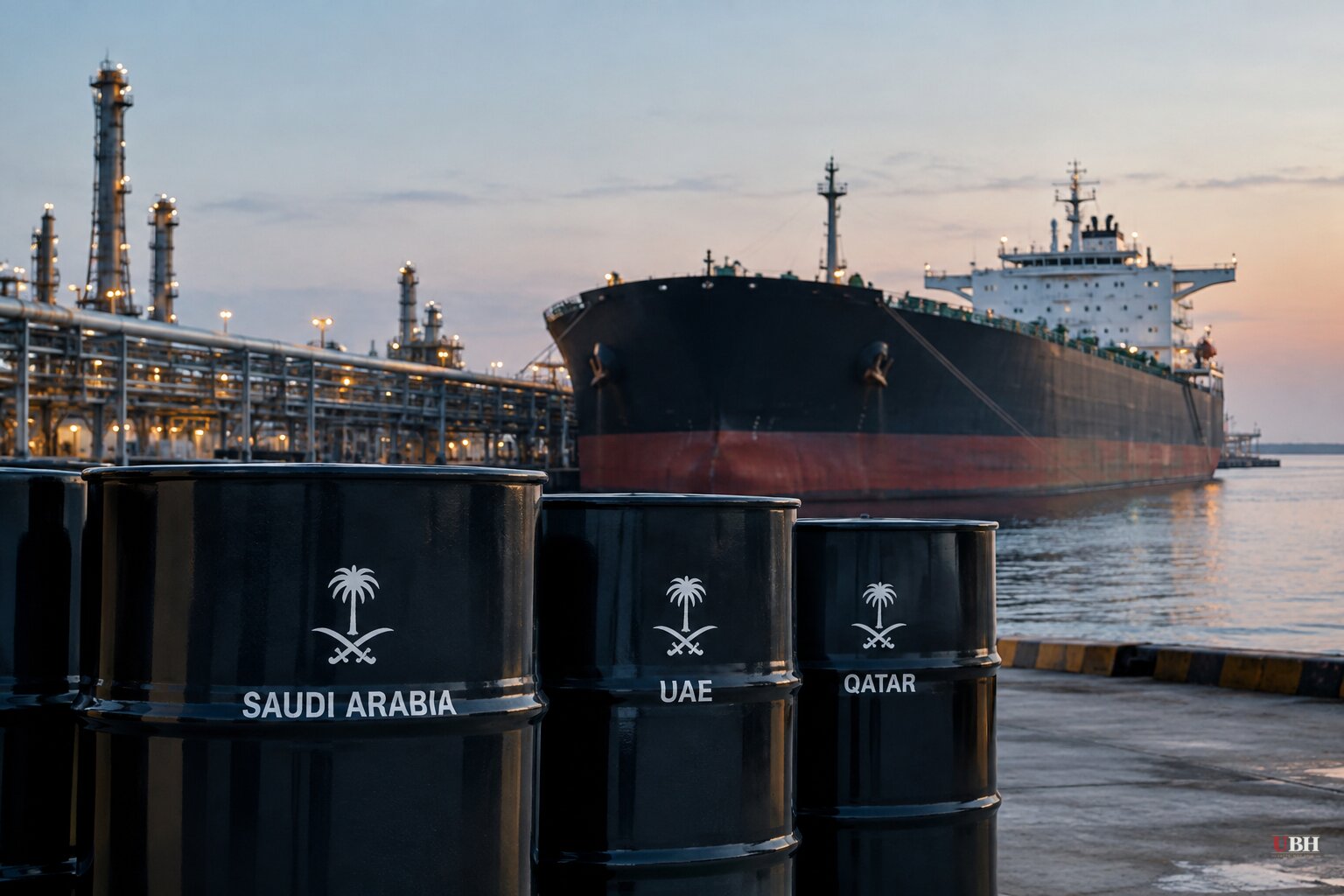
Since the U.S.-Iran war began on Feb. 28 and Gulf exports collapsed, Asia's refiners have spent eight months scrambling for oil from wherever they could get it. This week the buying pattern is shifting back.
Refiners in Japan, China and Thailand have ramped up or restarted purchases from Saudi Arabia, the United Arab Emirates and Qatar, traders familiar with the deals said. Some of those cargoes still have to cross the Strait of Hormuz. The war has not been formally settled.
Gulf supply is back, and it is getting cheaper
OPEC's October data shows the supply side of the story. Group output rose by nearly 2 million barrels a day to about 27.2 million, against roughly 28.6 million in February, before the war. Saudi Arabia raised production to about 10.6 million barrels a day from about 8.4 million in September.
Saudi crude exports averaged around 7 million barrels a day in October, according to Kpler data. That is slightly below September but above the kingdom's 2025 average of about 6.2 million.
Then came the price cuts. Saudi Aramco lowered its December official selling price for Arab Light to Asia by $2 a barrel, to a $7 discount to the Oman/Dubai benchmark. Kpler says Kuwait also cut December prices by $2. The UAE, which left OPEC in April, trimmed the premium on December cargoes of its flagship grade.
Dubai's prompt premium tells the same story. The Dubai M1-M3 spread narrowed from +$11.03 a barrel on Oct. 6 to +$1.03 on Nov. 12, according to Kpler, close to flipping into contango.
US crude is the first casualty
The cargoes that filled the gap are the ones losing out. Traders told Bloomberg in October that Asian orders for US crude for November delivery had fallen roughly 50%, to 24 million to 26 million barrels.
Kent Britton, chief executive of the Port of Corpus Christi, said this week that none of the 40 crude cargoes that left US Gulf Coast ports last week was bound for Asia.
Freight rates point the same way. Daily earnings for very large crude carriers on US Gulf routes are down 61% from their October peak. On the Persian Gulf to East Asia route the drop is 24%.
China's October crude imports reached a seven-month high of nearly 42 million tonnes, led by Iraqi cargoes. India's imports from the Gulf now exceed its volumes from Russia, according to figures cited in market reports.
Warren Patterson, head of commodities strategy at ING Groep, put the dependence bluntly: "How do you break the reliance on your biggest source of crude? There is just not enough slack in global balances to move the needle significantly when it comes to trying to diversify."
The Atlantic is not out of the game
The shift is not one-directional. Kpler's analysis shows Chinese refiners stepping up purchases of West African and Brazilian crude even though cheaper Middle Eastern oil is available.
The landed value of Nigeria's Agbami grade into Ningbo fell $11.95 a barrel week on week, to +$19.65 against the Dubai swap for late-November loading. At that level, prompt Agbami cargoes are about $4 a barrel more competitive than Murban, Kpler says.
Kpler expects that to support West African differentials as falling freight lets sellers keep part of the delivered-price advantage. It also warns that further Gulf price cuts could erode that edge.
So the Gulf is regaining ground in Asia, and Atlantic barrels are still winning some of it back on price. The US is the one exporter with the most to lose on the long haul.
Hormuz is still the bottleneck
The recovery rests on workarounds. Alternative pipelines, ship-to-ship transfers and Red Sea loadings have kept Gulf oil moving, along with US military support, according to the Wall Street Journal's reading of OPEC data.
Confirmed Hormuz transits averaged about 4 million barrels a day over the past week, against roughly 17 million before the war, Kpler data show. Those figures are preliminary, and some tankers cross with transponders switched off.
Before the war the strait carried around a fifth of the world's oil and liquefied natural gas. Houthi threats to Red Sea traffic and drone strikes on Saudi Arabia's East-West pipeline show how exposed the bypass routes are.
Diesel shows the wider reshuffling. An analysis of more than 21,000 shipments found Asian refineries supplied almost 40% of seaborne diesel in October, up from about 28% before the war. The US is now the world's top diesel exporter. Australia, the largest seaborne importer, was paying about A$2.79 a litre.
Prices and politics
Brent futures settled at $94.62 on Nov. 4, down 8.7% a day after Democrats flipped both the House and Senate in the Nov. 3 midterms. They remain well above the roughly $72 close on Feb. 27, the day before the war.
The national average for regular gasoline was $4.10 on Nov. 5, according to AAA, against almost $3.08 a year earlier. GasBuddy's Patrick De Haan said the average could fall to $3.65 in the coming weeks if wholesale losses carry through.
Sparta Commodities senior oil analyst June Goh said more volatility is likely because the path to a diplomatic end to the war is uncertain and global strategic reserves have been drawn very thin.
The next test is the January pricing round. If Saudi Arabia and Kuwait cut again, the Gulf could take back more of Asia from West African and US barrels. The strait would then still be carrying only a fraction of its prewar volume.
Sources used for this briefing
7 links from 7 independent newsrooms (syndicated copies of the same report count once)
These are the sources it draws on, linked so you can verify.


