
Unbiased headlines. Facts, not spin.
Unbiased Headlines is an independently owned news organization. We bring you the facts, not opinions, written fresh from 110+ named sources. Sources linked so you can verify it yourself.
 energy
Low Interest (4/10)
Event date: November 12, 2026 ·
South Africa Braces for El Niño: Cape Town Weighs Water Restrictions, Gauteng's Non-Revenue Water Estimated at 47%
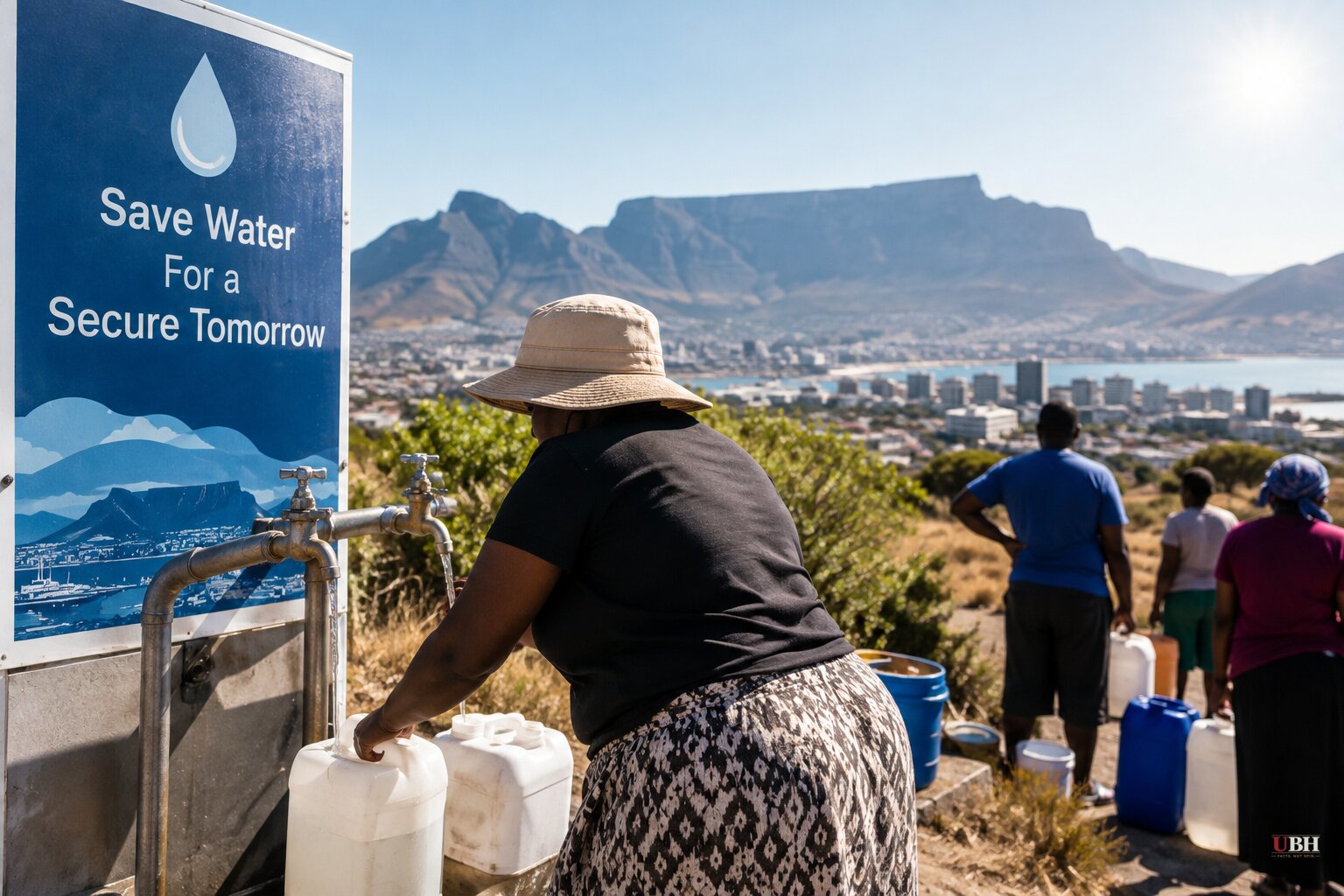
South Africa is heading into a hot, likely dry summer with full-looking dams and a leaky delivery system. That is the picture from the Department of Water and Sanitation, Parliament and the water experts now sounding the alarm.
The South African Weather Service's seasonal outlook points to below-normal rainfall across much of the country, with above-normal temperatures. The service is forecasting a high likelihood of a strong El Niño.
Cape Town: storage is high but falling
Water and Sanitation Minister Pemmy Majodina told Parliament that combined storage in the Western Cape Water Supply System stood at about 74.81% on 5 October 2026. She said the system remains relatively stable, but levels are lower than at the same point last year and the overall trend is downward.
Majodina said El Niño-related conditions have added uncertainty to future water availability and system performance. Her department has modelled restriction scenarios and other demand-management measures for the 2026/27 operating year, in response to questions from Rise Mzansi MP Songezo Zibi.
A decision on whether to introduce restrictions was due to follow the presentation of that analysis to the Western Cape Water Supply System Stakeholder Operating Forum. Whether restrictions have been approved remains an open question.
The City of Cape Town is already leaning on big users. It has sent notices to ratepayers whose consumption exceeded 15,000 litres a month for two consecutive months. One ratepayer received a text warning to get under that threshold the next month or face supply restrictions.
Majodina said her department is working with the Western Cape Department of Local Government on contingency plans, backup power support and dedicated operations and maintenance teams.
Provincial storage has kept slipping. A statement carried on Polity.org.za put total Western Cape dam storage at 77.7% as of 9 November, with Klipheuwel Dam at 7.6% (against 11.5% a year earlier) and Steenbras Lower Dam at 44.8%. It said Western Cape Minister Anton Bredell issued a circular advising municipalities to implement precautionary Level 1 water restrictions by 15 November, escalating to Level 2 by 1 December in higher-risk supply systems.
Gauteng: the water is there, the pipes are not
The Department of Water and Sanitation singled out Gauteng. Average consumption there is about 250 litres per person per day. The international average is 173.
Department spokesperson Wisane Mavasa said the current heatwave, entering its third consecutive week, is driving demand up. She said it is "compounding existing challenges, particularly substantial water losses through leaking municipal distribution infrastructure."
The department's own report puts Gauteng's non-revenue water at an estimated 47%. Physical losses account for about 27%. Non-revenue water is a different measure from water physically lost: it covers water that is supplied but not billed.
The department says it cannot give Rand Water more than its authorised annual abstraction from the Integrated Vaal River System. Residents are being told to water gardens only between 6pm and 6am and to fix leaking taps and toilets.
Prof Anja du Plessis of the University of South Africa put the national picture bluntly at a webinar hosted by WaterCAN. "Our dams are in better shape than in 2015 and 2016, and that gives us a little bit of time. But time only helps if we spend it on fixing leaks, building buffers, and making decisions early," she said.
She described El Niño as "a stress test that we can see coming." She said the Vaal system is in good shape, and that the vulnerability lies in whether treatment plants, pumps and municipal networks can keep up. Heat-driven demand shows up within days, she said, while dam levels take longer to move.
Du Plessis cited ageing infrastructure, weak financial management and unclear accountability in municipalities. She wants funding for El Niño preparation released and ring-fenced quickly, and municipalities held to leak-reduction targets and fault-response times. Johannesburg, she said, needs to tackle physical losses first.
"I don't think we can really depend on municipalities, so we need to build our own resilience," she said.
Rand Water's Lathyrus Kgasago said raw water availability does not mean there are no supply limitations, and put non-revenue water within municipal systems at above 38%.
Is government doing enough?
Ferrial Adam, executive director of WaterCAN, said she is concerned that adequate preparations are not being made. WaterCAN convened the webinar because El Niño threatens both water supply and food production, she said, and people need to prepare themselves if government is not doing enough.
Government describes its own record differently. The Department of Water and Sanitation says it monitors major supply systems through hydrological assessments, dam storage tracking and early-warning systems, and is working with sector partners on preparedness. Du Plessis acknowledged government had taken steps through early warning and advisory structures, but said municipalities must act early on leaks, pressure management and restrictions where necessary.
Conditions differ between towns
On the Garden Route, the Knysna Municipality says Akkerkloof Dam is about 92% full, against 15% at the same time last year. Level 2 restrictions remain in place anyway, and the municipality is warning residents about heat illness and veld fires.
IOL's account of the webinar also notes that El Niño does not automatically mean drought everywhere. Its effects vary by region and season.
The U.S. forecast
The pattern is global. NOAA's latest outlook calls for warmer-than-average temperatures across much of the continental U.S. and above-average precipitation in several regions. Ken Graham, director of NOAA's National Weather Service, said at an October media briefing: "It's a strong, if not historic El Niño going into this winter."
Forecasters stress these are odds, not guarantees. NASA Jet Propulsion Laboratory climate scientist Josh Willis points to the last strong event in 2015-16, when catastrophic flooding hit South Carolina and a blizzard struck the East Coast.
The near-term test is in the Western Cape, where the outcome of the operating-forum process will show whether restrictions arrive before or after summer demand peaks. In Gauteng, the 47% non-revenue water estimate is the number municipalities will be measured against.
The weather is set. The only variable left is how much water the pipes deliver.
Sources used for this briefing
7 links from 7 independent newsrooms (syndicated copies of the same report count once)
These are the sources it draws on, linked so you can verify.


