
Unbiased headlines. Facts, not spin.
Unbiased Headlines is an independently owned news organization. We bring you the facts, not opinions, written fresh from 110+ named sources. Sources linked so you can verify it yourself.
 energy
Notable (6/10)
Event date: November 9, 2026 ·
Iraq Reports 4.888 Million bpd to OPEC. Outside Estimate Is 4.491 Million, Against a 4.431 Million Quota
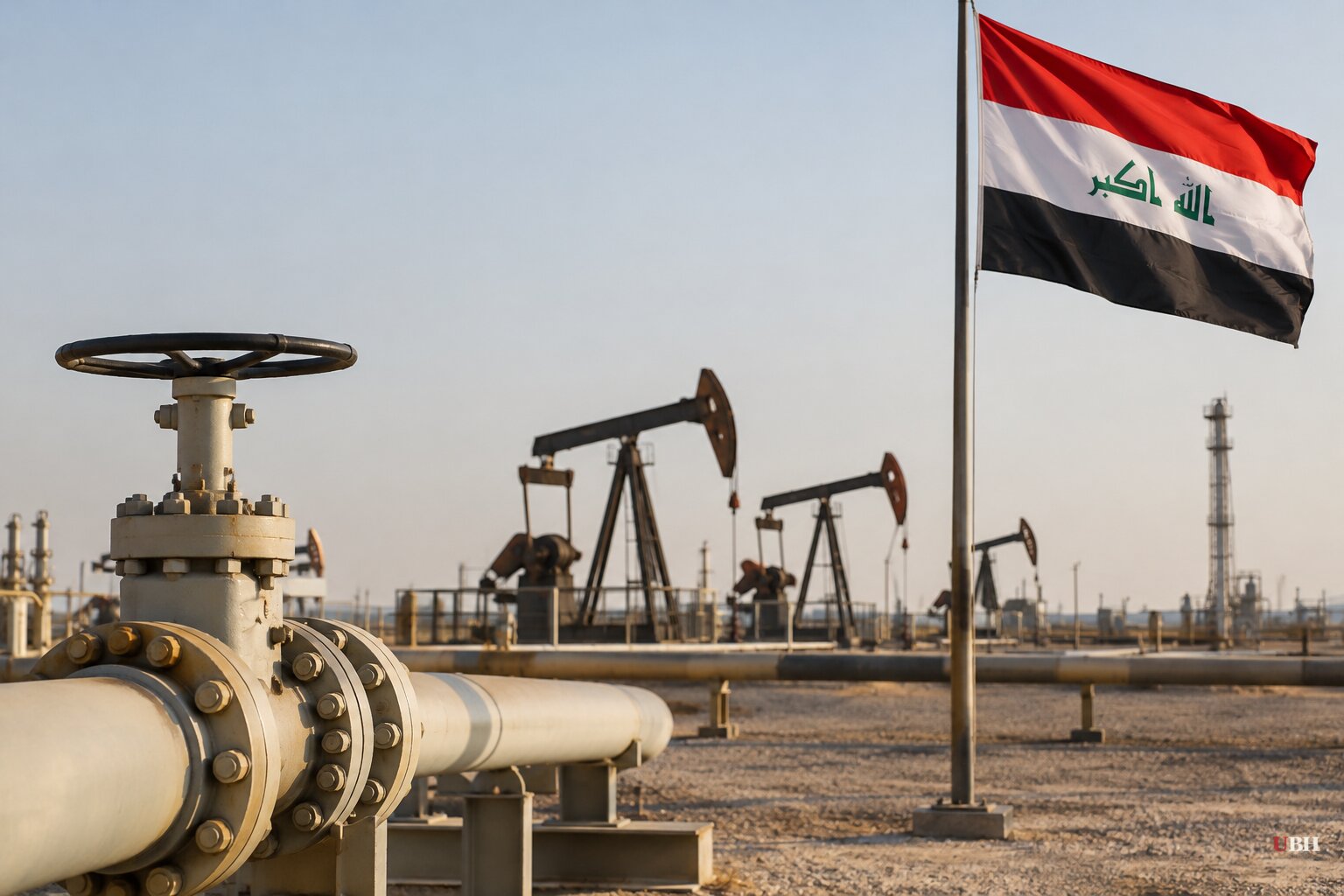
Iraq told OPEC that its crude production rose by 489,000 barrels per day in October, to 4.888 million bpd from 4.399 million in September. That is a gain of 11.1%, the second-largest monthly increase among OPEC members, behind Saudi Arabia and ahead of Kuwait.
The number is Baghdad's own. OPEC's compliance gauge, which relies on independent secondary sources, put Iraqi output at 4.491 million bpd. Iraq's OPEC+ requirement is 4.431 million bpd.
That leaves a wide gap between the two versions. On Iraq's figure, the country was 457,000 bpd over its target. On the outside estimate, it was about 60,000 bpd over.
The 5 million barrel claim
The dispute sharpened after Oil Minister Basim Mohammed Khudair said Iraq is already producing more than 5 million bpd. That came days after Iraq and six other OPEC+ producers agreed on Nov. 1 to leave December targets unchanged. Shortly afterward, the Oil Ministry reaffirmed its commitment to the 4.431 million bpd ceiling, said October output had risen, and gave no figure.
Khudair said Iraq remains compliant because its exports fall within what he called the group's "export ceiling." Iraq's 4.431 million bpd requirement, however, is a production target. OPEC assesses compliance using crude production estimates from secondary sources, not exports.
The distinction matters. Iraqi crude can be exported, refined at home, burned for power or put into storage. A country could export less than its quota and still produce more than it.
If Khudair's 5 million figure refers to production as OPEC defines it, Iraq would be at least 569,000 bpd above its requirement.
Why Baghdad wants a bigger number
Iraq is pushing for a 2027 baseline built on capacity of around 6 million bpd. OPEC is carrying out its own assessment of members' maximum sustainable capacity, which it says will serve as a reference for 2027 production baselines. The Oil Ministry said Saturday that Iraq is seeking a higher allocation than 4.431 million bpd while staying committed to the agreed limit.
There is also a recovery story behind the numbers. Iraq Oil Report, using field-by-field data, put total September output at about 4.22 million bpd, up from 3.47 million bpd in August. Federal fields produced 3.95 million bpd and Kurdistan Regional Government fields 265,000 bpd.
Several Iraqi oil officials told Iraq Oil Report that many fields lost at least some capacity during wartime shut-ins, which could delay a full recovery. That cuts against the idea that Iraq can simply flip a switch to 6 million.
Saudi Arabia and the wider market
Saudi Arabia told OPEC its October production hit 10.56 million bpd, slightly above its quota. OPEC's outside-source data showed Saudi output under its 9.194 million bpd threshold. The Saudi "supply to the market" figure was 9.203 million bpd, which implies some barrels went into storage.
Iran, by OPEC's secondary-source estimate, produced 1.91 million bpd in October, the lowest in roughly four decades. Tehran did not submit its own figure.
More crude is moving through the Strait of Hormuz despite Iranian attacks on tankers. Vessel traffic in October reached its highest monthly level since July, according to S&P Global, though crude tanker movements fell and security incidents continued.
Oil prices since the election
Brent futures settled at $94.62 on Nov. 4, down 8.7% in one session, a day after Democrats flipped both the House and Senate in the Nov. 3 midterms. Brent traded around $96.88 by late morning on Nov. 5. The U.S.-Iran war began Feb. 28, and Brent closed near $72 the day before.
Vice President JD Vance blamed the war for Republican losses, and President Donald Trump told reporters Vance's assessment was largely true because the war drove up gasoline prices. House Minority Leader Hakeem Jeffries said in a Nov. 4 letter that House Democrats must act in their first 100 days in the majority to stop the war.
ING commodities strategists Warren Patterson and Ewa Manthey said in a Nov. 5 note that the new Congress does not take office until January, leaving room for escalation. Absent that, they said, the market is likely to keep giving back its risk premium, and the selloff looked overdone.
Sparta Commodities senior oil analyst June Goh said more volatility is likely because the path to a diplomatic end to the war is uncertain and strategic reserves have been drawn very thin.
At the pump, AAA put regular gasoline at $4.10 on Nov. 5, against almost $3.08 a year earlier. GasBuddy's Patrick De Haan said the national average could fall to $3.65 in the coming weeks if wholesale losses from Nov. 4 carry through.
Fuel shortages inside Iraq
Higher output has not solved Iraq's domestic supply problems. The Kurdistan Region requested 268,710,600 liters of household heating oil this year, enough for its 1,343,553 families at 200 liters each. Baghdad said that amount was not available and offered 50 million liters, about 19% of the request. The Oil Ministry said Nov. 12 that the paperwork is complete and the oil should ship in the coming days, with mountainous areas served first.
The next test comes Nov. 29, when OPEC+ meets. Iraq will argue for a bigger 2027 baseline with two competing production figures on the table, 4.888 million bpd from Baghdad and 4.491 million from OPEC's secondary sources.
Sources used for this briefing
6 links from 5 independent newsrooms (syndicated copies of the same report count once)
These are the sources it draws on, linked so you can verify.


