
Unbiased headlines. Facts, not spin.
Unbiased Headlines is an independently owned news organization. We bring you the facts, not opinions, written fresh from 110+ named sources. Sources linked so you can verify it yourself.
 energy
Major Story (8/10)
Event date: November 9, 2026 ·
IAEA: Zaporizhzhia Lost All Off-Site Power for Over 12 Hours as Chernobyl-Zone Backup Generators Kicked In
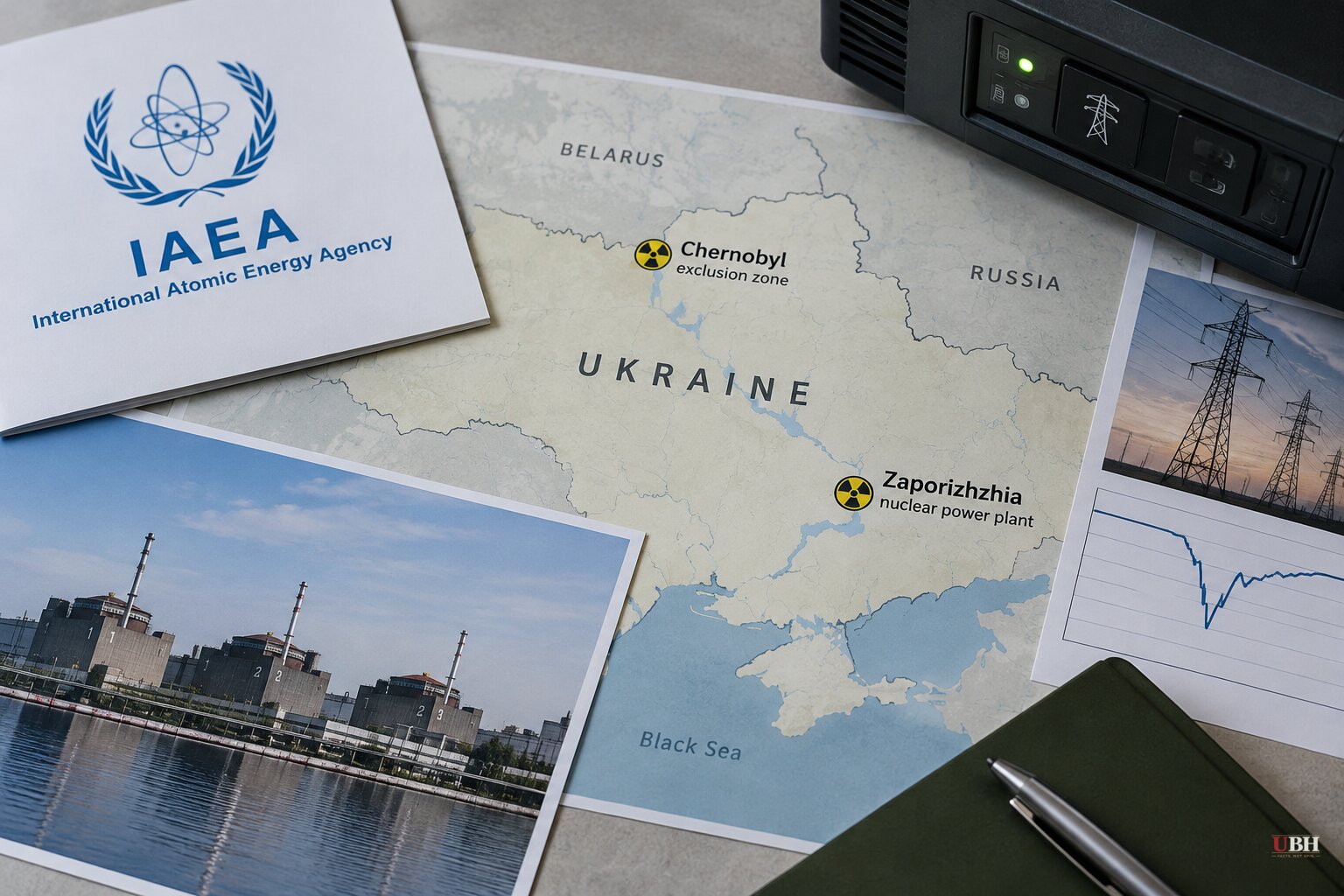
The International Atomic Energy Agency said Saturday that backup generators kicked in at two nuclear sites in Ukraine over the past week after the country's battered power grid faltered.
At the Zaporizhzhia Nuclear Power Plant, all off-site power was cut for more than 12 hours last weekend, the IAEA said. Four emergency diesel generators started to run essential safety systems. The plant later dropped to two generators to save fuel.
Separately, dips in the grid automatically triggered diesel generators at "several facilities" inside the roughly 1,000-square-mile Chernobyl exclusion zone in northern Ukraine, according to the agency's experts.
"It would be difficult for me to overstate my concern about the electrical grid in Ukraine and its impact on nuclear safety," IAEA Director General Rafael Grossi said. He added that the concerns are "only further exacerbated as temperatures continue to fall and winter takes hold."
A grid under sustained attack
The outages follow a heavy stretch of Russian strikes. Ukrainian outlet Ukrinform reported that Russian forces carried out 128 attacks on energy facilities across various sectors between Nov. 2 and Nov. 8.
On Nov. 7, Ukraine's Energy Ministry said a new wave of strikes left people without power in the Dnipropetrovsk, Donetsk, Kyiv, Zhytomyr and Kharkiv regions. The ministry reported "extensive damage" to transmission and distribution networks. Lines carrying electricity from nuclear plants to Kyiv and central Ukraine were also damaged.
President Volodymyr Zelensky said the strikes hit substations connecting the Rivne and Khmelnytskyi nuclear plants to the grid. The South Ukraine plant is still generating power.
On Nov. 8, DTEK said more than 600,000 people in the Dnipropetrovsk region were without electricity after a night attack. Zlatopil Mayor Mykola Baksheyev said nearly 250,000 customers in the Kharkiv region lost power. Zelensky said 140 apartment buildings in the Zhytomyr region lost heating, with temperatures hovering near freezing.
Centrenergo said Russia attacked the Trypillia thermal power plant again. The company's CEO said protective structures had been installed at the plant, but Russian forces had increased the intensity of their attacks and changed tactics. "Within a short period of time, the enemy can use various types of weapons against a single target, including ballistic missiles and jet-powered drones," the CEO said.
The damage to thermal plants matters for nuclear safety. Moscow's persistent attacks on Ukraine's energy infrastructure, like its thermal plants, have forced the country to rely even more on its three remaining working nuclear power plants.
Moscow's account
Russia does not deny striking the grid. Its Defense Ministry said overnight strikes on Nov. 8 hit two power substations in the Dnipropetrovsk and Zhytomyr regions that it said powered military-industrial enterprises. It also said it struck three cargo vessels it claimed were carrying weapons, military equipment or dual-use cargo, near Odesa and in the port of Chornomorsk. Reuters could not independently verify the ministry's claims.
Russia says its attacks on Ukraine's energy infrastructure are in retaliation for Ukraine's operations and are intended to harm Ukraine's war campaign. Kyiv has homed in on Russian oil refineries to cut off the Kremlin from income sources feeding its war effort.
That is the stated Russian position. The result on the ground is that hundreds of thousands of civilians lose power and heat at the onset of winter. Zelensky has also accused Russia of ramping up attacks ahead of trilateral talks with Russia.
Zaporizhzhia and the people around it
Russian forces seized control of Zaporizhzhia after taking the nearby town of Enerhodar in March 2022. The plant remains close to the front line in the south. The IAEA said the plant had lost access to off-site power for the 27th time since the start of the full-scale war, and that it has relied on just one off-site power line for most of the year. Although it is not currently operational, the six-reactor plant needs access to off-site power to keep it safe.
An employee there died after a strike on Oct. 29, and IAEA staff at the site have said they continue to hear explosions.
Grossi has called on all sides to "exercise maximum military restraint" and to refrain from attacks that could endanger nuclear facilities, their staff or the infrastructure essential to their safety. He said plant personnel must be able to carry out their essential work "without fear of attacks, including in the towns where they live."
Grossi also warned: "Every power line lost weakens a plant's connection to the grid and increases the risk of a complete loss of off-site power."
The attacks have also hit civilians directly. Zelensky said the death toll from Monday's strike on an aid distribution center in Komyshuvakha, in the Zaporizhzhia region, had risen to 55. He said a Russian FPV drone struck the village again on Nov. 8 while rescue operations were still underway.
What comes next
The Zaporizhzhia plant cut from four generators to two specifically to conserve diesel. With temperatures falling and the grid still being hit, Grossi's warning is that the pressure on the system will only grow as winter takes hold.
Sources used for this briefing
7 links from 5 independent newsrooms (syndicated copies of the same report count once)
These are the sources it draws on, linked so you can verify.


