
Unbiased headlines. Facts, not spin.
Unbiased Headlines is an independently owned news organization. We bring you the facts, not opinions, written fresh from 110+ named sources. Sources linked so you can verify it yourself.
 energy
Major Story (7/10)
Event date: November 12, 2026 ·
Surf Breaches Sand Berms at Seal Beach Homes; City Warns of King Tides Nov. 22 to 27
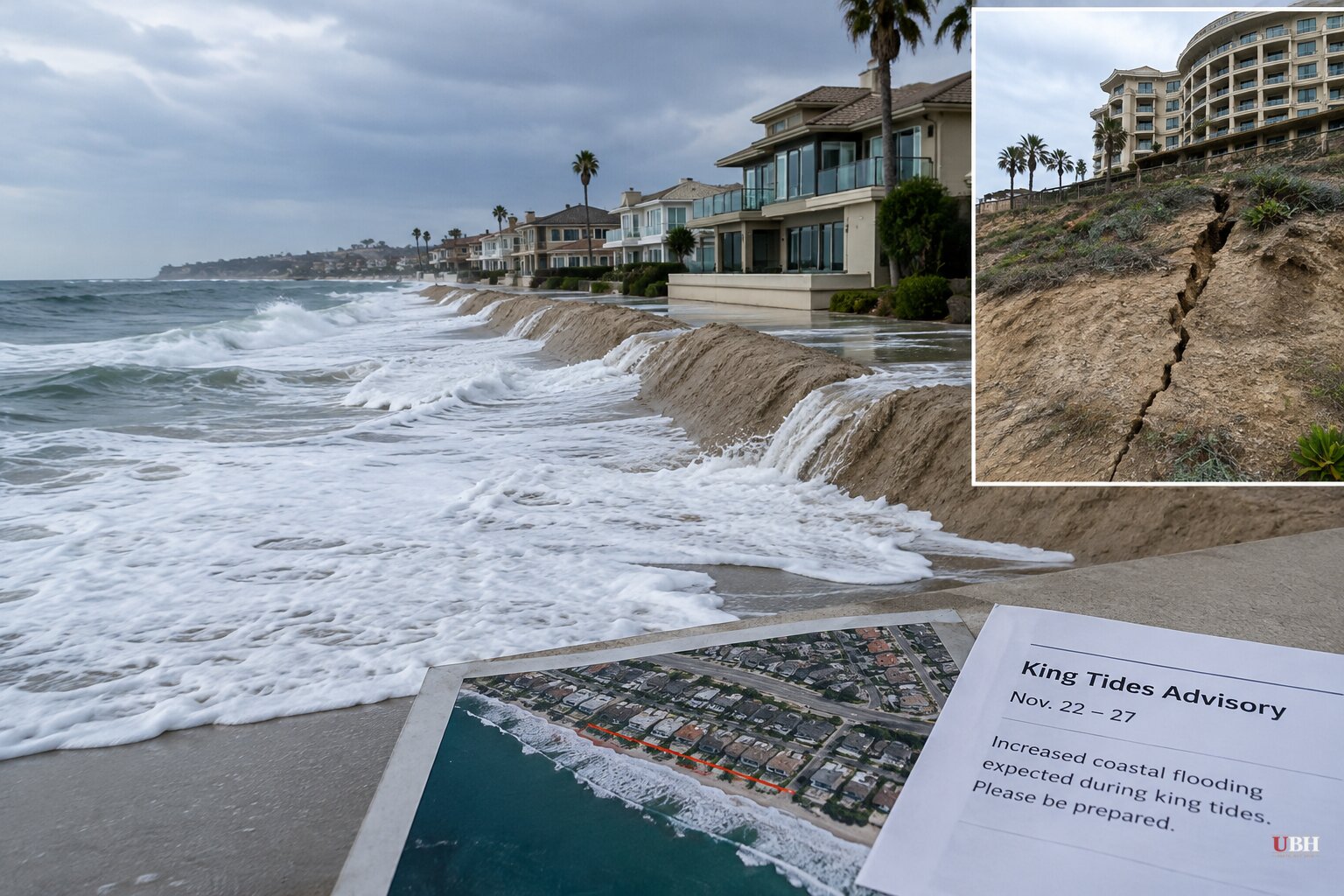
The damage reports along California's coast have shifted to the homes behind the sand. In Seal Beach, in Orange County, waves crashed against and over the berms built to protect beachfront properties, leaving residents with a major cleanup.
The city had prepared. In the days before the storm, officials reinforced the barriers, inspected drainage systems and staged equipment and personnel. The Public Works Department also maintained storm drains and pumping systems.
The ocean got through anyway.
Seal Beach braces for the next round
The next test is already on the calendar. The city has warned that unusually high king tides are expected during Thanksgiving week, from Nov. 22 through Nov. 27.
Officials are urging homeowners to secure outdoor belongings, clear drainage areas and use sandbags to protect vulnerable entrances. Free sandbags are available at several locations, including Marina Park and local fire stations.
The berms that were overtopped are the same ones that will face those tides.
A crack below the Ritz-Carlton
Farther south in Dana Point, a fissure has opened in the coastal bluff beneath The Ritz-Carlton, Laguna Niguel. It sits directly above the Salt Creek Point trail, which hundreds of walkers, beachgoers and surfers use each day to reach the surf breaks known as the Point, Middles and Gravels.
Local videographer Craig Whetter of Breaking Even TV filmed the split last week. "It's right above a very, very popular walkway that people use all day," Whetter said in the video. "It's putting a lot of people in danger."
Heavy rain and strong surf could make it worse. Water seeping into the fracture can saturate the soil, while waves erode the base of the bluff.
Officials have not confirmed a geological assessment of the fracture's depth, or whether the resort above faces an immediate structural threat.
A red-tagged house draws developers
In Long Beach, a four-story oceanfront house was listed in August at $4.95 million. It had no buyer after weeks on the market. Then Tropical Storm Rachel hit in October, and waves tore through the lower levels and cracked one of the building's two foundations. The house was red-tagged, meaning authorities have deemed it unsafe to occupy.
The owners relisted it Oct. 14 at $2.9 million, slashing more than $2 million off the original price. The listing described it as "RED TAGGED and is LAND VALUE."
Agent Andy Carter of Fiv Realty Co. said he has been fielding five to six calls a week from developers, and two have submitted offers. "There's a big market for it," Carter said. He estimates about 70 percent of the house is salvageable, and said the question is whether a buyer can save the home or scrap it and rebuild.
Carter said it is the only storm-flooded home on the peninsula being publicly marketed. "Some buyers are hitting pause," he said. "But others see opportunity."
Who pays for a shoreline that keeps moving
That view collides with what coastal researchers are saying. Essam Heggy, a research scientist at USC's Viterbi School of Engineering, argues that some of this building should not have happened. "Not every scenic place can be a house," Heggy said. "These are fragile environments that shouldn't have been built on in the first place."
Heggy co-authored a 2024 report asserting that development is rapidly deteriorating California's coast, shrinking shorelines and removing sand. He said that will require ongoing beach nourishment projects such as sand dredging and dune formation, at a cost that will increase fivefold by 2050 because of a global increase in sand prices.
A 2024 report from the Public Policy Institute of California found that rising sea levels could destroy billions of dollars' worth of buildings and completely erode one- to two-thirds of Southern California's beaches without costly, large-scale intervention.
Insurance is the more immediate pressure. Typical homeowners policies do not cover flood damage, and with a major El Niño expected this winter, many owners are rushing to get flood insurance. "Phones are wild with worried people," said Aaron Farmer, president of California Flood Insurance. His firm turned off its Google advertising because it no longer needs it.
Experts told the Los Angeles Times that this week's flooding in several Orange County coastal towns is likely just a preview of more intense problems this winter.
The king tides are expected Nov. 22 through Nov. 27. Seal Beach has not said whether it will rebuild or add to its berms before then. Officials have not confirmed a geological assessment of the Salt Creek bluff.
Whether the developers eyeing that red-tagged Long Beach lot rebuild on it or tear it down will show how the market prices a property that has already been flooded once.
Sources used for this briefing
4 links from 4 independent newsrooms (syndicated copies of the same report count once)
These are the sources it draws on, linked so you can verify.


