
Unbiased headlines. Facts, not spin.
Unbiased Headlines is an independently owned news organization. We bring you the facts, not opinions, written fresh from 110+ named sources. Sources linked so you can verify it yourself.
 energy
Major Story (7/10)
NTSB Says Tanker's Rudder Stuck to Starboard Two Minutes Before Hitting New Orleans Riverboat; Cause of Steering Failure Unknown
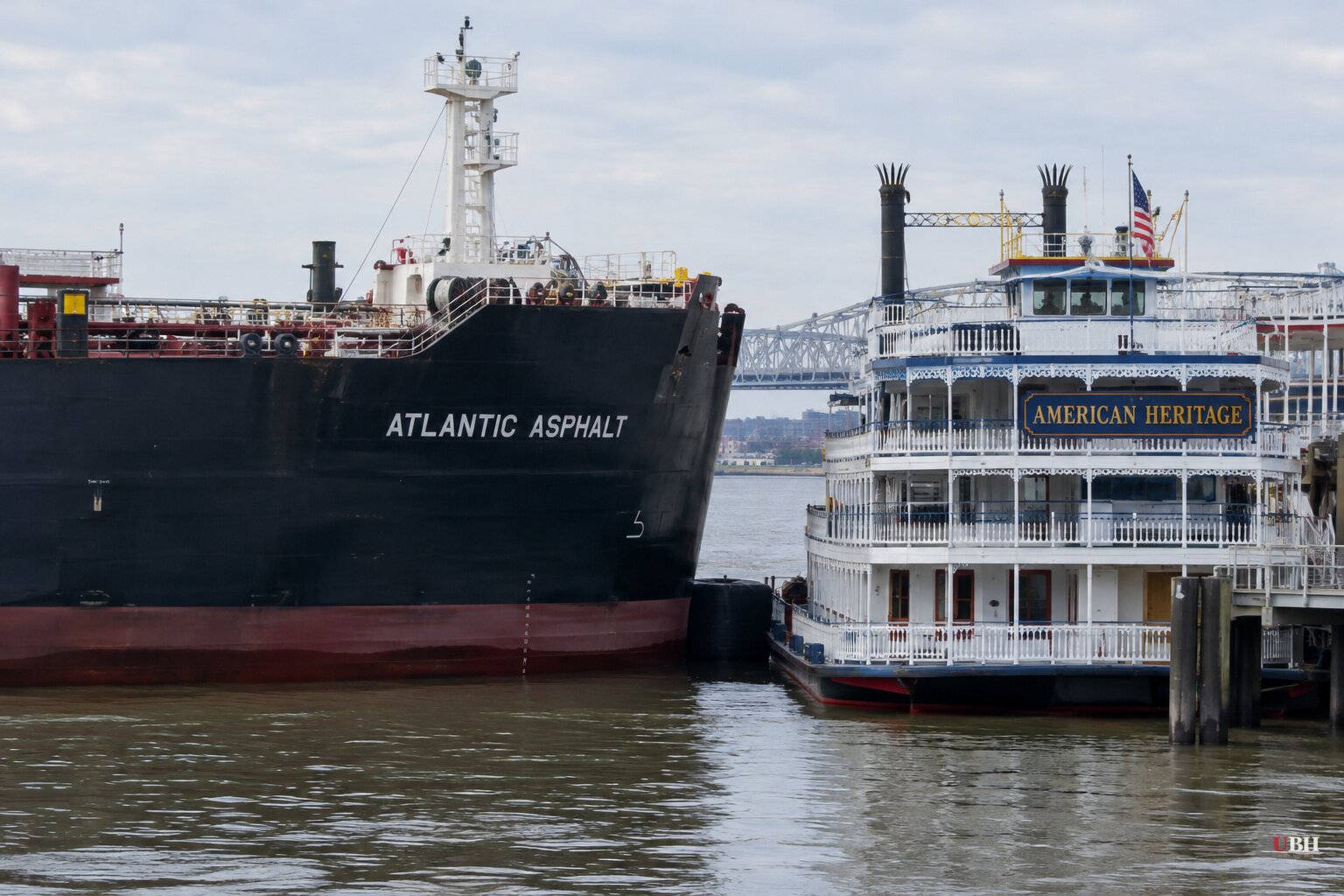
Two days after the Atlantic Asphalt slammed into the docked riverboat American Heritage on the Mississippi, the National Transportation Safety Board said Sunday, Nov. 15, that the tanker lost steering before impact.
The agency has not said why.
What the data recorder shows
NTSB senior marine accident investigator Bart Barnum said the tanker was heading upriver near the Crescent City Connection Bridge at about 12:26 p.m. Friday when it experienced a "steering casualty." The rudder stayed turned to starboard, and the ship veered toward the river's east bank.
The tanker struck the American Heritage at about 12:28 p.m. The riverboat capsized in roughly 22 minutes, NTSB member John DeLeeuw said.
Investigators pulled more than nine hours of data from the tanker's voyage data recorder. It includes bridge audio, rudder angle, engine RPM, course and speed.
The audio captured sounds consistent with the ship's whistle, warnings and requests for assistance over the marine radio, commands to deploy the anchors, and emergency ship-handling orders, Barnum said.
"We are aware that there was an issue with the steering on board and causing the rudder to remain at a starboard position," Barnum said.
The term is not a diagnosis
"Steering casualty" covers a lot of ground. Barnum said it "could be many different things" and that investigators are "looking at all of them." The exact cause of the steering problem has not been determined.
The NTSB has the tanker's speed data but is still analyzing it and did not release it. Video shows the anchors were down. Investigators are still working out which ones were deployed and how far, DeLeeuw said.
Interviews and next steps
Interviews with American Heritage crew members were underway Sunday. Interviews with the Atlantic Asphalt's crew were scheduled to begin Monday, Nov. 16, and continue through the week, Barnum said.
The NTSB is leading the safety investigation alongside the U.S. Coast Guard, American Cruise Lines and representatives of the Republic of the Marshall Islands, the tanker's flag state. A preliminary report is expected within about 30 days.
DeLeeuw said the probe will cover "the personnel involved, the ships involved, and the environment at the time." He added that investigators will also examine what went right, since no one died. He asked anyone with photos or video of the crash to send them to the agency.
Injuries and the river
Thirty-two people were taken to hospitals, including two police officers thrown into the river when the boat rolled. None of the injuries was critical. The city of New Orleans said Sunday that six people remain hospitalized.
The tanker is about 520 feet long with a crew of 19. Passenger counts differ by source: the Port of New Orleans put it at about 129 passengers plus crew, while the Associated Press reported 140 passengers and 50 crew.
A Coast Guard safety zone remains in effect around the site, with one-way traffic restrictions for larger commercial vessels while salvage planning continues, according to city officials. Mayor Helena Moreno has said removing the capsized vessel could take weeks.
Lawsuits are piling up
The Board of Commissioners of the Port of New Orleans sued within hours of the crash, saying the tanker caused at least $1 million in damage to its terminal. A federal judge issued a warrant Friday giving federal officials control of the ship for now.
Four American Heritage crew members filed a separate suit against Nave Shipping and Thome Ship Management, which oversee the tanker. They claim they "suffered significant and life changing injuries to their mind and body." Those are allegations in a court filing and have not been tested.
What is still open
The recorder shows the crew reacted: whistle, radio calls, anchors, emergency maneuvers. It also shows a window of roughly two minutes between the rudder sticking and impact. Whether the failure was a defect, a maintenance problem or an operating error is the central question, and the NTSB has not answered it.
The tanker's crew interviews begin Monday. The preliminary report, expected within about 30 days, is the next official word on what went wrong.
Sources used for this briefing
8 links from 7 independent newsrooms (syndicated copies of the same report count once)
These are the sources it draws on, linked so you can verify.


