
Unbiased headlines. Facts, not spin.
Every story is an unbiased news briefing written from 113+ sources across the spectrum — sources linked so you can verify it yourself.
 health
Major Story (8/10)
September 23, 2026 at 11:42 AM
health
Major Story (8/10)
September 23, 2026 at 11:42 AM
University of Chicago Study Projects 451,000 Heat Deaths From Super El Niño Through February 2027
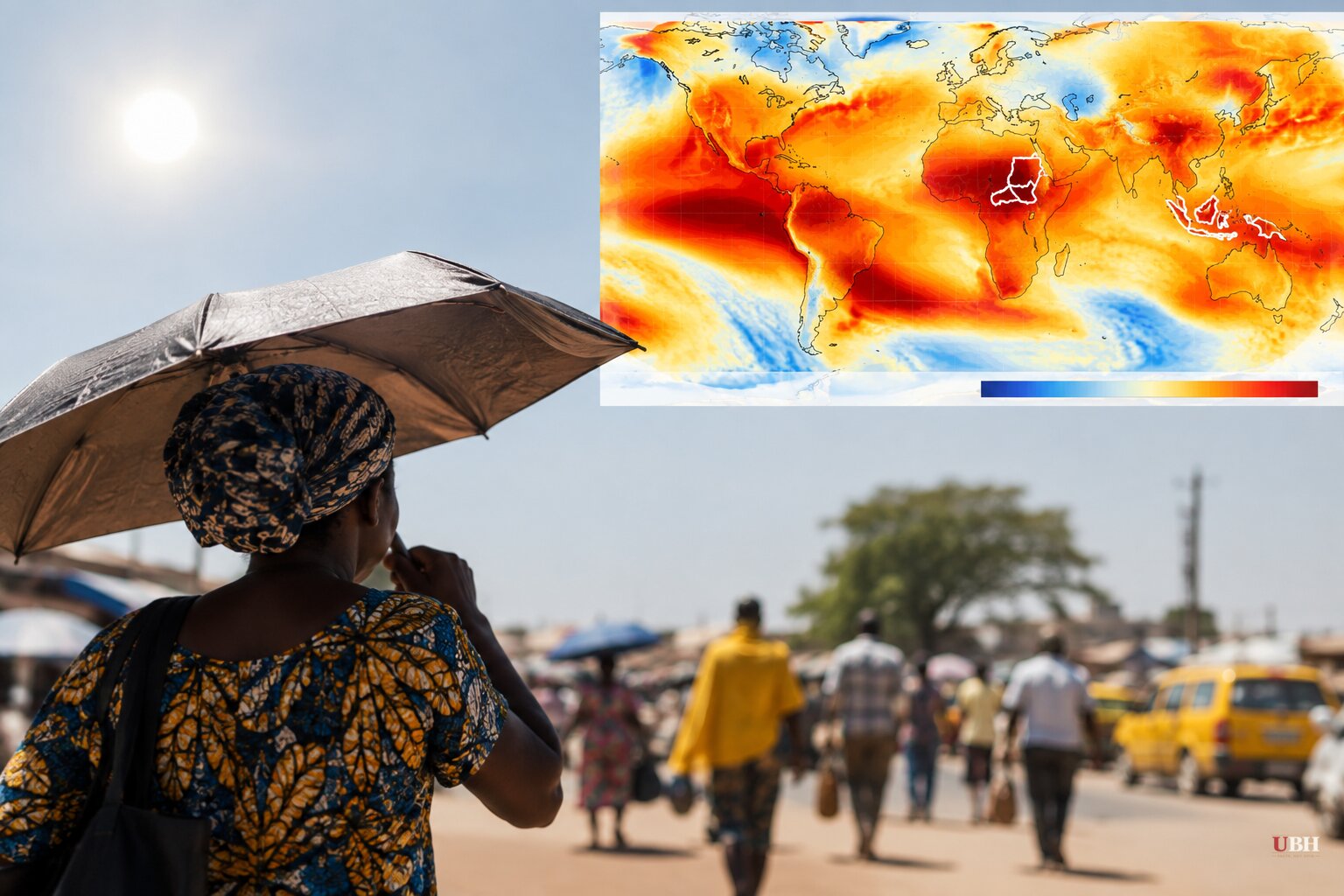
A statistical model, not a body count
The number making headlines this week, 451,000 projected deaths, comes from a report published Wednesday, September 23, by the Climate Impact Lab, a research group co-founded by University of Chicago economist Michael Greenstone. It's a projection built from a statistical model, not a tally of deaths that have already occurred.
The model tracks the historical relationship between temperature and mortality across 24,378 regions worldwide, using data from 1996 to 2025 as a baseline, then applies forecasted temperature anomalies from this El Niño to estimate excess deaths. Greenstone told the Associated Press the number can feel abstract. "The estimate of 451,000 people is such a large number that it can be numbing, but it is made up of parents and children, grandparents and neighbours," he said.
Where the numbers diverge
Coverage of the report isn't perfectly consistent on what window that 451,000 figure actually covers. The Guardian and Al Jazeera both report the 451,000 figure as the projection for the six months from September 2026 through February 2027. The Print, an Indian outlet, reports a different breakdown: 239,000 deaths for that same September-to-February window, with the full 451,000 figure covering a longer stretch it calls "the first half of the current El Niño," with elevated deaths continuing into June or July 2027. LADBible's account tracks closer to the Guardian's framing. Readers should treat the underlying six-month total as somewhat contested in secondary reporting, even though the top-line 451,000 number and the country rankings are consistent across every outlet.
What's consistent: Nigeria tops the list at roughly 31,400 projected deaths, ahead of Indonesia at 19,300 and Sudan at 17,600. The Sahel region overall is projected to see about 66,800 deaths. India comes in around 15,800, Brazil around 13,300, and a combined Southeast Asian bloc of Vietnam, Thailand, Cambodia and the Philippines around 19,400. The United States shows up far down the list, with roughly 3,500 projected additional deaths, according to the Guardian.
The wealth gap in who dies
Greenstone's explanation for the disparity is straightforward: heat is deadlier where it's already hot and incomes are already low. "If you're already in a hot place, the extra couple of degrees are going to be much more dangerous," he told the AP, noting wealthier regions have better air conditioning, water access and health infrastructure. Poor countries lack the cooling centers, reliable power grids and emergency medical staffing that blunt heat waves in rich ones.
Abhiyant Tiwari, a heat specialist at NRDC India, said plans on paper mean little without funding. "The real measure of our preparedness is not how many heat warnings we issue, but how effectively we protect people and reduce preventable deaths," he told the AP. That critique highlights implementation gaps in countries like India that have heat action plans but inconsistent execution.
California's other side of the same coin
Not everything about this super El Niño is about heat. On September 21, California Governor Gavin Newsom declared a state of emergency ahead of what forecasters describe as the strongest El Niño storm season on record, according to the Epoch Times and Breitbart. NOAA's September 10 advisory put the odds at 75 percent that this El Niño, expected to peak between October and December, could exceed the historic 1950 event, with more than a 90 percent chance it reaches "very strong" status this fall and winter.
Newsom's declaration lets state agencies pre-position sandbags and pumps, fast-track flood-control permitting, and ready the California National Guard for landslide and search-and-rescue response. "We are preparing for this El Niño early because every Californian deserves to be safe in their home," Newsom said in his statement. Whether that translates into fewer flooded neighborhoods and fewer collapsed bluffs this winter is the open question nobody can answer until the storms actually arrive.
What's actually unresolved
The Climate Impact Lab's number is a forecast built on a model, and forecasts carry uncertainty bands the top-line 451,000 figure doesn't convey in headlines. The researchers themselves frame this El Niño as a "postcard from the future," arguing today's extreme temperatures will be the 2040s' new normal. That's their interpretation of the trend line, not an established fact about 2046. The number that will actually be verifiable is the one nobody has yet: how many excess deaths public health systems in Nigeria, India, Indonesia and California actually record between now and next summer, and whether the warnings translated into funded, staffed responses on the ground.
Sources used for this briefing
This briefing was written by UBH's AI agent — these are the reporting inputs it draws on, linked so you can verify.


