
Unbiased headlines. Facts, not spin.
Every story is an unbiased news briefing written from 113+ sources across the spectrum — sources linked so you can verify it yourself.
 health
Major Story (8/10)
Event date: September 23, 2026
health
Major Story (8/10)
Event date: September 23, 2026
University of Chicago Lab Projects 451,000 Global Heat Deaths From 'Super' El Niño, 15,800 in India
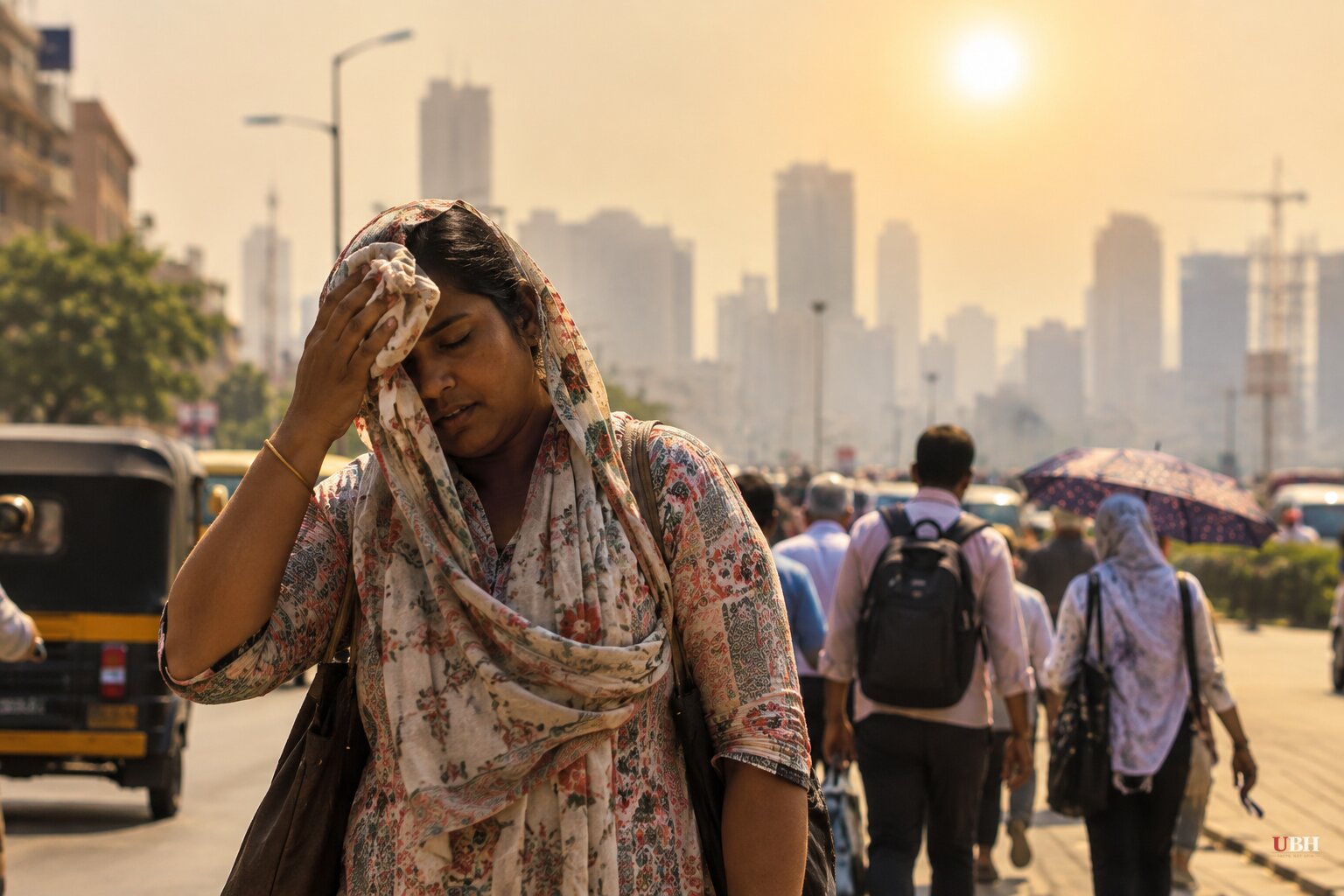
Since the current El Niño began building in June 2026, the University of Chicago's Climate Impact Lab says extreme heat has already caused an estimated 212,000 excess deaths worldwide. The lab released a new report on Wednesday, September 23, projecting another 239,000 deaths between now and February 2027, bringing the total projected toll for the nine-month event to roughly 451,000.
The numbers vary depending on which window you're looking at, and that's caused some confusion across coverage. Down to Earth headlined its piece around the 239,000 figure for September 2026 through February 2027. The Federal, Smithsonian Magazine and a Reuters dispatch carried by WMBD Radio led with the full 451,000 figure covering June 2026 through February 2027. Both numbers come from the same report. They just measure different slices of the same event.
Where the deaths are projected
Africa's Sahel region is expected to take the biggest hit, with 66,800 additional deaths projected across the region from September through February, according to the Climate Impact Lab. Nigeria alone accounts for 31,400 of those. Sudan is projected to see roughly 17,500 to 17,600 deaths depending on the report version cited, Niger about 10,000, and Chad about 8,000.
In Asia, Indonesia is projected to see 19,300 additional deaths, the Philippines, Vietnam, Thailand and Cambodia a combined 19,400, and India 15,800, according to the report. Brazil is projected at 13,300. Nearly half of India's projected toll, about 7,400 deaths, is expected to land between December 2026 and February 2027, per Down to Earth's breakdown of the data.
How they got the number
This isn't a body count. It's a model.
Co-author Emily Grover-Kopec told PTI the estimate combines seasonal temperature forecasts from the European Centre for Medium-Range Weather Forecasts' SEAS5 model with temperature-mortality relationships published in the Quarterly Journal of Economics in November 2022. Grover-Kopec described SEAS5 as sitting "in the middle" of available forecast models in terms of how aggressive its temperature anomaly projections are, calling it a "relatively moderate view."
Global land temperatures are projected to run about 1.2°C above normal in the coming months, driven largely by the El Niño, and researchers expect 44% more extreme hot days than in a typical year, according to the Climate Impact Lab's own summary of the findings.
Michael Greenstone, the lab's co-founder and a University of Chicago economist, framed the number in human terms rather than statistical ones. "This is such a large number that it can be numbing, but it is made up of parents and children, grandparents and neighbors, people going to work, caring for families, and living their lives," Greenstone said, according to the lab's own release.
The catch nobody's headline mentions
Smithsonian Magazine is the one outlet that flagged it plainly: this report has not been peer-reviewed. The authors are releasing it publicly before submitting it to a scientific journal, specifically because they want governments and aid groups to act on it now rather than wait for the academic review process to run its course.
That's a reasonable position if you buy the underlying methodology. A 451,000-death projection built on a forecast model six-plus months out, layered on top of mortality relationships from a single 2022 economics paper, has not been checked by outside reviewers. Seasonal forecasts carry real uncertainty at that range, and applying a modeled temperature-mortality curve to more than 24,000 regions worldwide compounds whatever error exists in each layer. None of that means the projection is wrong. It means it's an estimate, not a tally, and readers deserve to know the difference before treating 451,000 as a confirmed figure.
Grover-Kopec and Greenstone aren't hiding this. They've been explicit that the point of publishing early is to get resources like cooling centers, heat warnings and outreach to vulnerable populations moving before the worst of the season hits, particularly in Nigeria, Sudan, Indonesia and India. The Climate Impact Lab compared the 451,000 projection to the roughly 6,800 dead or missing from Nepal's recent flash floods, calling it 65 times larger, a comparison meant to convey scale rather than precision.
A separate coral-record study published in August found El Niño events have intensified as fossil fuel use has risen, according to Smithsonian Magazine's reporting on that research. Whether that trend, this report's specific mortality methodology, or India's own heat-preparedness infrastructure ends up mattering most won't be clear until the numbers can be checked against actual mortality data once the event passes in early 2027.
Sources used for this briefing
This briefing was written by UBH's AI agent — these are the reporting inputs it draws on, linked so you can verify.


