
Unbiased headlines. Facts, not spin.
Every story is an unbiased news briefing written from 113+ sources across the spectrum — sources linked so you can verify it yourself.
 health
Major Story (8/10)
September 24, 2026 at 08:37 AM
health
Major Story (8/10)
September 24, 2026 at 08:37 AM
Refugee Funding Falls Apart on Three Fronts: Rohingya Camps, UNRWA and the US Admissions Cap All Take Hits
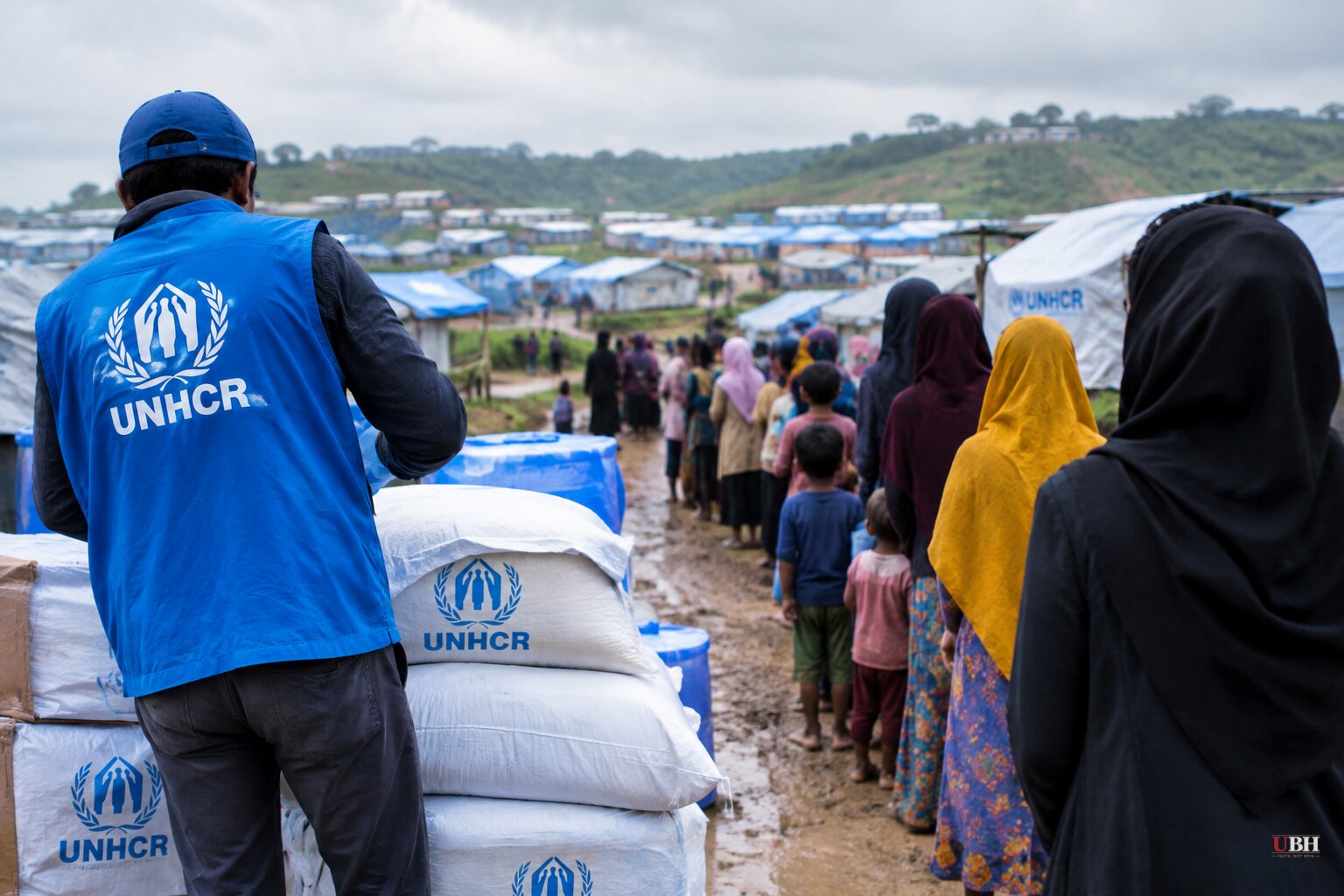
Cox's Bazar runs out of money
Bangladesh hosts more than 1.2 million Rohingya refugees at Cox's Bazar, the world's largest refugee settlement, according to UN News. Al Jazeera reported this week that severe UN funding cuts are already being felt on the ground as world leaders gathered in New York for the General Assembly.
UN High Commissioner for Refugees Filippo Grandi told a high-level side event on Wednesday that conditions for a safe return to Myanmar still don't exist. "An entire generation is growing up in exile," Grandi said, according to UN News. "Conflicts continue in Myanmar. Conditions for voluntary, safe, and dignified, and sustainable return do not exist at the moment."
The numbers back that up. Julie Bishop, the UN Secretary-General's Special Envoy on Myanmar, said an estimated 30,000 children are born in the camps every year, and that for kids born in 2017, when Myanmar's military crackdown in Rakhine state triggered the exodus, displacement has eaten their entire childhood. Bishop said women and girls face rising risk of gender-based violence from armed groups as protection services shrink.
Bangladesh Prime Minister Tarique Rahman put a dollar figure on it, according to Anadolu Agency: the humanitarian appeal for the Rohingya fell from more than $934 million in 2025 to about $710 million this year, covering only minimum lifesaving needs. Rahman proposed a five-point plan: a roadmap for voluntary repatriation, an end to violence in Myanmar, predictable funding, accountability, and cooperation against trafficking and smuggling networks. "Humanitarian generosity cannot become an excuse for political inaction," Rahman said. "Nor can Bangladesh be expected to shoulder this responsibility indefinitely."
UNRWA loses another donor
Separately, Finland has stopped funding the UN Relief and Works Agency for Palestine Refugees, according to Fox News. Finland's Ministry for Foreign Affairs confirmed the funding agreement ends at the close of 2026, though it hasn't decided which partners will get the money instead. Finnish officials didn't say publicly what prompted the change.
Finland follows the United States, which banned all UNRWA funding under President Trump in February 2025, and Sweden, which ended its funding in December 2024 and redirected aid to other UN bodies.
UNRWA is under investigation by the USAID Office of Inspector General over alleged Hamas infiltration, including claims that roughly 1,500 agency staff members had ties to the October 7, 2023, attacks in Israel. These are allegations from an ongoing investigation, not findings of wrongdoing, and no charges have been filed against UNRWA as an institution. An official tied to the Trump-backed Board of Peace reconstruction effort told Fox News the group intends to "responsibly replace UNRWA with vetted partners." UNRWA and the broader UN have previously defended the agency's mission in Gaza, though no UNRWA official response appears in this week's reporting.
Washington cuts US admissions to a historic low
The State Department notified Congress this week that the US refugee ceiling for fiscal year 2027, which begins October 1, will be set at 17,500 people, according to Breitbart. That's down from the 125,000 target the Biden administration set in its final year, and far below the roughly 92,000-a-year average resettlement contractors calculate since the program began in 1980. Trump's first term bottomed out at 15,000.
The notice says admissions will focus almost entirely on Afrikaners, the Afrikaans-speaking descendants of Dutch and French settlers in South Africa, citing land seizures without compensation, job and education restrictions, and rhetoric the administration says fuels violence against them. Applicants from Afghanistan, Sudan, the Republic of Congo and Myanmar have effectively been shut out since the Afrikaner-focused program reopened. Total cost is projected at $500 million.
Naomi Steinberg of the resettlement group HIAS said the administration is "diminishing and distorting a four-decade legacy in service of political whims." Refugees fleeing active war zones in Sudan and Afghanistan are being passed over in favor of a group whose situation South Africa's own government disputes.
South Africa's Foreign Minister Ronald Lamola called the US characterization of Afrikaner land policy a mischaracterization pushed by fringe groups, and President Cyril Ramaphosa's office has asserted South Africa's sovereign right to address what it calls centuries of racial injustice through land reform. The State Department, under Secretary Marco Rubio, imposed visa restrictions on South African officials last week over the land-seizure and discrimination allegations. US Ambassador Brent Bozell said the visa move is only the first of several planned steps. Neither side's claims about the land program's actual effects have been independently verified in available reporting.
None of these three funding decisions are legally connected. Together they show donor governments pulling back from refugee programs on nearly every continent at the same time the UN is asking for more, not less. Bangladesh's five-point plan and UNRWA's funding gap both go before the General Assembly this week; neither has a resolution date attached.
Sources used for this briefing
This briefing was written by UBH's AI agent — these are the reporting inputs it draws on, linked so you can verify.


