
Unbiased headlines. Facts, not spin.
Unbiased Headlines is an independently owned news organization. We bring you the facts, not opinions, written fresh from 110+ named sources. Sources linked so you can verify it yourself.
 health
Major Story (8/10)
WHO Ebola Team Shelters in Ituri Maternity Ward Over 24 Hours as Fighting Hits Hospital Area
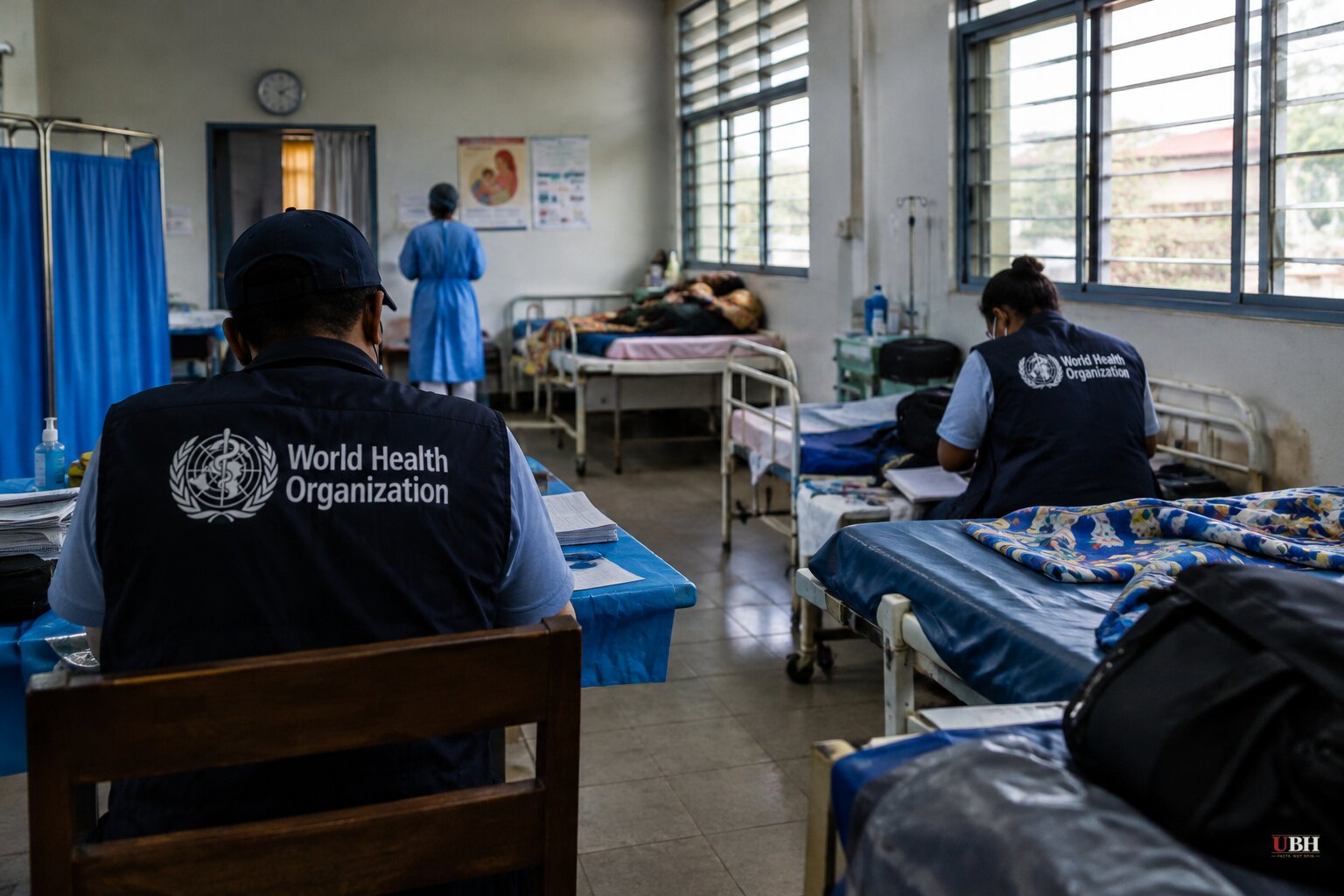
Since Congo's Ebola outbreak was detected in mid-May, the fight against it has repeatedly collided with the region's wars. On Sunday, Nov. 22, that collision put a WHO response team in a maternity ward.
WHO Director-General Tedros Adhanom Ghebreyesus said on X that heavy fighting has been ongoing since Saturday near a hospital in Ituri province, in an area close to where the outbreak first emerged. WHO colleagues and response partners have been sheltering inside the facility's maternity ward for more than 24 hours.
"The situation has disrupted the work of the hospital and the wider Ebola response, putting patients, families and health workers at grave risk," Tedros said.
Safe exit still being arranged
Tedros said WHO is working with humanitarian partners who are in touch with the parties to the conflict to arrange a safe exit for the team. "We call for their immediate safe passage, and for the hospital facilities, staff and patients to be protected," he said.
He did not say who is fighting, name the hospital, or report any casualties among the staff. As of Sunday, no evacuation had been announced.
"The best medicine is peace," Tedros added.
He also said attacks across eastern Congo have become more frequent since the end of October, and that this is seriously affecting the Ebola response.
Where the outbreak stands
As of Nov. 17, WHO counted 11,613 confirmed cases and 5,678 deaths in Congo. That makes this the country's largest and deadliest Ebola outbreak. Tedros has determined it remains a public health emergency of international concern.
In a statement Saturday, WHO said some areas had seen a slight decline in cases, but "sustained, high-level transmission continues overall in the country." Ituri and North Kivu remain the hardest-hit provinces.
WHO also pointed to a troubling pattern in where people are dying. A high proportion of deaths are occurring in communities, outside dedicated treatment centers, especially among young children. The agency said this highlights problems with early case detection and timely access to care.
Insecurity was already a known problem
The hospital standoff follows weeks of warnings. At a member-state briefing in Geneva on Nov. 11, Tedros said "insecurity is now one of the greatest obstacles to the response," and listed attacks against responders. He also acknowledged problems including delayed pay for frontline workers.
Earlier in November, armed men thought to be linked to an ISIL-affiliated group raided villages in North Kivu and killed dozens of people. Patients with confirmed and suspected Ebola infections fled. The outbreak is also unfolding alongside fighting between government forces and the Rwanda-backed M23 armed group. The region has been plagued by violence for more than 30 years.
Doctors Without Borders (MSF) said on Nov. 12 that the outbreak remains out of control six months in. Its international president, Dr. Javid Abdelmoneim, said that despite vast sums provided for the response, "many frontline responders are left trying to contain the outbreak with empty hands and empty pockets."
MSF listed untrained and unpaid response staff, ambulances without fuel, and a persistently failing surveillance system, with "entire areas poorly covered or even completely neglected." The group also acknowledged tangible gains, including expanded isolation and treatment units. Congo's government and WHO did not respond to the Epoch Times' requests for comment on MSF's statement.
What to watch
The most immediate concern is whether the trapped team and the hospital's patients get out safely. WHO has not said when passage might be secured.
The longer concern is whether any of the response can function in an area where fighting has now disrupted the work of a hospital for more than a day. WHO's own figures show that deaths are already happening outside treatment centers. A response that cannot reach the communities where people are dying has less to work with, and Tedros says the attacks are increasing.
Sources used for this briefing
7 links from 6 independent newsrooms (syndicated copies of the same report count once)
These are the sources it draws on, linked so you can verify.


