
Unbiased headlines. Facts, not spin.
Unbiased Headlines is an independently owned news organization. We bring you the facts, not opinions, written fresh from 110+ named sources. Sources linked so you can verify it yourself.
 health
Notable (6/10)
RFK Jr.'s Ultra-Processed Food Definition Stalled at the White House, The Atlantic Reports
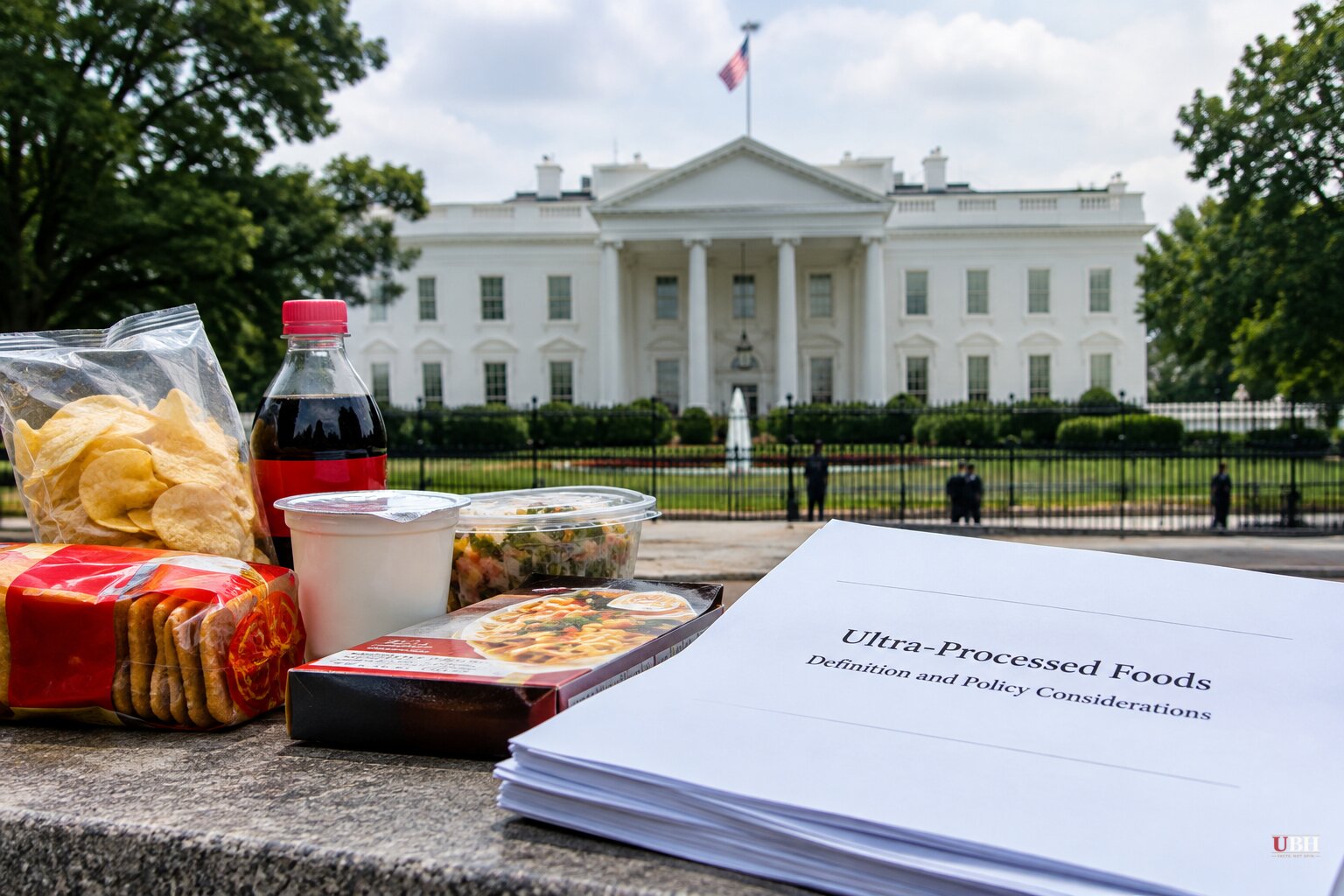
Robert F. Kennedy Jr. planned a "policy celebration" in August to roll out a federal definition of ultra-processed food, a centerpiece of the Make America Healthy Again agenda. He never got to announce it.
According to a report by The Atlantic, White House officials stepped in and told him the definition was not cleared. Kennedy instead announced that an announcement would come later. The definition has still not been finalized.
What the proposal would do
Documents The Atlantic viewed show the draft would classify any food or beverage as ultra-processed if it contains chemical preservatives, artificial colors, added flavors, or low- or no-calorie sweeteners such as stevia and aspartame.
That covers most packaged items. The Daily Beast reports the classification sparked panic across the food industry.
White House officials said the draft had not cleared the Office of Management and Budget. They also raised concerns about its potential impact on the economy, a move others criticized as political, according to the Daily Beast's account of The Atlantic report.
A person involved in the process told the magazine the proposal ran only two pages. "The idea that you have to do some complex policy process for a two-page proposal is laughable," that person said.
The Wiles fight
The dispute reached a fever pitch earlier this month when Calley Means, a Kennedy ally, resigned as a special government employee and alleged that Susie Wiles blocked parts of the MAHA agenda, including efforts to improve children's diets, to keep sugar-industry money flowing.
"Susie said to me many times: 'We need money for the midterms, Calley. We need money for the midterms,'" Means told Joe Rogan in an interview. The Daily Beast says the interview drew more than a million views within two days. The White House did not immediately respond to the Daily Beast's questions, and the sugar-money allegation rests on Means alone.
The Daily Beast describes Wiles as the recently ousted White House chief of staff who spearheaded the slowdown of the definition. The Atlantic reports that after Means left, Wiles made a last-ditch effort to release the definition with Kennedy. Kennedy himself pumped the brakes before the midterm elections, according to the magazine, because he feared it had been too rushed.
A different explanation
Not everyone buys the midterm-politics story. Sean McBride, a former executive vice president of the Grocery Manufacturers Association (now the Consumer Brands Association) and founder of DSM Strategic Communications, argues in a guest post for Food Dive that the answer is simpler.
He says White House staff, OMB and the Domestic Policy Council may have done their due diligence and concluded that the ultra-processed definition and a front-of-pack nutrition labeling scheme come with great cost and little or no chance of improving public health. He also suggests they might not survive a federal court challenge.
McBride has an industry background, and his column is an opinion piece. But the OMB and economic-impact concerns attributed to White House officials fit the same line of argument.
He cites figures that frame the stakes: 125 million obese children and adults in the U.S., 38 million people with Type 2 diabetes and 119 million with hypertension. In his words, the public health crisis "remains virtually unaltered under this Administration."
Kennedy's response
Senators Raphael Warnock (D-GA) and Angela Alsobrooks (D-MD) have called for Kennedy to resign or be fired. "The time is now," Alsobrooks wrote on X. "RFK Jr. must resign or be fired. End of discussion."
Warnock wrote: "Unless RFK Jr. is interested in spending the next two years in front of Congressional committees, he should go ahead and resign now."
Kennedy answered on X that he stands "firmly behind President Trump." He listed what he counts as achievements:
- Rewritten federal dietary guidelines that emphasize real food.
- Commitments from major food companies to remove petroleum-based synthetic dyes and other additives.
- Systematic reviews of chemicals already in the food supply.
- A proposed rule requiring companies to notify the FDA before introducing ingredients they independently deem safe.
That last item is the "generally recognized as safe" (GRAS) proposal Kennedy announced in August, according to Breitbart News.
Some of the company pledges are moving. Breitbart News reported in June 2026 that Nestlé had removed FD&C colors, a year after promising to. General Mills, Hershey and Nestlé have announced plans to eliminate artificial dyes and flavors from their products over the next few years.
Kennedy said the administration must "finish food-ingredient reform, advance our work on ultra-processed foods, and put children's health at the center of federal policy." He added that he will keep pressing those priorities across the administration and work with anyone in either party who will help deliver them.
What comes next
The White House did not immediately respond to the Daily Beast's questions about the Atlantic report. McBride notes that anonymous sources are predicting the FDA's ultra-processed foods definition will be finalized with a pro-MAHA chief of staff in place at the White House. The Daily Beast says Wiles has been replaced by a MAHA-minded successor, whom it identifies as Stephen Miller, but the movement has already been burned by this administration several times.
McBride writes that, in the lame-duck Congress and beyond, the left, the right and everyone in between are fighting to see who will control the food policy agenda in 2027 and beyond. Whether the two-page definition ever clears OMB, and in what form, is still unresolved.
The draft's reach is the hard part. As described, it would classify most packaged items as ultra-processed, and the White House has not said whether it will accept that.
Sources used for this briefing
3 links from 3 independent newsrooms (syndicated copies of the same report count once)
These are the sources it draws on, linked so you can verify.


