
Unbiased headlines. Facts, not spin.
Unbiased Headlines is an independently owned news organization. We bring you the facts, not opinions, written fresh from 110+ named sources. Sources linked so you can verify it yourself.
 health
Low Interest (4/10)
French Lawmakers and Activists Demand Tear Gas Ban Over Menstrual Complaints; Interior Minister Says No
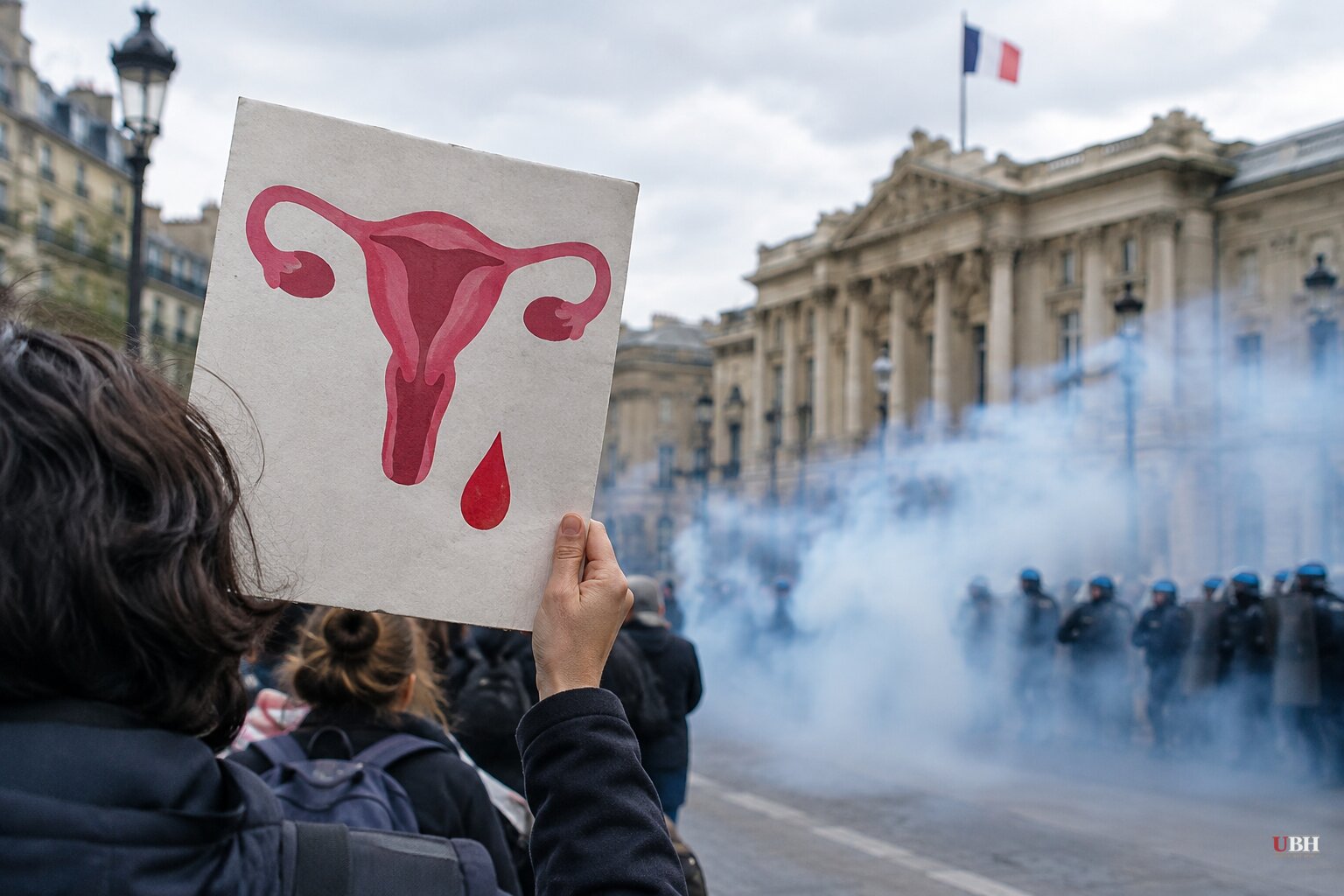
French police have fired tear gas at protesters for weeks. Now a group of women says it left more than a cough behind.
Activists and opposition lawmakers are demanding that authorities suspend tear gas use at demonstrations, citing reports of painful cramps, unexpected bleeding and disrupted cycles. Interior Minister Laurent Nuñez has rejected the demand. He says tear gas is an essential crowd-control tool and a substitute for more dangerous weapons.
Scientists have not confirmed a medical connection.
What the activists are reporting
The advocacy group "Lacrymos de sang" ("Tears of blood") was founded during the protests by Eva-Luna Tholance, a former journalist who looked into the issue six years ago. It asked people last month to fill out a questionnaire describing their exposure and symptoms. The group says it has more than 10,000 complaints.
"Some people experience mild cramps, but a huge number tell us about cramps that are far worse than what they normally experience during their periods," Tholance said.
Le Temps reported that the collective gathered testimonies between Oct. 8 and Oct. 31 and presented initial results to the National Assembly on Nov. 17. According to that reporting, nine in ten of 9,480 testimonies described gynecological disorders after exposure. Of those, 59% reported uterine cramps, 43% ovarian pain, 32% bleeding between periods and 25% abnormally heavy bleeding.
The collective also reported that 15 of 47 pregnant women who testified described a miscarriage. Le Temps said that is twice the rate expected in the general population. That is a very small group, and the figure comes from the collective's own collection.
Individual accounts are specific. Mélina Galland, a 24-year-old photographer, covered the Oct. 17 Paris protests, which were marred by rioting and looting. She wore a double surgical mask and a diving mask. "Heading back home, I felt intense belly pain which was unusual because I never experience pain that intense at that stage of my period," she said.
Chloé Baroux, 25, also a photographer, said she first noticed irregular periods after covering protests against a security bill in 2020 and 2021. Her cycles later settled, she said, but "over the past two months, it's become irregular again."
What science does and does not show
French police grenades contain CS, a chemical irritant that affects the eyes, skin and respiratory tract. It is a crystalline powder dispersed as fine particles, and its effects depend on dose and length of exposure. Those exposed in France include peaceful marchers, children, pregnant women, older people and residents near protest routes.
The questionnaire responses do not establish how common symptoms are among people who say they were exposed. They were also not reviewed by independent doctors. People who chose to answer a survey about tear gas and periods are not a random sample of everyone who stood in a cloud of it.
The research base is thin. A University of Minnesota Medical School study gathered testimonies about symptoms after the 2020 Black Lives Matter protests in the United States. Lead author Asha Hassan said of the causes: "There's a lot of theories. We don't really 100% know." ABC News reported that the study urgently calls for more research. It also described how early tear gas research relied on healthy young men in military settings, not on women of reproductive age.
That gap is the core of the dispute. Absence of studies is not evidence of safety, and a pile of unverified testimonies is not evidence of harm.
The government's position
Nuñez's argument is operational. Police need a way to disperse crowds, and tear gas is what stands between officers and heavier force. He has not agreed to a suspension or to the independent research opposition lawmakers are seeking.
The pressure on the police is real. The Paris Police Prefecture cited the October riots, which led to thousands of arrests and violent clashes, when it denied protest permits in parts of the capital. A prefecture order said the events showed "the intention of certain individuals to target the institutions of the Republic." Authorities deployed 70,000 officers nationwide for the Nov. 7 Saturday demonstrations, which the Interior Ministry expected to draw 170,000 people. "The risk is exactly the same as on previous Saturdays," Nuñez said.
The Limoges town hall was set on fire during the unrest, according to Fox News.
On Nov. 17, the Interior Ministry counted 146,000 demonstrators nationwide, including 28,000 in Paris, down from 575,000 on Nov. 5. The CGT union claimed more than 500,000 for Nov. 17. Police used tear gas and water cannon in Nantes after the march, and Ouest-France reported one participant hospitalized with a jaw injury.
The police are stretched. The union Un1té said about 1,000 riot-police officers saw doctors on Nov. 17 instead of reporting for duty. CRS officers are not allowed to strike. Police unions told Le Figaro that about a dozen CRS companies were out of action and roughly 30 others partly affected.
What comes next
The demand for independent research is the part of the fight that could produce data. The collective has already put its initial results before the National Assembly. Nuñez has said no to a ban, and the government has not committed to any study. Whether French health authorities will take up the question, and test whether exposure to CS and these symptoms are linked, is still open.
Sources used for this briefing
7 links from 5 independent newsrooms (syndicated copies of the same report count once)
These are the sources it draws on, linked so you can verify.


