
Unbiased headlines. Facts, not spin.
Unbiased Headlines is an independently owned news organization. We bring you the facts, not opinions, written fresh from 110+ named sources. Sources linked so you can verify it yourself.
 health
Notable (6/10)
NIH Halted Pittsburgh Alzheimer's Study in Its Final Year After $8 Million Spent, Researchers Say
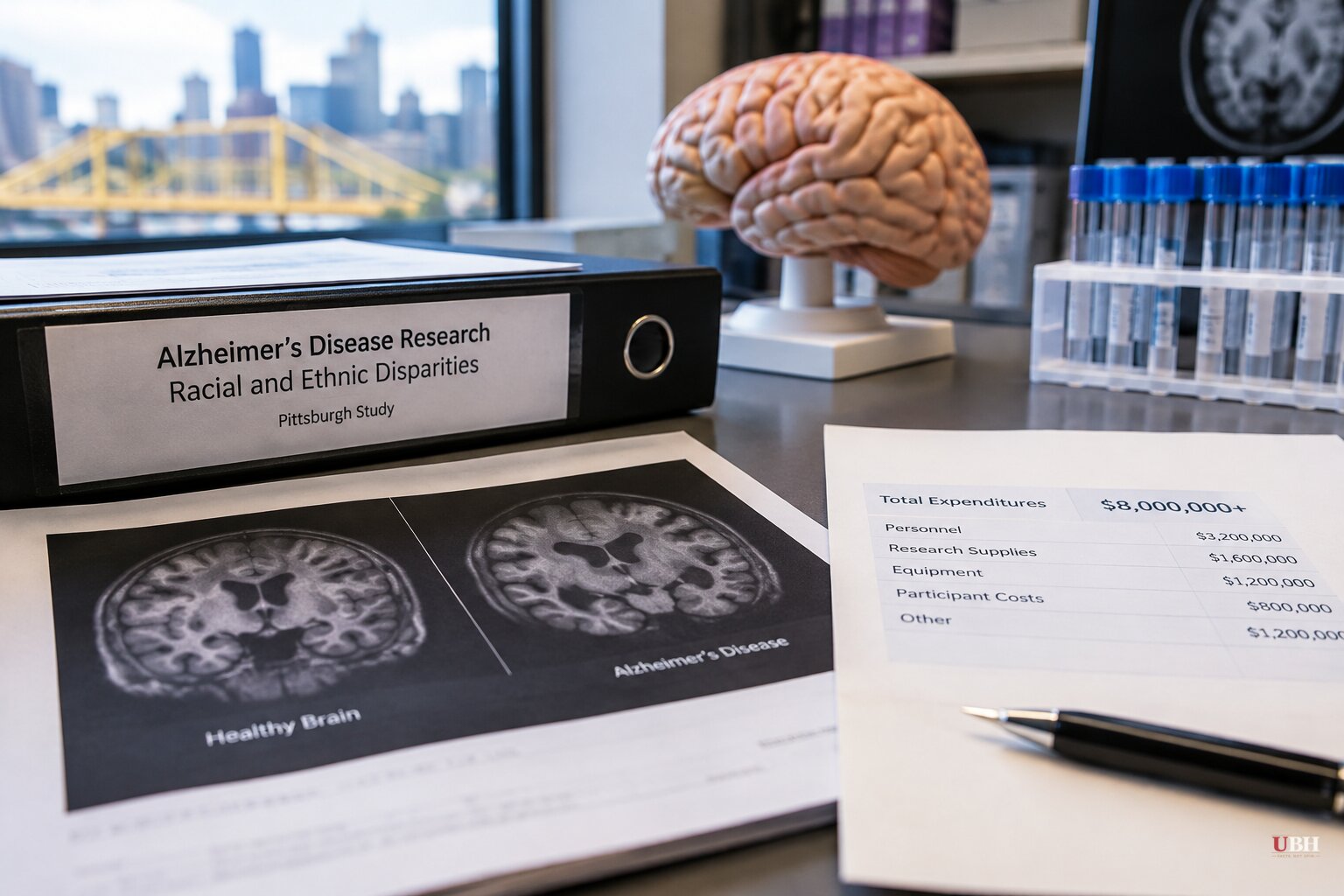
A study in Pittsburgh's Hill and Homewood neighborhoods was in its fifth and final year when the National Institutes of Health pulled its funding. Researchers say taxpayers had already paid more than $8 million.
The study, called Think PHRESH and led by University of Pittsburgh researchers, tried to find out why Black Americans are twice as likely as their white peers to develop Alzheimer's disease. Participants took memory tests, tracked their sleep and blood pressure, and shared their life histories.
Now they may never get answers.
What the study lost
Roderick Blair, 70, took part for four years. He says the abrupt end will read badly in the neighborhood.
"The community will look like, 'Oh, they came in here, they took all our stuff, they checked us out. Now they're gonna leave us hanging,'" Blair said.
Researchers say participants won't even be told whether their brain tests showed signs of trouble.
La'Vette Wagner, the study's field coordinator, says the work changed how people in those neighborhoods talked about memory loss. Families who used to write it off as depression started asking about dementia. People outside the study called her to ask whether their relatives could join.
That connects to a gap the Alzheimer's Association has measured: 55% of Black Americans believe significant memory or cognitive loss is a natural part of aging rather than a disease.
Why the money was cut
The study's researchers say the NIH ended the grant last year on the grounds that it was "not science." They say that came despite a rigorous review and vetting by a community advisory board.
Wagner rejects the label the administration has put on this kind of work. "It wasn't a Black study or a DEI study," she said. "It was something that was happening that was real."
The NIH's stated position is broader. Bhattacharya told The Daily Wire that President Trump gave a clear directive: the agency's research budget should fund "rigorous science that helps Americans live better lives." He said the NIH has "taken a bold approach to terminate DEI programs that wasted taxpayer money."
A Daily Wire review of the federal terminated-grant database points to what supporters of the cuts consider the target. One project at the University of Cincinnati, started in 2024, would have received $315,393 to build software to help transgender-identifying people train their voices. A Georgia State University project on how "microaggressions" feed drug and alcohol use among transgender and gender-diverse adults was set to receive $365,329. The NIH terminated both in March 2025.
The Daily Wire put the savings from the examples it selected at nearly $4 million. It estimates the NIH has saved hundreds of millions through terminated projects overall.
The waste problem cuts both ways
Trimming grants that exist mainly to advance an ideological framework is a defensible goal. Taxpayers shouldn't underwrite activism dressed up as research.
But an Alzheimer's study that tracked cognitive health, blood pressure and sleep is a different kind of project from a voice-training app. Whatever one thinks of how it was labeled, ending it in year five means the government paid for four years of data collection and may get little out of it. Researchers describe the $8 million as wasted. The NIH's public statement doesn't say how it weighed money already spent against what remained to finish.
That is a fair question for any agency, under any president. Cutting a project in year one saves money. Cutting it in year five can lose the investment.
Other terminations
The Pittsburgh study was not alone. Negar Fani, a neuropsychologist at Emory University in Atlanta, was two years into a five-year, $2.9 million project on how daily experiences of racial discrimination affect the brains and bodies of Black Americans. The NIH terminated it in July.
Fani is trying to raise the roughly $2.3 million she needs to finish. In the meantime she and her team have had to explain the situation to participants who feel abandoned.
The researchers say the damage reaches beyond the studies themselves. Trust between Black communities and U.S. health institutions has been strained for generations by unequal access to care and bias in the medical system. The Tuskegee study, which withheld treatment from Black men infected with syphilis in the 1930s, still casts a shadow.
The Pittsburgh team spent years overcoming that distrust. Whether the participants will ever see their results, and whether Fani finds the $2.3 million, remain open.
No source in this story says a replacement funder has stepped in for Think PHRESH.
Sources used for this briefing
7 links from 7 independent newsrooms (syndicated copies of the same report count once)
These are the sources it draws on, linked so you can verify.


