
Unbiased headlines. Facts, not spin.
Unbiased Headlines is an independently owned news organization. We bring you the facts, not opinions, written fresh from 110+ named sources. Sources linked so you can verify it yourself.
 health
Low Interest (4/10)
Event date: November 20, 2026 ·
Study: India's Sanitation Workers Live 63.8 Years on Average, 11.4 Fewer Than Professionals
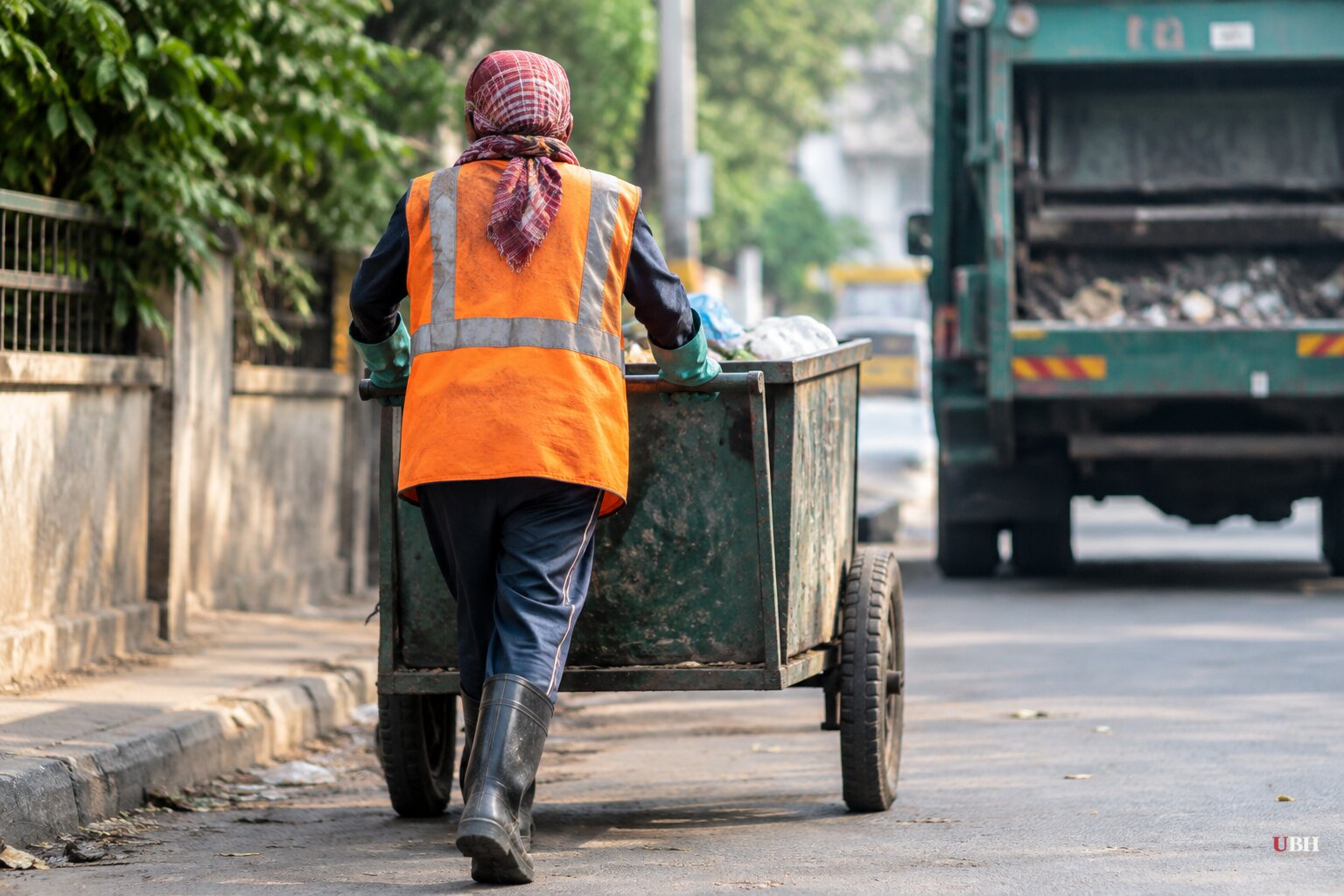
India's sanitation workers have an estimated life expectancy of 63.8 years. That is 11.4 years lower than professional and managerial workers, according to a report released Nov. 19, World Toilet Day, by the consumer-goods company Reckitt and the International Institute for Population Sciences (IIPS).
The report is titled Bridging the Life-Expectancy Gap of Sanitation Workers in India. It rests on demographic and economic modelling by IIPS.
The gap is not just poverty
The report compares sanitation workers with agricultural and manual workers of similar schooling and income. They still live 9.6 years less. That suggests low pay and low education alone do not explain the shortfall.
City life does not help either. Urban male sanitation workers have an estimated life expectancy of 62.3 years. Urban women in the same work come in at 64.3 years. The usual urban advantage does not extend to this workforce.
Poisoning stands out
The sharpest number is cause of death. Of recorded deaths among sanitation workers, 30.2% were classified as poisoning, against 5.4% among other occupational groups. The report ties that to toxic gas exposure in sewers, drains and other confined spaces.
This is a workplace safety problem with identifiable mechanisms. Gas detectors, mechanised cleaning and enforced entry rules all target it directly.
The cost to families
Out-of-pocket healthcare spending takes 17.4% of monthly household consumption among sanitation workers, the highest share of any occupational group in the study. Only 1% of their survey records showed payment of a health insurance premium.
Sanitation workers are also the only group in the study for whom living in a city does not lower the risk of catastrophic health spending. In urban households, 7.4% crossed the study's spending threshold. In rural households, it was 7%.
The report estimates the life-expectancy gap costs India an annual economic loss equal to about 1.03% of GDP. That is a modelled estimate, not a measured figure.
What the report recommends
The report lists six priority areas:
- reducing hazardous manual entry through mechanisation
- strengthening employer accountability
- expanding healthcare and insurance cover
- improving workforce records
- supporting sanitation-worker households
- speeding up adoption of protective technologies
It points to wearable toxic-gas detectors, low-cost monitoring systems and digital safety training as ways to cut risk.
The sponsor's numbers
Reckitt, the maker of Harpic, is a corporate partner on the study. It says the report is the first in the Global South to put a figure on the human and societal cost of this gap.
The company ties the findings to its Harpic World Toilet College, which it says has trained 250,000 sanitation workers since launch. Each participant completes a 16-contact-hour course covering occupational safety, protective equipment, health and wellness, and employment readiness. They receive safety kits and a "Suraksha Passport" recording their training. The program also links workers to government welfare schemes.
Reckitt then makes two claims of its own. The first is that this training could advance about 1.2 million life-years. The second is that an independent impact assessment found Rs 25 in social value for every Rs 1 invested.
The first figure is arithmetic. It multiplies 250,000 trained workers by the report's modelled 4.8-year gain from reduced occupational risk. That assumes every trained worker captures the full modelled gain. Reckitt itself calls the result a "potential" figure, and a projection is not a measured outcome.
Gaurav Jain, Reckitt's executive vice president for South Asia, said: "Sanitation workers play a critical role in safeguarding public health, yet many continue to face risks that impact their health, safety and livelihoods."
The college has also worked with the Administrative Staff College of India on the SAFER Challenge (Sanitation Worker Assistance for Fatality Elimination & Risk Reduction), which explores low-cost toxic gas sensors. Reckitt says it is supporting a policy roadmap on worker safety, healthcare access and livelihood security.
What comes next
The estimates come from a model, and the survey records behind them show a clear pattern in cause of death. Reckitt has not published results showing whether trained workers actually live longer than untrained ones. That would be the test of the 4.8-year assumption. The report also does not say who would pay for mechanisation or enforce employer accountability, two of its six priorities. Those decisions sit with employers and governments, and the policy roadmap Reckitt says it is supporting is where they would be set.
Sources used for this briefing
7 links from 7 independent newsrooms (syndicated copies of the same report count once)
These are the sources it draws on, linked so you can verify.


