
Unbiased headlines. Facts, not spin.
Unbiased Headlines is an independently owned news organization. We bring you the facts, not opinions, written fresh from 110+ named sources. Sources linked so you can verify it yourself.
 health
Notable (6/10)
NHS Begins £10m Trial Using AI as Second Mammogram Reader for 700,000 Women
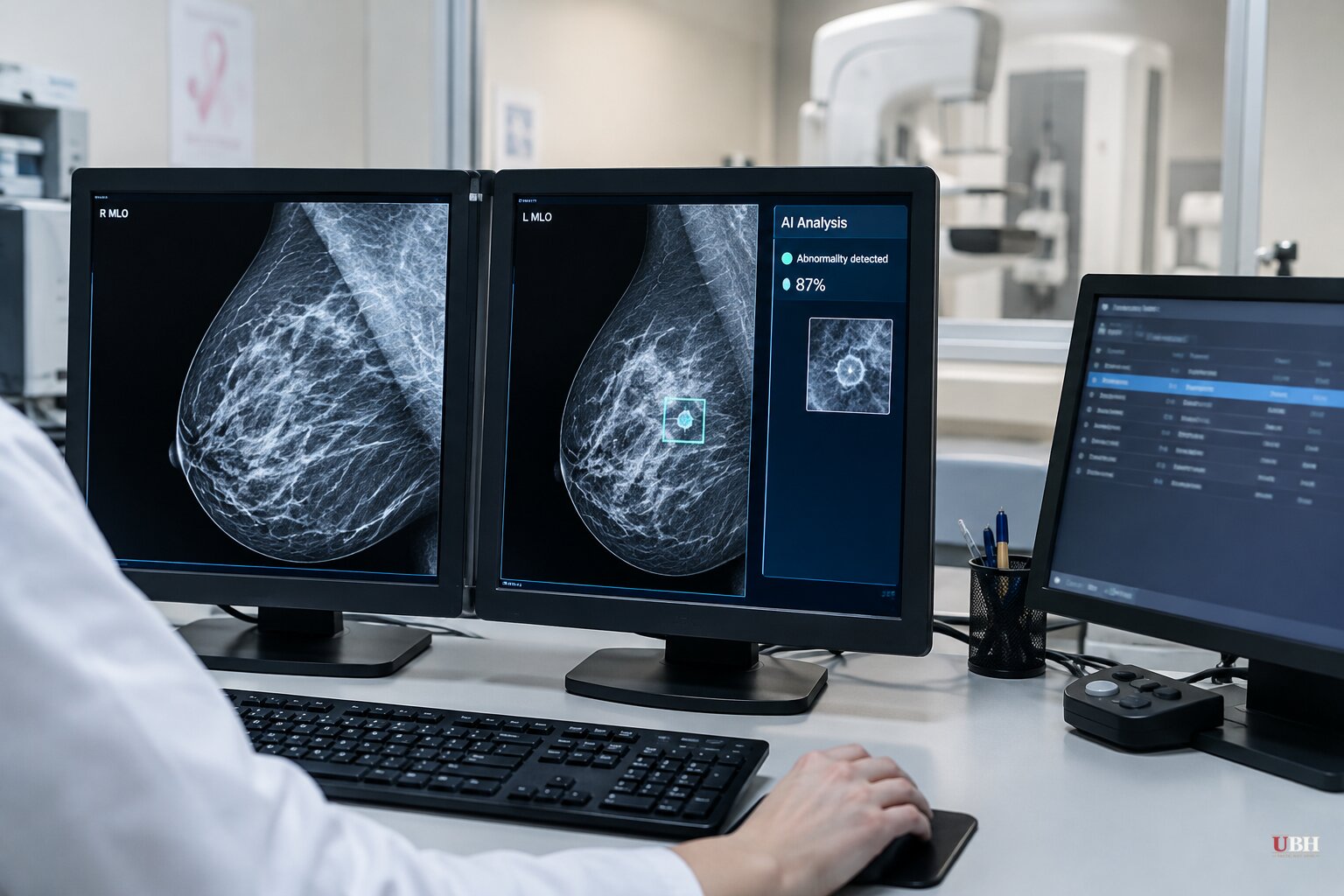
The NHS has begun enrolling women in what its organizers call the world's largest trial of artificial intelligence in breast cancer screening.
The study is called EDITH. NHS England says about 700,000 women are expected to take part at 30 sites over three years. The budget is £10 million.
Recruitment has started at Cambridge University Hospitals, the first site. Thousands more women will be invited at other sites in the coming months.
How the trial works
Under the current NHS programme, two specialists read every mammogram. In the trial, one of those human readers is replaced by AI.
The Warwick and Cambridge researchers say all clinical decisions will stay with NHS staff. Sian Taylor-Phillips, professor of population health at the University of Warwick and co-chief investigator, said the team has "rigorously tested four AI systems for accuracy and will use these safely and transparently."
The University of Warwick, the University of Cambridge and Cambridge University Hospitals NHS Foundation Trust lead the study.
Women will not see a change in the appointment itself. Their routine screening invitation will include details of the trial and the choice to opt out.
The scale of screening
Women aged 50 to 71 are invited for a mammogram every three years. NHS figures show 2.75 million women were invited in 2024/25, 10% more than the year before. Around 70% took up the offer.
Breast cancer is the most common cancer among women in the UK, with around 59,000 diagnoses a year. About a third are found through screening, usually early. The programme is estimated to prevent around 1,300 deaths annually.
Prof Fiona Gilbert of the University of Cambridge, an honorary consultant at Addenbrooke's Hospital and the other co-chief investigator, noted that fewer than 1% of women screened have cancer. That means most of the reading work is clearing normal images.
The workforce problem
The trial exists because the system is short of people. Gilbert told the BBC there is a "huge shortfall" in radiologists, while the number of imaging examinations is rising by 8% a year.
Dr Stephen Harden, president of the Royal College of Radiologists, welcomed the research but refused to oversell it. He said AI could "safely act as a second pair of eyes, increasing capacity," but warned that patients "are facing long, anxious waits for scan results because of a dire shortage of radiologists." He added that the technology will not be a quick fix and that more radiologists are needed. According to the college's research, more than a fifth of the breast radiology workforce is due to retire by 2030.
The trial is a test of a tool, not a substitute for training and hiring.
What the researchers are actually worried about
Several smaller studies have already indicated AI can improve cancer detection rates. EDITH is meant to settle a different question: whether it does harm.
Taylor-Phillips said the team wants "to avoid the overdiagnosis of milder disease that would never have caused symptoms." Researchers also want to be sure AI does not trigger unnecessary recalls for further tests. Every false alarm means anxiety for a woman and extra work for a stretched service.
The technology is also meant to look for cancers too small to see or feel, according to NHS England. Those are exactly the cases where the line between useful early detection and overdiagnosis gets blurry.
Official backing
Health Secretary Yvette Cooper, speaking during a visit to the trial team at Addenbrooke's Hospital, said that if successful, the technology "could help women get a breast cancer diagnosis and start treatment much more quickly."
Prof Kevin Dunbar, deputy director of public health at NHS England, said EDITH "will help build the evidence we need, while ensuring patient safety, quality and the expertise of screening professionals remain at the heart of the programme."
Hannah Maybour of the charity Breast Cancer Now called it "hugely encouraging" to see trials and investment in technologies that could improve detection.
What comes next
There are no results yet, and none are due soon. The trial runs three years. The first women are being enrolled in Cambridge, with more sites coming online in the coming months.
The finding that matters is not just how many extra cancers AI catches. It is whether recall rates and overdiagnosis stay under control while the radiologist shortage Harden describes continues to grow.
Sources used for this briefing
7 links from 6 independent newsrooms (syndicated copies of the same report count once)
These are the sources it draws on, linked so you can verify.


