
Unbiased headlines. Facts, not spin.
Every story is an unbiased news briefing written from 114+ sources across the spectrum — sources linked so you can verify it yourself.
 defense
Major Story (8/10)
October 8, 2026 at 02:38 AM
defense
Major Story (8/10)
October 8, 2026 at 02:38 AM
White House Asked Pentagon for Iran Strike Options Before Nov. 3 Midterms, Two Officials Tell The Atlantic
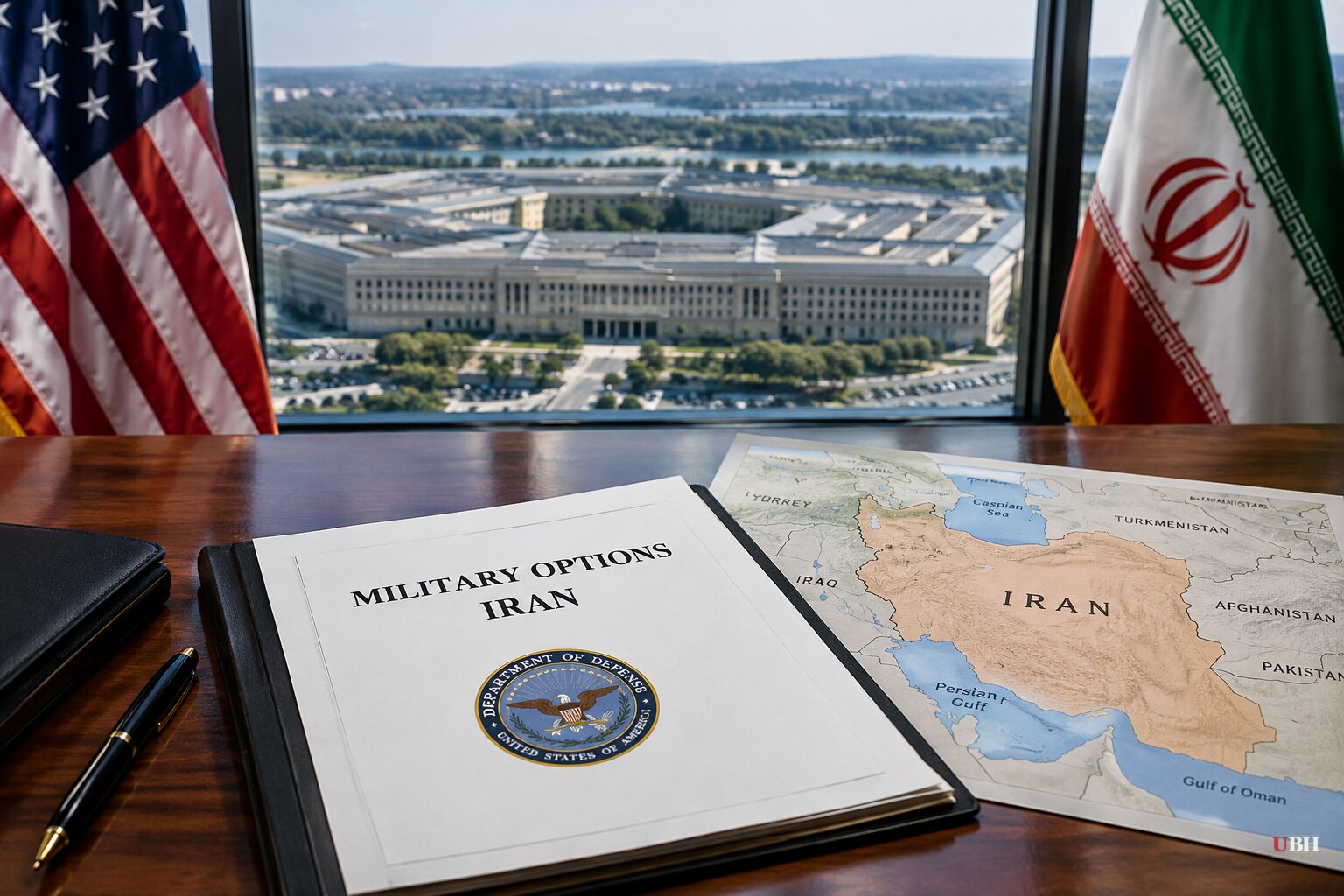
Since the war with Iran began on February 28, the U.S. has gone through months of on-again, off-again fighting, and it has not struck Iranian targets in several weeks.
The White House has asked the Pentagon to develop strike options against Iranian targets that could be carried out before the November 3 midterm elections, two administration officials told The Atlantic on Wednesday. A U.S. official told the magazine that Central Command, which runs the war effort, is drawing up the plans.
Targets, scope, and whether President Trump will authorize anything are all still under discussion. A White House official told the magazine only that Trump "has all options available at any time" and did not answer questions about timing.
Administration officials tied the work to Trump's wish to show progress in the war and to bring down gasoline prices before the vote, according to The Atlantic.
The plan's own advocates see limits. They acknowledge that limited strikes would not, by themselves, bring Iran to the negotiating table, restore safe passage through the Strait of Hormuz, or lower gas prices before Election Day. Their argument is that action after months of uneasy quiet would let Trump demonstrate strength and possibly claim some kind of victory.
The Atlantic also reported that oil prices have tended to jump on headlines of major escalation, which cuts against the gas-price goal.
Some presidential advisers want to wait until after the election, the magazine reported, worried that renewed fighting, especially if American troops are killed, would hurt Republican candidates. The Pentagon has separately presented post-election options, from limited attacks to a broader campaign that could include more strikes on Iran's energy industry.
Axios reported, citing U.S. officials, that the Pentagon has instructed CENTCOM to complete preparations for a possible resumption of major combat operations. Those could target Iranian nuclear facilities, energy infrastructure and other strategic sites. Axios said no timeline has been set and the preparations are not a presidential order to begin strikes.
Axios also reported that negotiations are stalled and that a Camp David meeting of Trump's senior national-security team last week, chaired by Vice President JD Vance, focused on the Iran war and the Saudi-Houthi fighting in Yemen. Trump and Israeli Prime Minister Benjamin Netanyahu have spoken twice in recent days. An Israeli official told Axios the chances of action before the polls are low and could rise afterward.
On the diplomatic track, Vance told Reuters that any deal would require concrete reductions in Iran's enrichment capacity, and that Washington is unsure how decisions are made in Tehran. A senior Iranian official told Reuters that U.S. nuclear demands conflict with Iran's position and that recognition of its right to enrichment is a red line.
The shipping picture is getting worse. The UKMTO maritime agency said Wednesday that a tanker sailing 51 nautical miles (94 kilometers) off Qatar's north coast reported being struck by multiple projectiles. An unspecified number of casualties was reported. UKMTO did not identify the ship's origin or who fired, and authorities are investigating.
Maritime security groups counted at least 12 attacks on oil, LNG and LPG vessels between September 28 and October 5, according to reporting on those organizations' tallies. The Atlantic reported that Iranian attacks on shipping this week have led some shipowners to reconsider transiting the waterway.
CENTCOM said Wednesday that an IRGC claim that the Strait of Hormuz is "closed" is "FALSE." The command said traffic is flowing, including 20 million barrels of crude. The claim came from Mohammadreza Naqdi, an adviser to the IRGC commander, who said routes Tehran considers illegal would be closed.
Defense Secretary Pete Hegseth has said the U.S. blockade is "ironclad" and that traffic is returning toward pre-war levels. Treasury Secretary Scott Bessent has called the current phase "Operation Economic Outcast." Neither claim sits easily beside a dozen attacks in eight days.
The strike talk landed in the middle of a separate mess. At a Monday rally in Nebraska, Trump said of Iran: "They can take out a city, let them take out Los Angeles, let them take out San Diego. This is a very small price to pay."
Gov. Gavin Newsom opened the state emergency operations center Tuesday to assess potential threats. San Diego Mayor Todd Gloria said, "San Diego is not collateral damage." Republican Jim Desmond, a Navy veteran in a competitive House race, wrote: "I vehemently disagree with President Trump's comments."
White House Communications Director Steven Cheung called the reaction a "media freakout" and said Trump was "clearly stating U.S. cities would have been threatened if a nuclear Iran hadn't been stopped."
In San Antonio on Wednesday night, Trump said: "We are not going to let that happen. We protect our cities. We protect our country."
The U.S. has roughly 50,000 troops in the region, according to a Washington Post report on the Pentagon's posture. Trump has not decided whether to order strikes, and the Israeli official quoted by Axios put the odds of action before November 3 as low. The election is 27 days away.
Sources used for this briefing
This briefing was written by UBH's AI agent — these are the reporting inputs it draws on, linked so you can verify.


