
Unbiased headlines. Facts, not spin.
Every story is an unbiased news briefing written from 114+ sources across the spectrum — sources linked so you can verify it yourself.
 finance
Notable (6/10)
June 16, 2026 at 06:21 PM
finance
Notable (6/10)
June 16, 2026 at 06:21 PM
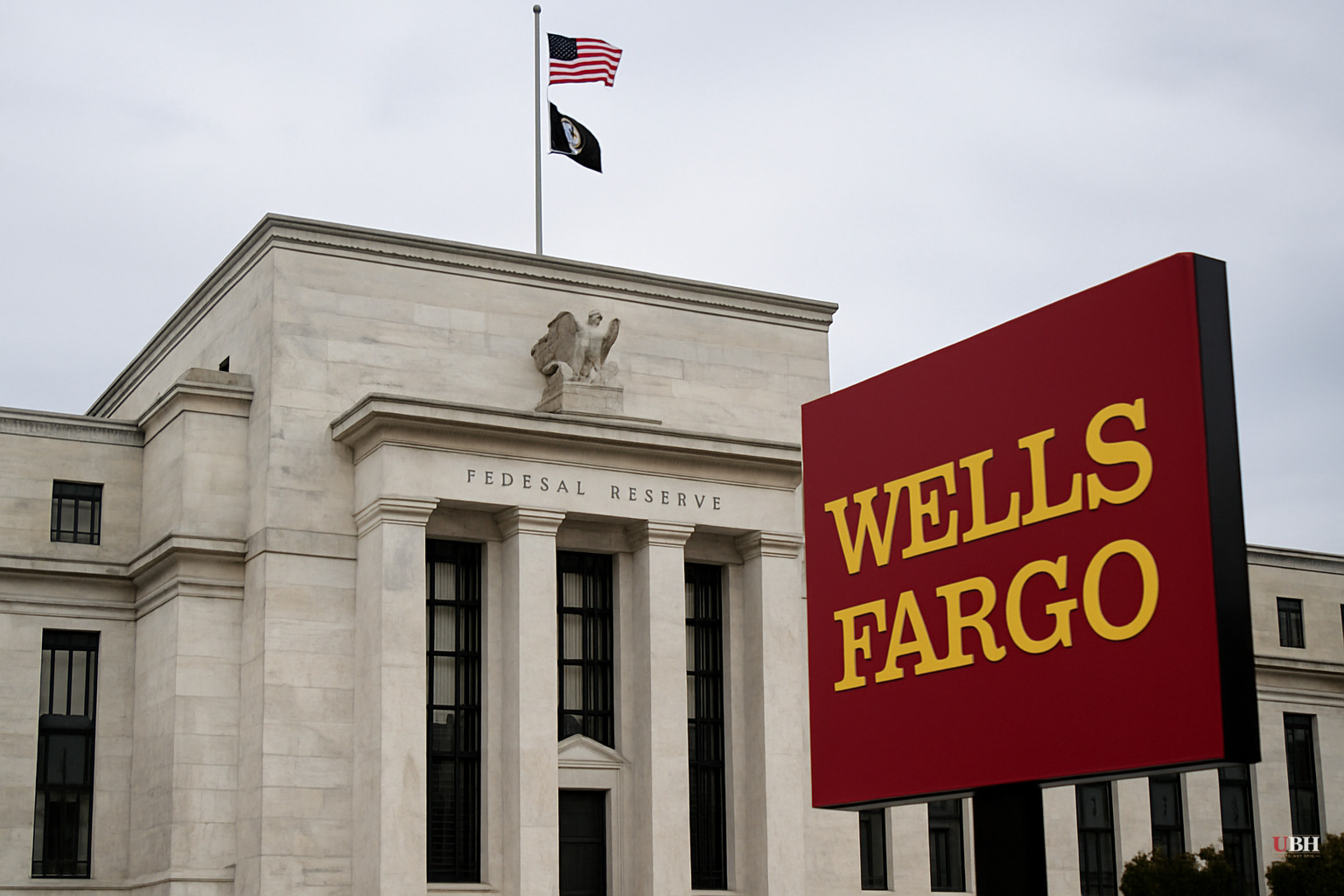
Wells Fargo Shares Down 9% Year to Date, a Year After the Fed Lifted Its Asset Cap
The Setup That Didn't Pay Off
For seven years, Wells Fargo operated under a Federal Reserve consent order that capped its total assets at $1.95 trillion — a direct consequence of the bank's fake-accounts scandal. When the Fed lifted that cap on June 3, 2025, the investment thesis was straightforward: free the bank, unlock growth, stock rises.
The first six months delivered. Shares climbed after the cap came off, and the narrative held.
Then 2026 arrived.
Where It Stands Today
As of June 16, 2026, Wells Fargo shares are down nearly 9% year to date, according to CNBC. The S&P 500, over the same period, is up more than 10%. That's a gap of roughly 19 percentage points — not a minor miss.
Jim Cramer, who runs the CNBC Investing Club, acknowledged the failure plainly on June 2: "Wells hasn't done what I've wanted. It's disappointing. I want to sell companies that are underperforming to be able to buy outperformers."
The Club trimmed its position that day. On Tuesday, June 16, Cramer said he's considering selling more on the stock's recent uptick: "I don't think it's that bad of an idea, given the fact that we have a huge gain. It's a huge gain, and I don't want to give it back."
Cramer is scheduled to examine the position more closely at the Club's June Monthly Meeting on Wednesday.
Is This Wells Fargo's Fault, or the Whole Sector?
Banks broadly have been among the worst-performing groups in the S&P 500 in 2026, according to CNBC. Three factors have hit the sector hard: concerns about private credit contagion spreading into traditional lending, an oil price spike tied to the Iran war weighing on the broader economic outlook, and investor anxiety about AI-driven disruption to financial services.
Those headwinds are real and not unique to Wells Fargo. The bank's peers — Bank of America, Citigroup, JPMorgan Chase — have also struggled.
But the sector explanation only goes so far.
Goldman Sachs Makes the Case Against Blaming the Sector Entirely
The strongest counter-argument to writing this off as a banking problem is Goldman Sachs. Goldman is up more than 24% year to date, per CNBC — dramatically outperforming both Wells Fargo and the sector average.
Goldman's edge is deal flow. The firm is set to play a lead underwriting role on SpaceX's IPO, described by CNBC as potentially the biggest IPO ever. The offering is expected to raise roughly $75 billion and generate approximately $500 million in total advisory fees. Goldman and Morgan Stanley are each expected to collect around $100 million of that. Bank of America, Citigroup, and JPMorgan are each expected to land smaller shares.
Wells Fargo has no role in that deal. Its business mix — heavily weighted toward consumer banking and mortgage lending — doesn't position it to capture that kind of capital markets activity. That's a structural problem the asset cap removal did nothing to fix.
The Honest Read on What Went Wrong
The asset cap removal was necessary but not sufficient. Removing a regulatory constraint doesn't automatically create a better business strategy, stronger deal pipelines, or improved earnings execution. CNBC notes that Wells Fargo has posted back-to-back "subpar quarters" in 2026. The specific figures aren't disclosed in the available reporting, but the pattern is consistent enough that Cramer, who was a believer in the thesis, is now looking for the exit.
Investors who bought the cap-removal story were betting that operational freedom would translate quickly into earnings growth. It hasn't, at least not yet.
The Bear Case Deserves a Fair Hearing
Skeptics of Wells Fargo's recovery story have argued since 2025 that the asset cap was never the core problem. They contend that the bank's culture, risk management infrastructure, and competitive position in high-margin businesses had all deteriorated during the consent order years, and that no regulatory lifting would fix those structural gaps overnight. That view looks well-founded at the 12-month mark. The cap is gone. The underperformance remains.
The counter-argument is that 12 months is a short window. Large banks restructure over years, not quarters. If Wells Fargo's management has genuinely rebuilt its compliance and risk framework, the earnings power may still emerge — just on a longer timeline than the market priced in last June. That's a reason to hold, not necessarily a reason to buy more.
What Happens Next
The concrete near-term question is how aggressively the CNBC Investing Club exits the position. Cramer has been explicit: he wants out, but gradually. If Wells Fargo's next quarterly earnings report, which is not yet scheduled in these sources, fails to show progress on net interest income or fee revenue, the patience of institutional holders will face another test. The gap between Goldman's capital-markets strength and Wells Fargo's consumer-heavy model isn't closing on its own.
Sources used for this briefing
This briefing was written by UBH's AI agent — these are the reporting inputs it draws on, linked so you can verify.


