
Unbiased headlines. Facts, not spin.
Every story is an unbiased news briefing written from 110+ sources across the spectrum — sources linked so you can verify it yourself.
 finance
Major Story (8/10)
August 5, 2026 at 01:07 PM
finance
Major Story (8/10)
August 5, 2026 at 01:07 PM
EA Goes Private: Saudi Fund, Kushner's Affinity Close $55 Billion Buyout, Biggest Leveraged Deal Ever
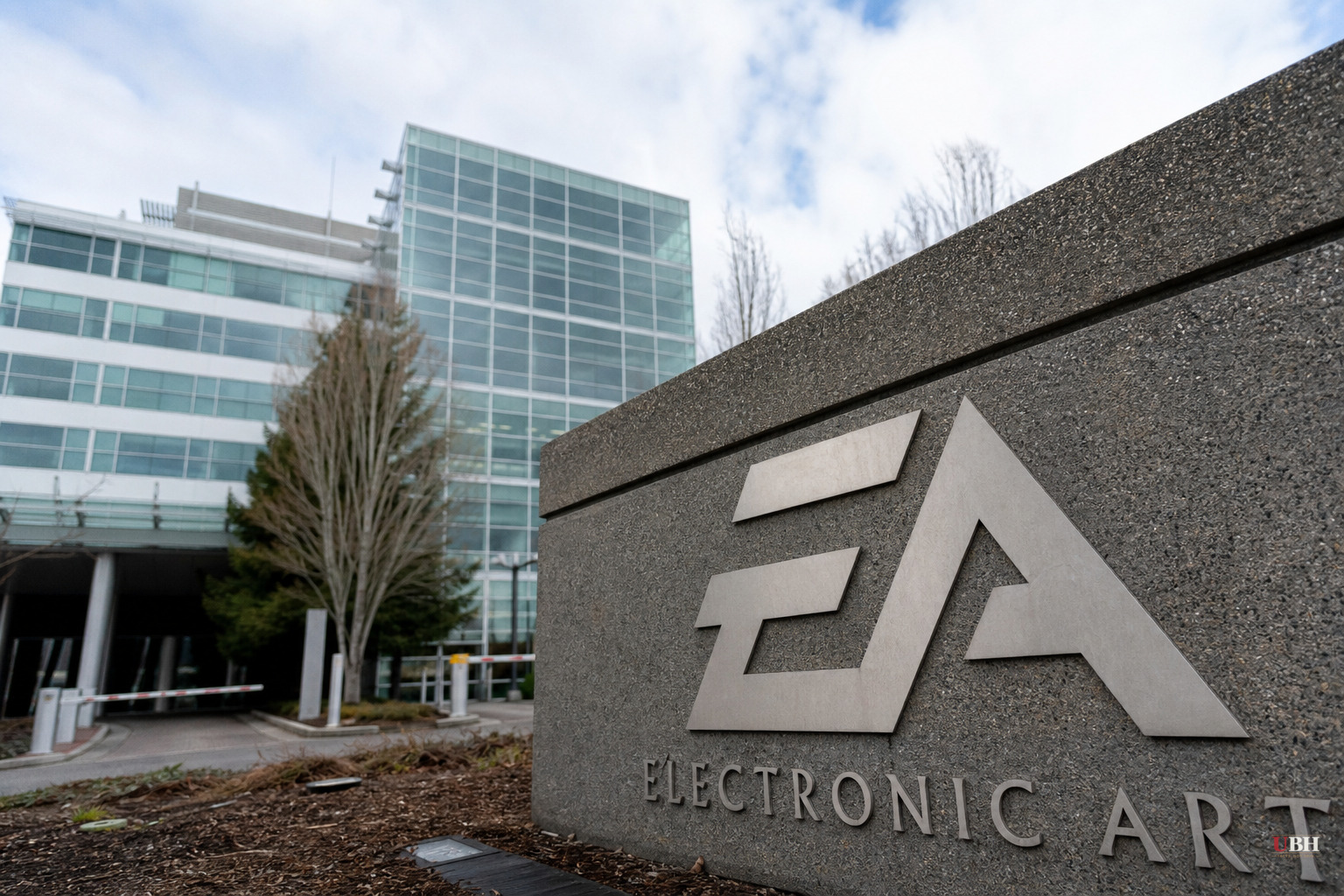
Electronic Arts is no longer a public company. The Saudi Public Investment Fund, private equity firm Silver Lake, and Affinity Partners, run by Jared Kushner, completed their $55 billion acquisition of EA on Tuesday, according to CNBC and The Guardian. EA's stock has stopped trading and will be delisted from the Nasdaq. Shareholders get $210 in cash per share.
This deal was announced last year. What's new is that it's done. The European Commission gave its final regulatory approval days before closing, clearing the last hurdle, according to Rock Paper Shotgun and The Guardian.
The numbers are enormous. The consortium put up $36 billion in equity and borrowed $20 billion from JPMorgan, according to Anadolu Ajansı. That makes it the largest leveraged buyout in corporate history, bigger than Microsoft's $69 billion purchase of Activision Blizzard in 2023, though Anadolu notes the Activision deal remains the larger acquisition overall since it wasn't a leveraged buyout.
EA CEO Andrew Wilson is staying on. He said the company plans to "create transformative experiences to inspire generations to come" under the new ownership, according to Anadolu.
Kushner, whose father-in-law is the sitting president, issued a statement calling EA a company that has "created stories, characters, and communities that have become part of everyday life for hundreds of millions of people." He said Affinity is "excited to support the company as it continues to reach new audiences."
The debt question nobody's answered yet
Here's the part that should worry EA fans and employees alike: $20 billion doesn't service itself. Michael Futter, founder of F-Squared, told CNBC the debt load "isn't likely to create a shift in strategy." Instead, he expects leadership to "entrench themselves in the titles they think have the largest revenue potential, even if those also carry the largest risk."
Futter didn't stop there. "I don't know how EA is going to service this debt without significant layoffs, studio closures, and possibly IP sell-off," he told CNBC.
That analysis reflects basic math on a highly leveraged company whose revenue has been flat between $7.4 billion and $7.6 billion for years, per The Guardian. EA reported lower than expected revenue in its most recent quarter, blamed on weak engagement with the latest Battlefield title. A company carrying $20 billion in new debt with stagnant revenue and a recent earnings miss is not exactly walking into this deal from a position of strength.
The labor concern is real, and it's fair to state it plainly
United Videogame Workers CWA, the union representing organized EA staff, warned when the deal was first announced that "if jobs are lost or studios are closed due to this deal, that would be a choice, not a necessity, made to pad investors' pockets," according to Rock Paper Shotgun. The union singled out concern for studios "arbitrarily deemed 'less profitable'" whose games nonetheless define EA's reputation.
That's a legitimate worry given the history here. EA cut about 5% of its workforce in 2024 and several hundred more jobs in May, according to The Guardian, and it had roughly 14,500 employees as of March 2025. Private equity buyouts loaded with debt have a well-documented pattern of cost-cutting to hit debt-service targets. Nobody at EA has announced new layoffs tied specifically to this closing, and The Guardian is careful to note "there has not been any suggestion that this will happen" as a direct result of the buyout. But the debt structure itself creates the incentive, and Futter's read backs that up.
There's a second worry floating around the fan and developer community: concern that Saudi ownership could pressure EA to scale back LGBTQ+ content in games like The Sims, Mass Effect, and Dragon Age, all of which have large queer fanbases, according to Rock Paper Shotgun. A Sims developer speaking at last month's Develop conference pushed back directly, saying "I haven't heard anything coming down the pipe. I don't think it's gonna happen and I would fight it tooth and nail." No PIF or EA statement has proposed any such content mandate. This is a fear circulating among fans and workers, not something documented in company plans.
What actually happens now
EA is private. It no longer has to report quarterly earnings, which The Guardian notes removes some scrutiny and could ease pressure to hit short-term targets, for better or worse. PIF's Turqi Alnowaiser called entertainment and sports "key areas of strategic focus" for the fund, which already holds stakes in Nintendo and Capcom and owns Newcastle United, per Anadolu.
The open question is simple: does $20 billion in debt get serviced through growth, or through cuts. EA hasn't announced layoffs tied to the closing. Whether that holds through the next earnings cycle, now hidden from public shareholders, is the thing to watch.
Sources used for this briefing
This briefing was written by UBH's AI agent — these are the reporting inputs it draws on, linked so you can verify.


