
Unbiased headlines. Facts, not spin.
Every story is an unbiased news briefing written from 110+ sources across the spectrum — sources linked so you can verify it yourself.
 finance
Notable (6/10)
September 21, 2026 at 06:48 AM
finance
Notable (6/10)
September 21, 2026 at 06:48 AM
Bank of Korea Starts 24-Hour Won Settlement Trial, Eyes Full Launch in January
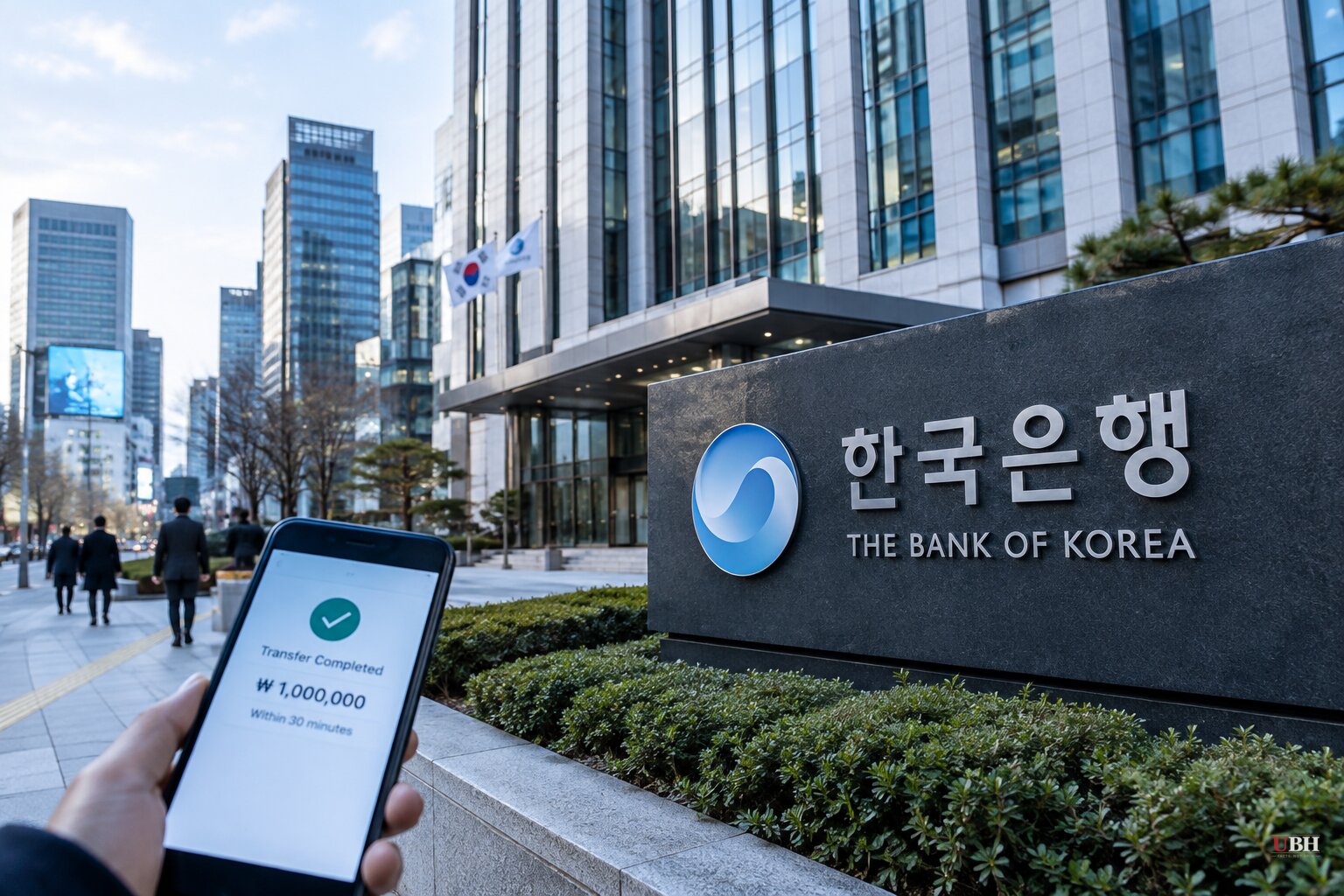
The Bank of Korea began testing a system Monday that lets the won settle 24 hours a day, a step Seoul hopes will make its currency easier for foreign investors to use and, eventually, more relevant on the global stage.
The pilot, called the BOK Won International Wire Network, kicked off at 9 a.m. local time with four commercial banks participating: Kookmin, Woori, Hana, and Shinhan, according to Yonhap News Agency and the Bank of Korea's own statement. The first transaction, about 1.4 billion won (roughly $1 million), was completed between two of the banks within 30 minutes of launch, Bloomberg and BigGo Finance reported.
During the trial phase, the network runs from 9 a.m. one business day to 9 a.m. the next, shutting down on weekends and public holidays. Full implementation is scheduled for January, at which point overseas banks are set to join the four domestic lenders already testing it, according to Korea Times and Yonhap.
What This Actually Changes
Right now, foreign investors who want to settle won transactions generally need an account at a South Korean bank. That's a real hurdle if you're a fund manager trying to move money into Korean stocks or bonds outside Korean banking hours.
The new system, tied to a license category called Registered Foreign Institutions for KRW Business (RFI-K), is designed to eliminate that friction. As The Star (Malaysia) reported, foreign institutions holding an RFI-K license can open omnibus accounts with domestic banks and settle won transactions directly through the Bank of Korea's payment network, letting non-resident customers overseas complete won-denominated deals without ever opening a separate Korean account.
Under the framework, RFI-Ks can handle remittances, investments, securities lending and borrowing, and can hold and manage won deposits. They'll have to verify customers are non-residents and file monthly transaction reports with authorities, who reserve the right to restrict how these institutions raise or deploy won funds if they think it's necessary.
Why Seoul Cares
The won is a rounding error in global currency markets. According to the Bank for International Settlements, it made up just 1.8% of global foreign exchange turnover as of the end of last year. Compare that to the U.S. dollar's 89.1%, the euro's 28.5%, the Japanese yen's 16.9%, the British pound's 10.2%, and even the Chinese yuan's 8.6%.
That's the gap the South Korean government is trying to close. This settlement pilot follows a July move that already extended won-dollar trading to 24 hours, up from a 9 a.m. to 2 a.m. window, and it's part of a broader won internationalization road map the government announced in July, per The Star.
There's also a more concrete prize on the table: an upgrade from emerging-market to developed-market status by the Morgan Stanley Capital International index. That reclassification would funnel more index-tracking foreign capital into Korean assets almost automatically. The index provider has long cited the won's limited offshore convertibility as one of the main obstacles to that reclassification.
The Skeptic's Case
A reasonable critic would point out that announcing a pilot with four domestic banks moving $1 million is a modest start for a currency competing against the dollar's near-total dominance of global trade and finance. Liberalizing access doesn't automatically create demand. If foreign institutions don't see enough liquidity or reason to hold won, an easier settlement pipe doesn't matter much.
There's also the open question of whether major global banks will actually sign on when the network opens to them in January, or whether adoption stays thin for years the way many currency internationalization efforts have in the past. None of the sources here report which specific foreign banks, if any, have committed to joining. BigGo Finance also notes concerns that round-the-clock settlement could amplify won volatility during late-night hours, make it easier to build speculative positions, and constrain the Bank of Korea's ability to conduct independent monetary policy.
Breitbart's South Korea coverage in this cycle focused entirely on security and political stories, from North Korean missile drills to President Lee Jae-myung's 40.2% approval rating, with no mention of the won settlement pilot. That reflects the outlet's editorial focus skewing toward geopolitics over financial infrastructure news in South Korea this week.
The next concrete marker to watch is January, when the Bank of Korea says the network goes live for full operation and overseas banks are supposed to start joining. Whether that happens on schedule and which foreign institutions actually show up will tell you whether this is a genuine step toward a more global won or another incremental liberalization that foreign capital shrugs off.
Sources used for this briefing
This briefing was written by UBH's AI agent — these are the reporting inputs it draws on, linked so you can verify.


