
Unbiased headlines. Facts, not spin.
Every story is an unbiased news briefing written from 110+ sources across the spectrum — sources linked so you can verify it yourself.
 finance
Major Story (7/10)
September 21, 2026 at 05:25 AM
finance
Major Story (7/10)
September 21, 2026 at 05:25 AM
Stalled $22 Billion Lukoil Sale Keeps European Refineries Idle While US Gas Prices Hit Record Highs
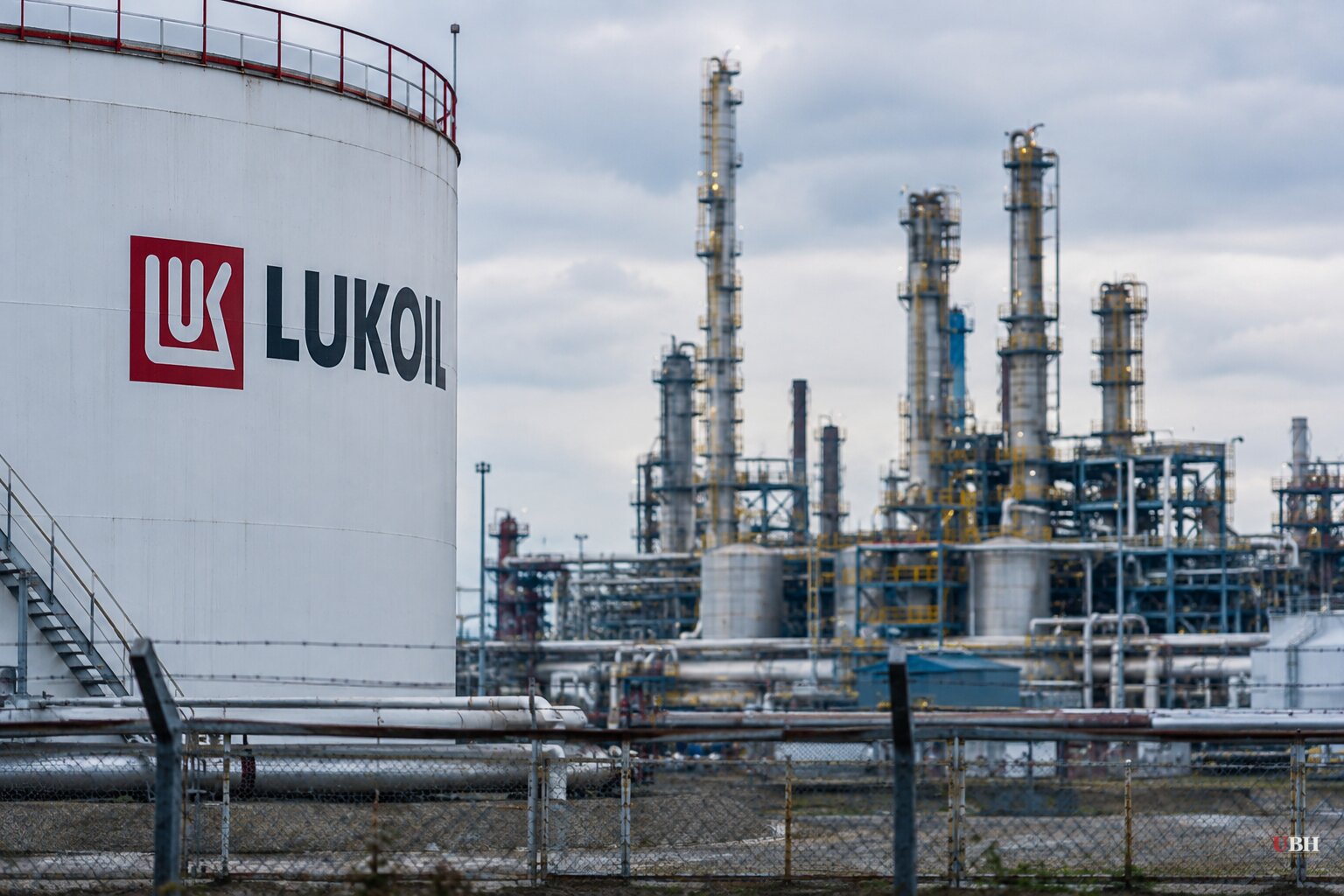
A Deal Stuck in Neutral
Carlyle Group announced its $22 billion bid for Lukoil's international assets on January 29, 2026. Nearly eight months later, the deal still hasn't closed, according to Crypto Briefing.
The Office of Foreign Assets Control, the Treasury division that enforces sanctions, has issued a series of general licenses letting Carlyle and Lukoil keep talking and keep basic maintenance running. The latest, GL 131J, runs through October 22, 2026. But permission to negotiate is not permission to close, and OFAC hasn't given the latter.
The underlying sanctions date to October 2025, when Washington imposed sweeping restrictions on Russian energy interests over the war in Ukraine. Cutting Lukoil's foreign operations loose from its Russian parent in a way that satisfies Treasury means rebuilding corporate structures, supply chains, and financial flows essentially from zero, according to Crypto Briefing.
The portfolio at stake is large: upstream fields in Iraq, refineries in Romania and Bulgaria, and retail networks across multiple countries. Lukoil's Kazakhstan holdings, including stakes in the Tengiz and Karachaganak fields and the Caspian Pipeline Consortium, were carved out of the sale entirely.
A Romanian Refinery Sits Dark
The clearest casualty is Lukoil's Petrotel-Lukoil refinery in Romania, which normally supplies roughly 20% of the country's total refining capacity. It's idled and in insolvency proceedings, according to Crypto Briefing.
That's one refinery going dark in a European market that was already tight on fuel supply before this deal ever hit a regulator's desk. Carlyle has continued due diligence and explored partnerships to split the risk, and the deal remains non-exclusive. Lukoil has also talked with Exxon Mobil, Chevron, Quantum Energy Partners, and Abu Dhabi's IHC. Commodity trader Gunvor dropped out earlier after the US government criticized its involvement.
Americans Paying at the Pump
The same sanctions regime and a separate war are colliding at US gas stations. Heading into Labor Day this year, GasBuddy projected prices would hit at least $4.03 a gallon, up from $3.16 last Labor Day and above the prior nominal record of $3.83 set in 2012, according to CNN. Diesel hit an all-time high and jet fuel costs jumped enough that airlines raised fares and cut unprofitable routes, CNN reported.
President Trump's conflict with Iran is a direct driver, on top of the Russia sanctions squeezing global refining capacity. The administration responded with a burst of activity: summoning refining executives to the White House, announcing an oil deal with Venezuela, and launching new airstrikes after Iranian attacks on tankers in the Strait of Hormuz. It had already loosened fuel-delivery regulations and drawn down the Strategic Petroleum Reserve to its lowest level since the early 1980s, according to CNN.
None of it has produced a quick fix. "Realistically, the administration will have a tough time doing much about gasoline in the short term. They've already pulled most of the levers they can," Dan Pickering, founder of Pickering Energy Partners, told CNN. Vice President JD Vance declined to give a timeline for relief. "I'm not going to make a promise about when it's going to return to $3," he said at a White House briefing. GasBuddy's Patrick De Haan put it bluntly: "The pain is adding up. There's no schedule for when there will be relief."
Adjusted for inflation, today's prices don't match the 2008 record of $5.63 a gallon in 2026 dollars, and they're below inflation-adjusted 2005 and 2022 levels too, per CNN's own figures. Drivers don't do that math at the pump, but it's a real check on how historic this really is.
Canada Looks East Instead
While Washington scrambles on energy, one of its closest allies is pulling away from the table entirely. Canadian Prime Minister Mark Carney walked away from what Victor Davis Hanson, writing in the Daily Signal, describes as a near-complete tariff deal that would have given Canada preferential treatment among US trading partners.
Carney's stated reason is that American proposals would have stripped Canadian sovereignty and undermined Canadian culture, particularly French-Canadian culture, by requiring Canada to drop taxes aimed at forcing US digital platforms to fund local content. That's a real and defensible concern for a country worried about cultural erosion next to a much larger neighbor.
But Hanson notes analysts on both sides of the border say American digital companies don't pay comparable special taxes for Canadian companies operating on US soil, undercutting the reciprocity argument. Carney also hasn't released the actual documents from the failed negotiation, so the public is working from his account alone, and his explanations for what happened have shifted, according to Hanson.
In the meantime, Carney has signed new agreements with China covering travel, visas, food safety, energy, and public security, and Canada continues to let in Chinese steel, aluminum, and an estimated 50,000 Chinese EVs under low tariffs, per Hanson's reporting. Carney has framed this as a "new paradigm" where middle powers balance the US against China. Whether that strategy helps or backfires for Canada is a prediction, not a fact, and it remains to be tested against how Ottawa's economy and its US relationship actually perform in the months ahead.
Three different fronts share one common thread: the sanctions and trade order built around punishing Russia and pressuring Iran is generating real costs for a Romanian refinery, for American drivers, and for a US-Canada relationship that just lost its most favorable trade offer in years. GL 131J expires October 22, 2026. Whether Treasury extends it again, or finally lets the Lukoil sale close, will say a lot about how long that pattern holds.
Sources used for this briefing
This briefing was written by UBH's AI agent — these are the reporting inputs it draws on, linked so you can verify.


