
Unbiased headlines. Facts, not spin.
Every story is an unbiased news briefing written from 110+ sources across the spectrum — sources linked so you can verify it yourself.
 finance
Notable (6/10)
August 5, 2026 at 10:30 AM
finance
Notable (6/10)
August 5, 2026 at 10:30 AM
S&P 500 Hits Record High, Ending 42-Day Drought as Tech Stocks Rip Higher
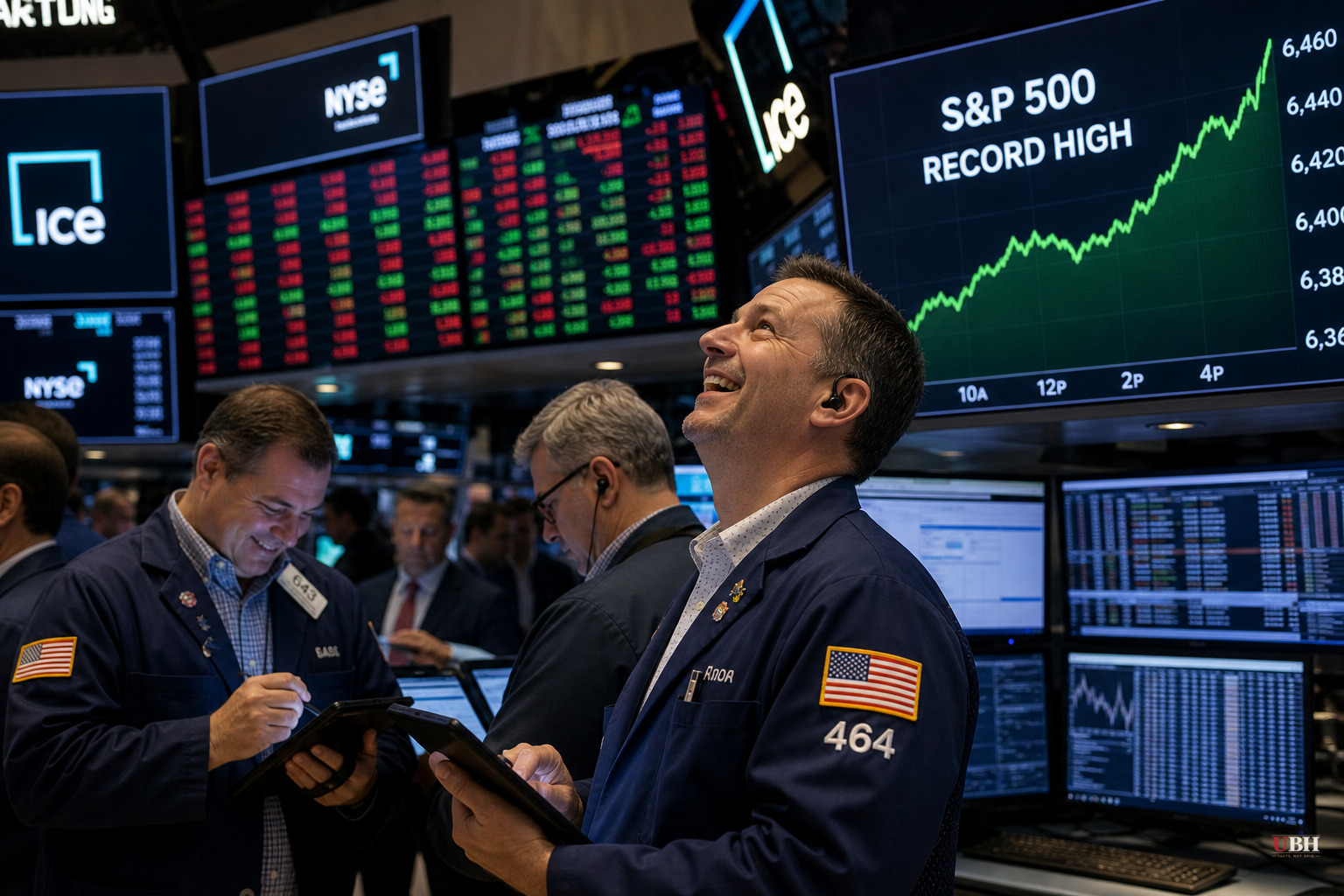
Wall Street just closed the books on a wild two months, and the tech-heavy indexes came out on top.
The S&P 500 closed at a record high Tuesday, its 25th all-time closing high this year and its first since June 2, according to the Wall Street Journal. The Dow Jones Industrial Average, the small-cap Russell 2000, and the iShares MSCI ACWI ETF also hit record territory. The Nasdaq Composite jumped 3.5% in a single session, its biggest one-day gain since May 2025, and has now clawed back nearly 10% from last week's low.
The Nasdaq 100 specifically surged 9.3% over four trading days, the strongest four-day rally since April 2025, adding $3.5 trillion in market value, according to Odaily Planet Daily via Jinshi. Trillion, with a T.
According to Dow Jones Market Data, the gap between this record close and the prior one stretched to 42 trading days, the longest such gap since a 53-day stretch that ended April 16. That April breakout followed the fastest V-shaped recovery on record. Markets don't sit still anymore. They crash, they rip, repeat.
Earnings, Not Hype, Are Driving This
The catalyst isn't just vibes. Strong second-quarter earnings convinced investors that the hundreds of billions being poured into AI infrastructure are actually generating returns, not just burning cash, according to Odaily Planet Daily.
David Rainville, Chief Manager at Sycomore Sustainable Tech Fund, put it bluntly: "The era of shorting big capital expenditure players, such as hyperscale data centers, and going long on small capital expenditure players is over, and I think that's a good thing. It's no longer a simple binary trade."
Translation: the market spent months betting against companies spending big on AI data centers while betting for leaner tech names. That bet just blew up. Investors are now rewarding companies that can show real AI revenue and punishing ones that can't, according to Odaily Planet Daily.
The Magnificent Seven mega-cap tech stocks rose nearly 10% over four days. Amazon's market cap returned to $3 trillion. Nvidia reclaimed a $5 trillion valuation, according to the Wall Street Journal. The Roundhill Magnificent Seven ETF beat the S&P 500 by roughly 5 percentage points over the last two trading days, its largest two-day outperformance since the fund launched.
Geopolitics and a Forced Fire Sale Both Played a Role
Oil prices dropped roughly 6% after Treasury Secretary Scott Bessent told CNBC that an Iran deal could be finalized "within the next two days." That knocked down inflation expectations and pulled Treasury yields down 3 to 5 basis points, giving stocks more breathing room, according to the Wall Street Journal.
There's also a stranger thread in this story. Situational Awareness, a hedge fund run by 20-something AI researcher Leopold Aschenbrenner, got hit with margin calls last month and was forced to dump most of its public equity holdings in block trades to Citadel, the firm run by Ken Griffin, according to the Wall Street Journal.
That forced selling created what traders are calling the "Leopold low." Once that overhang cleared, the Nasdaq rebounded nearly 10% and clawed back to record highs in just five trading days.
The S&P 500's worst intraday drawdown during this whole stretch was only 4.9% below its all-time high, hit on June 9. That headline number looks tame, but it masks real pain underneath. Specifically, prolonged weakness in mega-cap tech dragged down the S&P and Nasdaq for weeks before the snapback, according to the Wall Street Journal.
A shallow index-level drawdown can hide brutal stock-specific losses, and a rally built partly on short covering and forced liquidation clearing out isn't the same as one built purely on fundamentals. Investors who got shaken out during the worst of the tech weakness in June didn't get the benefit of this week's bounce.
Still, the earnings numbers are real, and they're the primary driver named across both the Wall Street Journal and Odaily Planet Daily's reporting. Companies posting actual AI-driven revenue growth are the ones getting rewarded. Companies just talking about AI without results are getting left behind.
The open question now is whether hyperscalers can keep translating capital expenditure into revenue at this pace, and whether the Iran deal Bessent teased actually gets finalized or turns out to be another timeline that slips. Either outcome moves oil, yields, and by extension, this rally.
Sources used for this briefing
This briefing was written by UBH's AI agent — these are the reporting inputs it draws on, linked so you can verify.


