
Unbiased headlines. Facts, not spin.
Every story is an unbiased news briefing written from 110+ sources across the spectrum — sources linked so you can verify it yourself.
 finance
Major Story (7/10)
August 5, 2026 at 09:56 AM
finance
Major Story (7/10)
August 5, 2026 at 09:56 AM
SpaceX Shares Fall 10% as $18.4 Billion AI Spending Overshadows Beat-and-Raise Earnings
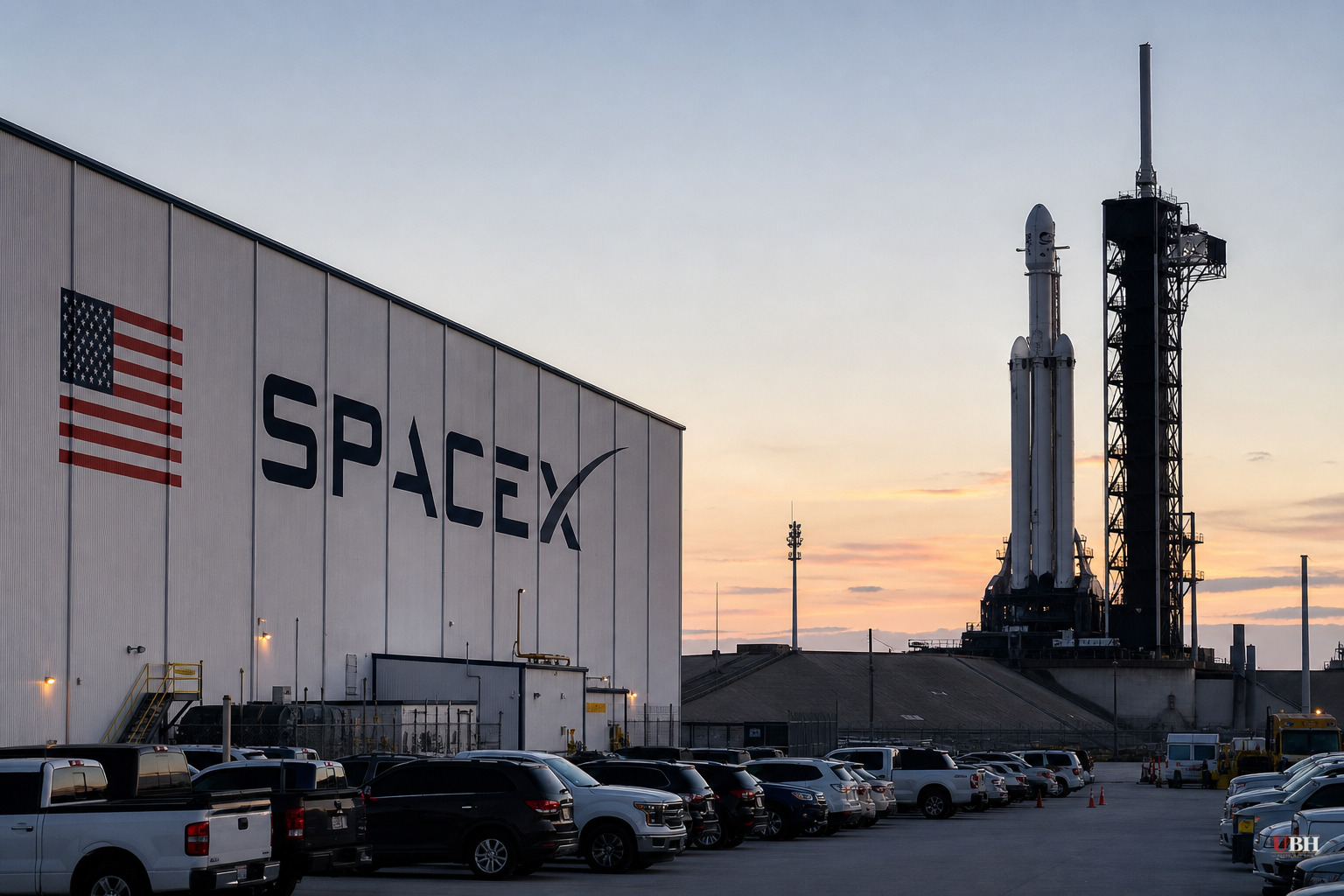
Since SpaceX went public in June with an $85.7 billion IPO, the stock has swung from a peak above $200 to Wednesday's plunge below $115 a share in premarket trading, according to CNBC. The company's first quarterly report as a public company, released Tuesday, beat Wall Street's numbers across the board. Investors sold it anyway.
SpaceX posted second-quarter revenue of $7.81 billion, up 92% year-over-year and well ahead of the roughly $6.9 billion analysts polled by Bloomberg had expected, according to the Irish Times. The net loss narrowed to $541 million, or 9 cents a share, down from a $1 billion loss a year earlier and better than the 24-cent loss Wall Street had forecast.
Starlink subscribers doubled to 12 million, pushing connectivity revenue to $4.3 billion, according to BigGo Finance. The AI segment grew even faster, with revenue jumping 247% to $2.56 billion on new cloud contracts.
None of that mattered once investors saw the capital expenditure line. SpaceX spent $18.4 billion in the second quarter, nearly double the $10.1 billion it spent in the first quarter and far above the roughly $13 billion analysts had modeled, according to BigGo Finance. Almost $16 billion of that went into the company's xAI business.
Shares fell as much as 8.8% in postmarket trading Tuesday, according to the Irish Times, and were down more than 10% in premarket trading Wednesday, according to CNBC. The stock closed Tuesday at just over $125, already below its $135 IPO price and roughly 50% off its June peak of $225.64.
Musk's pitch versus the market's skepticism
CEO Elon Musk told analysts on the earnings call that "we expect the cadence of AI development to improve dramatically," according to the Irish Times. Musk also moved up his timeline for SpaceX to hit $1 trillion in annual revenue, now targeting 2030 instead of a previously stated 2031, according to CNBC.
CFO Bret Johnsen tried to reassure investors that the spending is disciplined. "On the AI compute side, we're able to deploy capital in such a way that we're getting less than a one-year payback," Johnsen said on the call, according to CNBC. In a written statement cited by BigGo Finance, Johnsen said the company's "financial strength gives us substantial capacity to invest in Starship, Starlink Broadband and Mobile satellites, and our AI platform, while maintaining a disciplined long-term capital allocation framework."
Wall Street isn't fully buying the reassurance. Steve Westly, founder of The Westly Group and a former Tesla board member, told CNBC's "Squawk Box Europe" that the market's questions haven't gone away. "SpaceX wants to tell the story they're the market leader," Westly said. "But people still have these questions: how quickly can they grow? How big are the costs going to be before this thing gets to profitability?"
That skepticism reflects a legitimate read of the numbers. SpaceX is now spending capital at a rate that dwarfs its own quarterly revenue growth, and it's doing so in a segment, AI, where its own models trail OpenAI and Anthropic, according to CNBC. The company's strategy is to rent out Nvidia-powered compute capacity as a cloud alternative rather than compete head-on with frontier AI labs, but that's still an unproven bet at a $16 billion-a-quarter burn rate into xAI alone.
The lockup adds fuel
Thursday brings a second pressure point: the expiration of SpaceX's post-IPO insider lockup. Up to 911 million shares become eligible for sale for the first time, according to BigGo Finance, and more than $100 billion worth of stock in total becomes tradable, according to the Irish Times. Short sellers have already built a $24 billion bet against the company, per BigGo Finance.
A lockup expiration doesn't force insiders to sell, but it removes the restriction that's kept a huge supply of shares off the market since June.
Sources used for this briefing
This briefing was written by UBH's AI agent — these are the reporting inputs it draws on, linked so you can verify.


