
Unbiased headlines. Facts, not spin.
Every story is an unbiased news briefing written from 110+ sources across the spectrum — sources linked so you can verify it yourself.
 finance
Notable (6/10)
August 5, 2026 at 01:56 PM
finance
Notable (6/10)
August 5, 2026 at 01:56 PM
Treasury Holds Debt-Sale Guidance Steady, Ignores Wall Street's Push to Change It
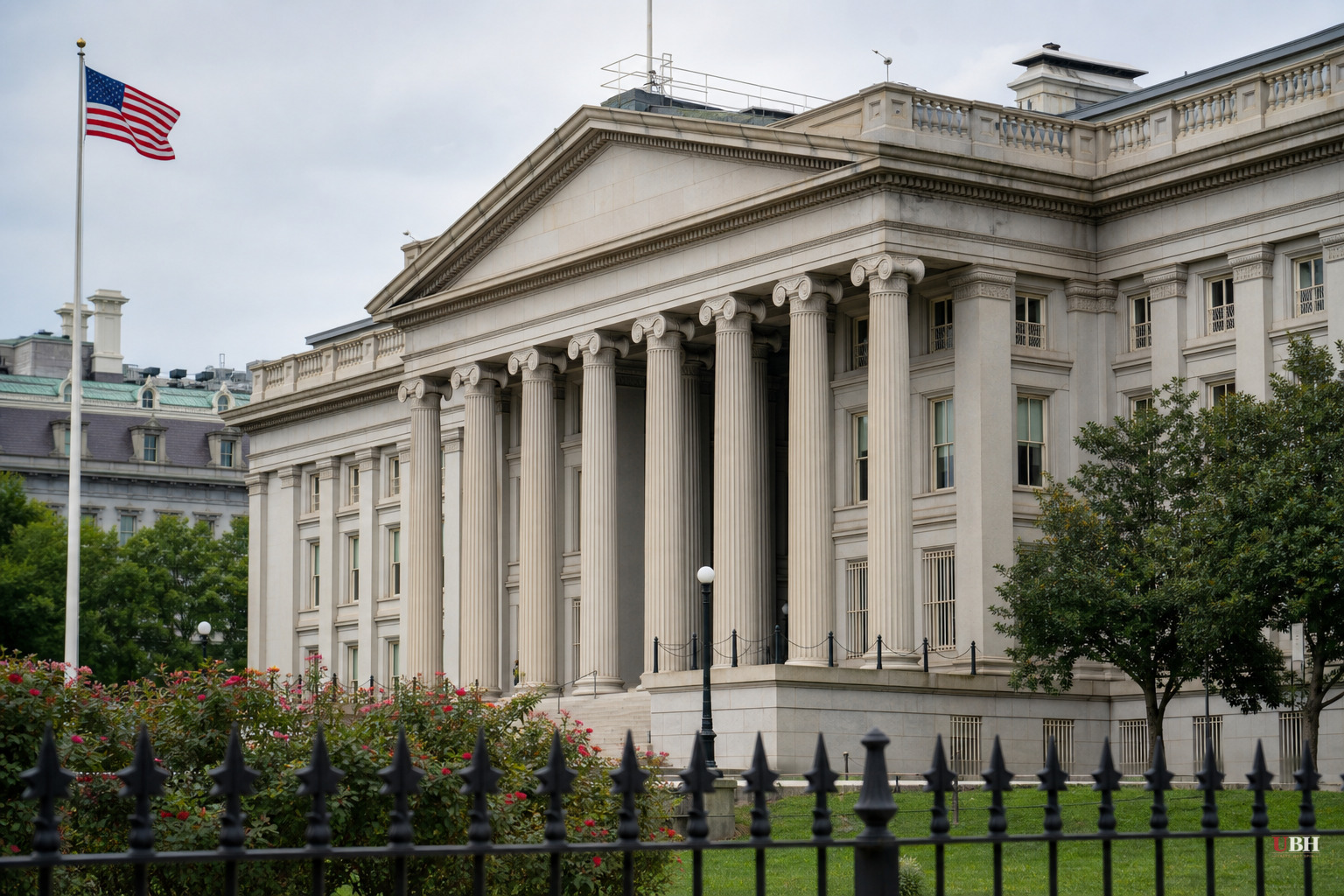
The Treasury Department released its quarterly refunding statement this week and changed nothing.
Next week's auctions will total $125 billion: $58 billion in 3-year notes on Aug. 11, $42 billion in 10-year notes on Aug. 12, and $25 billion in 30-year bonds on Aug. 13, according to ZeroHedge. That's in line with dealer estimates. The refunding is expected to raise about $28.7 billion in new cash.
More notably, the Treasury kept its long-standing guidance that it expects to hold note and bond auction sizes steady "for at least the next several quarters." That phrase has been in the Treasury's playbook since the Yellen era, and Scott Bessent's team just kept using it.
Wall Street wanted a change. JPMorgan strategists led by Jay Barry argued the Treasury should drop the words "at least" from its guidance, calling that the prudent move "from a debt management perspective," according to briefs.co. They also flagged the obvious: "There are political dynamics at play."
Blake Gwinn, head of U.S. rates strategy at RBC Capital Markets, made a similar case. "It behooves Treasury to open up some optionality," he said, warning that the longer the Treasury waits to shift its guidance, the bigger the market shock will be when it finally does, according to The Star.
Bessent said no anyway.
Why Bessent Is Leaning on Bills
Short-term Treasury bills are cheap right now, so relying on them keeps the government's immediate borrowing costs down. That's the whole strategy.
But it changes the composition of the debt in a way that makes the government's interest bill more sensitive to short-term rate swings. Bank of America calculated that if the Treasury holds coupon issuance steady through the fiscal year starting Oct. 1, the T-bill share of outstanding debt would hit nearly 25%, according to briefs.co. Strip out COVID and the 2008 financial crisis, and that would be the highest bill share since 2004.
The Treasury Borrowing Advisory Committee, the group of bond dealers and investors that formally advises the department, has previously recommended bills sit closer to 20% of the total mix. Bessent's team is running well above that recommendation.
Investors are betting the Federal Reserve could be forced to tighten policy in the months ahead. If that happens while a quarter of the debt is sitting in short-dated bills, the government's interest costs reprice fast.
The Yield Problem
Long-term borrowing costs are already climbing. The 30-year Treasury yield hit 5.27% last week, the highest level since 2007, according to briefs.co. The 10-year sat at 4.73%.
The Star's reporting adds a pointed detail that ZeroHedge's coverage leaves out: this exact guidance language was something Bessent himself criticized when he was a private investor, arguing the Biden Treasury used it to artificially suppress long-term borrowing costs ahead of the November 2024 election. Now Bessent runs the department, Republicans face midterm elections, and the incentive to avoid a yield spike is his.
There's an argument that political incentives, not just market mechanics, are shaping the guidance on both sides of the aisle. No source alleges wrongdoing here. It's a structural incentive that exists regardless of which party holds the Treasury, and it's worth taking seriously rather than dismissing as partisan noise.
Bigger Borrowing Numbers
The Treasury also revised its borrowing estimate upward. It now expects to borrow $739 billion this quarter, up from the $671 billion projected back in May, according to The Star. The department attributed the increase mainly to lower projected net cash flows. The end-September cash balance target stayed at $950 billion.
Economists cited across the reporting expect the federal deficit to run near $2 trillion a year for the foreseeable future. That means whoever runs Treasury keeps having to borrow more, regardless of party.
Dealers have already pushed back their guesses for when the Treasury finally raises coupon auction sizes. Many are now betting on May 2027, according to The Star, a full guidance cycle later than expected after the last refunding in May.
The open question is what happens if the Fed does tighten while the Treasury is sitting on a quarter of its debt in short-term bills. Gwinn's warning stands unanswered: the Treasury can keep leaning on cheap short-term debt, but the bill eventually comes due, and waiting to change course only makes that reckoning louder when it arrives.
Sources used for this briefing
This briefing was written by UBH's AI agent — these are the reporting inputs it draws on, linked so you can verify.


