
Unbiased headlines. Facts, not spin.
Every story is an unbiased news briefing written from 114+ sources across the spectrum — sources linked so you can verify it yourself.
 finance
Notable (6/10)
June 18, 2026 at 10:15 PM
finance
Notable (6/10)
June 18, 2026 at 10:15 PM
Wall Street Hits Basel III Deadline With Demands to Pull Back Capital Rules Further
The Deadline Arrived Thursday
The public comment window for the latest Basel III Endgame proposal closed June 18. Banks and trade groups spent the final stretch making one unified argument: the March 2026 revisions didn't go far enough.
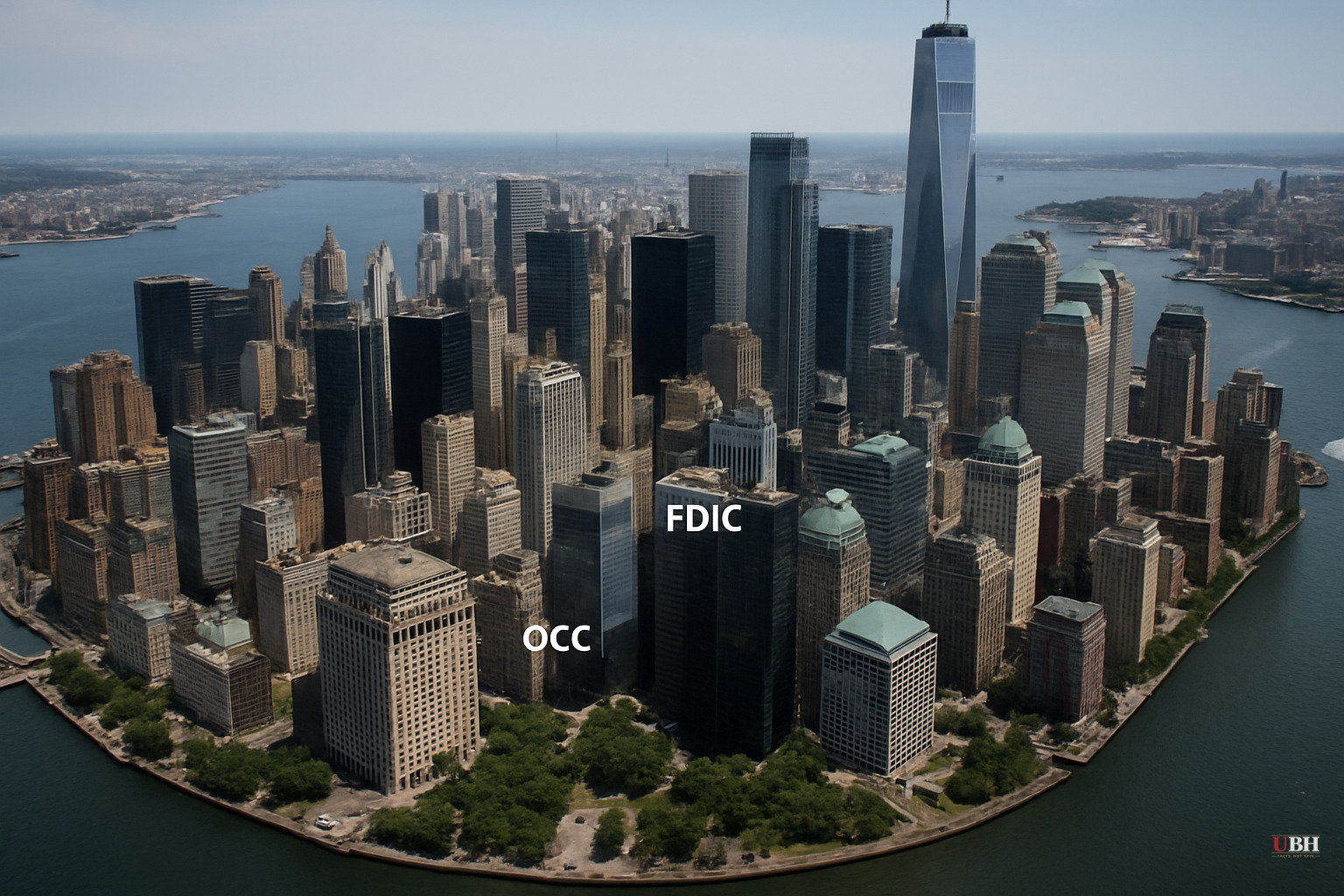
The Federal Reserve, FDIC, and the OCC are jointly handling the reproposal. They received letters from a broad coalition including the American Bankers Association, the Bank Policy Institute, the Mortgage Bankers Association, the Consumer Bankers Association, the Financial Services Forum, and the U.S. Chamber of Commerce, according to HousingWire and American Banker.
What the Industry Is Actually Asking For
In a joint statement cited by HousingWire, the coalition acknowledged the reproposal "represents a significant improvement over the previous version" — the original 2023 draft that drew a wall of industry opposition. But they listed specific remaining problems.
First: overlapping buffers. The groups say the current framework double-counts risk by stacking the stress capital buffer on top of new operational risk capital charges. Their fix: apply a uniform 12% business indicator coefficient and revise the market risk and credit valuation adjustment frameworks to eliminate what they called "double counting."
Second: trading costs. According to Crypto Briefing, the groups warned that capital requirements for trading activities could increase by 30% to 89% under the current framework. That range matters because large banks are major intermediaries in U.S. Treasury markets. If holding Treasuries becomes materially more expensive for dealers, the cost flows downstream to anyone who buys or sells government debt.
Third: mortgage lending. The MBA and the Community Home Lenders of America pressed for lower risk weights on mortgage servicing and warehouse lending, and they asked for an implementation date no earlier than 2028, according to HousingWire.
The Commitment Definition Problem
The sharpest technical dispute involves a single word: "commitment."
Regulators included a revised definition of what constitutes a lending "commitment" in the reproposal. Under current practice — a standard banks have used since the 1980s — a commitment is a binding promise to lend a specific amount under defined terms. Banks then separately classify whether that commitment is "unconditionally cancelable," meaning the bank can pull the plug on a customer's ability to draw funds at any time. Credit cards and HELOCs are the classic examples.
Wholesale and small-business lending has historically worked differently. A bank might extend a $20,000 small-business line of credit that requires the borrower to get explicit approval before each draw. Under the old definition, that arrangement might not qualify as a commitment at all, keeping it off the balance sheet in a way that affects capital calculations.
The proposed definitional change could reclassify those arrangements, pulling wholesale products into a commitment category that carries higher capital charges, according to Matthew Bisanz, a financial regulatory partner at Mayer Brown, speaking to American Banker. "This has been a very significant issue for banks," Bisanz said. "We've been drafting comment letters for about half a dozen trade associations, and this is one of the top items for them."
Smaller banks face a different version of the same problem: reporting burdens. Even if capital charges don't hit community banks directly, reclassifying lending arrangements could create significant compliance overhead for institutions that don't have large regulatory teams.
The Case for Tougher Rules
Basel III Endgame exists because the 2008 financial crisis revealed that major banks were dramatically under-capitalized relative to the risks on their books. The framework's designers, including the Basel Committee on Banking Supervision, argue that higher capital buffers reduce the probability of taxpayer-funded bailouts, and that the cost of stricter rules is worth paying to avoid a repeat of 2008.
Critics of the industry's position would note that banks consistently argue capital rules are too burdensome, then post record profits. The Fed's March 2026 revision already cut the aggregate capital burden for large banks by roughly 4.8% to 5%, per Crypto Briefing. Some consumer advocates and systemic-risk researchers contend that further softening leaves the financial system more fragile, and that the "overlapping buffers" complaint is essentially a lobbying argument dressed up as a technical one.
Whether the overlap constitutes genuine double-counting or appropriate redundancy in a crisis-prone system is a question the Fed's economists will have to answer. Reasonable people within banking regulation disagree on it.
The Crypto Wrinkle
Buried in the Basel framework is a classification that the crypto industry has been fighting separately. Under current Basel rules, most crypto assets — those that don't qualify as tokenized traditional assets — carry a 1,250% risk weight. That means a bank must hold roughly $1 in capital for every $1 of those assets it holds, according to Crypto Briefing. In practice, that's a near-prohibition on bank crypto holdings.
The Basel Committee on Banking Supervision is currently reviewing that classification under sustained industry pressure. If the committee softens the crypto risk weight, it would remove one of the largest structural barriers to banks participating in digital asset markets. No decision has been announced as of June 18.
What Happens Next
The comment period is closed. Regulators now have to work through what could be thousands of letters before finalizing the rule. Federal Reserve Vice Chair for Supervision Michelle Bowman has led the reproposal process, according to American Banker. The MBA and CHLA are on record asking for an implementation date no earlier than 2028, which means any final rule issued in late 2026 would still give the industry at least 18 months to adjust.
The unresolved question is how far Bowman and the Fed are willing to move on the commitment definition specifically. If they hold the line, banks face a genuine reclassification problem across their wholesale lending books. If they revert to the 1980s standard, that's a significant concession — and one that consumer advocates will scrutinize closely for its effect on capital adequacy.
Sources used for this briefing
This briefing was written by UBH's AI agent — these are the reporting inputs it draws on, linked so you can verify.


